Archive | Advertising RSS feed for this section

Kmart’s “Show Your Joe” — How DraftFCB Created More Than Just a Viral Video

25 Nov


   No, this is not your grandmother’s Kmart.  And that’s the point.  If you think the latest internet-only ad from Kmart looks like a PG-13 version of Chippendales, that too is the point.

     The new ad called “Show Your Joe” is the latest in a series of slightly edgy digital shorts (no pun intended) designed specifically for the sharability of social media.  It is not without controversy, and that also is likely part of the goal to reawaken awareness of a flagging brand.  Jingle Joe 5

     But there’s much more going on here.  Kmart’s agency, DraftFCB-Chicago has built in a clear strategy behind the naughty-but-nice jingle bells spoof.  That strategy is to boost Christmas sales among  young internet savvy women by co-branding with Joe Boxer.  They do this by embedding an integrated link at the end of the video that redirects the viewer to a special Kmart shopyourway.com page featuring each of the “Jingle Joes.” (Figure 1)  Click on one of the “Joes” and another page pops up with a virtual catalog of gift ideas laid out in Pinterest-like tiles to create your own “Fantasy Joe.”  The subtle but strategic message argument is, “Dress your man the way you want—at Kmart.” 

Figure 1

Figure 1

     What Kmart is attempting to do is create a new value proposition in digital space.  It’s not so much about discount pricing as it is about allowing the shopper to experience the enjoyment of customizing their man through an easy and fun online shopping tool.  The “Show Your Joe” video is merely the bottom rung of the means-end ladder to creating the perfect Christmas gift for the price and style conscious woman—a fun dressed man she wants to be seen with.  The ad is really about her, not him.

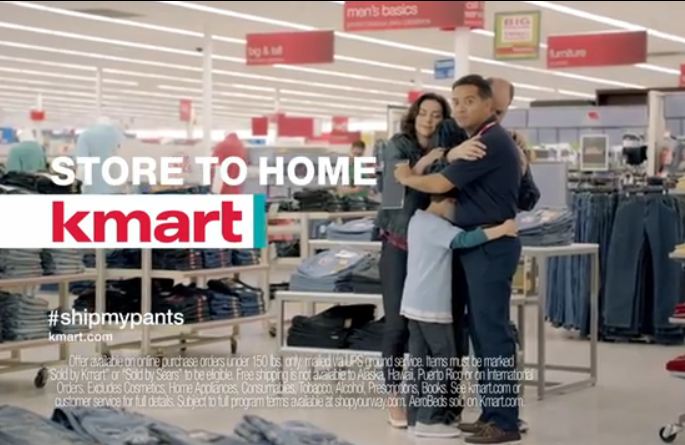
     This is not Kmart’s first attempt at edgy videos.  Earlier this year DraftFCB created an online ad called “Ship My Pants” designed to drive traffic to kmart.com for free shipping. 

https://youtu.be/lCsqABAQLjs

    In a previous post I explored how more major brands such as Ford and Njoy have used digital-only campaigns in social space to target very specific market segments.   Kmart is only the latest player in this category and according to internet tracking data, the strategy may be working. 

Figure 2

Figure 2

     Google Trends shows a sharp rise in online search for Kmart since the release of the “Show Your Joe” ad. (Figure 2)  Additionally, the web tracking service Alexa shows consistent growth in traffic to both kmart.com and shopyourway.com in the two weeks ahead of the post-Thanksgiving holiday rush.

     The ultimate metric is whether those searches and visits are converting into sales.  Kmart is making a low-cost bet that the strategy is worth it.  With more than 12-million views on YouTube, “Show Your Joe” is at least placing them into the holiday shopping conversation.  And that’s a place every retail brand wants to be.  


#WolvesAreComing – How FSN’s New Timberwolves Marketing Campaign Came From Students at the U of Minnesota

1 Nov


    Big ideas don’t necessarily come from big agencies.  They come from wherever inspiration lies.  In the case of the new Minnesota Timberwolves image campaign, the big ideas came from a group of students at the University of Minnesota’s Strategic Communication Program.

    “Our idea was to kind to reach people like us,” said Kelsey Batkiewicz, one of the students who worked on the campaign.

    Batkiewicz’s class of nearly two dozen students divided into three teams and worked on competing strategies and pitches on the Timberwolves marketing campaign for Fox Sports North.  

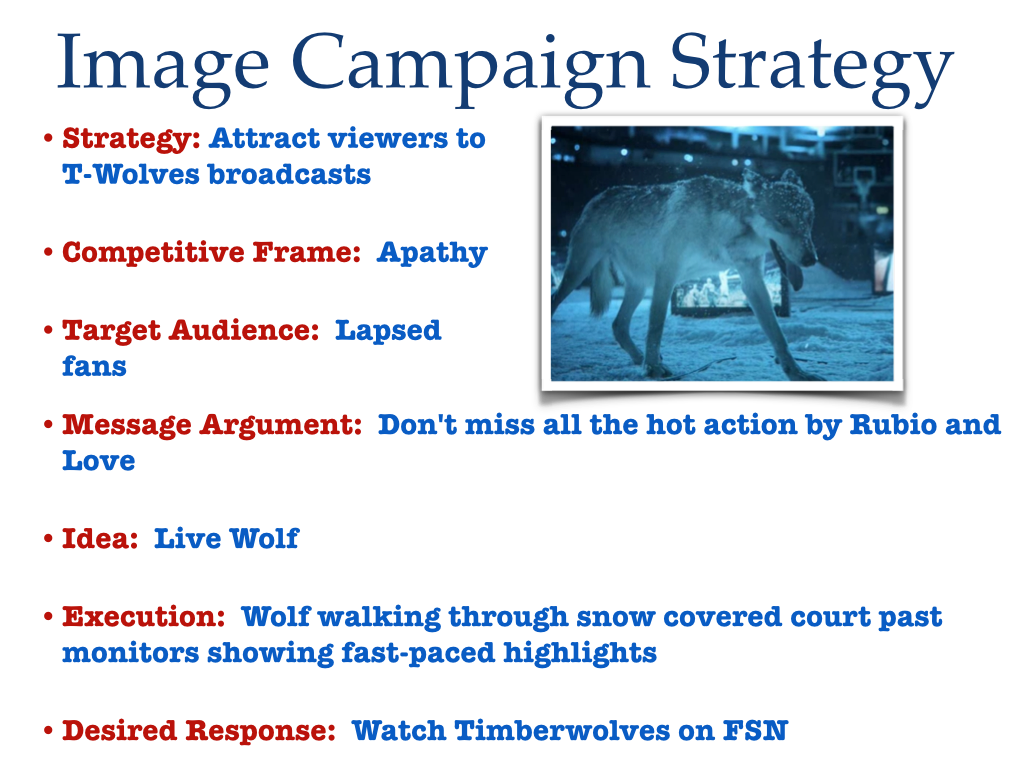
    The creative concept of the thirty-second image spot she said was to have a live wolf  walking through a snow covered basketball court and past TV monitors containing fast paced imagery of Timberwolves highlights on FSN.  [Figure 1]    

Timberwolves Background 4

Figure 1 – Image from FSN Timberwolves promo

     “Well, the snow was actually made out of paper, which is really funny.  It looks so real in the commercial,” said Batkiewicz .   “And so it’s really that contrast from the cold winter to the awesomeness that’s inside the target center and what goes on during those games.”

    The promotional video as conceived by Batkiewicz’s team and produced by FSN uses no announcer’s track, only metaphorical imagery designed to make the viewer elaborate about  the fast-paced excitement of watching stars Ricky Rubio and Kevin Love play on television.  The communication strategy peels off the screen. [Figure 2] 

Figure 2

Figure 2

    Additionally, the students collaborated with FSN on creating a social media campaign and hashtags, one of which is #WolvesAreComing, to help create a social community for the buildup of the new season.

    The competition is a collegiate outreach effort of Fox Sports called the Fox  Creative University.   It collaborates with major universities in each of the markets where Fox Sports has a regional cable network to give students an opportunity to contribute to a real-world marketing campaign.  

U of M graduate Kelsey Batkiewicz and her classmates with the FSN Timberwolves broadcast team. (Courtesy: Dr. John Eighmey)

U of M graduate Kelsey Batkiewicz (first row, second from left) and her classmates with Tom Hanneman and the FSN Timberwolves broadcast team. (Courtesy: Dr. John Eighmey)

    “Everybody is trying to figure out what’s the future, what’s going to trend with the younger audience,” said Mike Dimond, Fox Sports North Senior Vice President and General Manager.  “It’s really an opportunity for us to learn as much as it is for them to learn.”  

    The students’ professor, Dr. John Eighmey said there was really no secret to their success.  “I just taught them the concepts, and they created their own ideas and ran with them,” said Eighmey.

    Dimond said his team at FSN was so impressed with the students’ input on the Timberwolves campaign that they’ve gone back to the U of M and Eighmey’s current strategic communication students to have them design the media campaign for the 2015 Hockey Day in Minnesota.

    “I don’t think I could have had any better experience during my time at the U of M,” said Batkiewicz.    “It was hands down the best.”

#    #    # 

Disclosure:  Fox Television Stations, where I am currently employed, along with Fox Sport North are both divisions of 21st Century Fox.  Additionally, I hold a Master of Arts degree in strategic communication from the U of Minnesota School of Journalism and Mass Communication, the same school attended by Ms. Batkiewicz.   I was neither paid nor encouraged by any of these organizations to write this blog post.

“Giving is the Best Communication” — The Year’s Best Ad From a Brand You’ve Never Heard of

29 Sep


   One of the most viral and powerful advertisements this fall doesn’t sell a product.  Instead, it sells an idea.  And in the process, it brilliantly illustrates the power of brand extension with a smart and strategic piece of communication.

    It comes from a cell phone company in Thailand named Truemove-H.  The three minute film spans a 30-year story, one that begins with an act of sympathy and kindness and ends with a surprise act of gratitude.   The film contains no product placement, no overt sales pitch, only the powerful idea of the value of paying life forward.  The message from Truemove-H:  “Giving is the best communication.” 

   Proof of the Ad’s power lies in the fact that it just surpassed 9-million YouTube views in one week. 

"Giving" by Thailand's Truemove H phone service

“Giving” by Thailand’s Truemove H phone service

   As a piece of communication, the film is a daring and brilliantly strategic tool to build brand salience in a hyper-competitive category. 

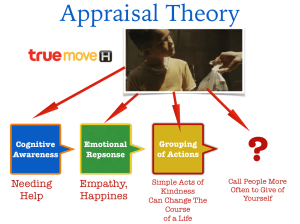
    In this case it effectively uses Appraisal Theory to connect emotion and mood to influence a specific action.   The film makes the viewer cognitively aware of how giving can have its own unexpected reward. (Figure 1)  The deep emotional response of empathy—even guilt—leads to the formation of new attitudes about how giving can impact people’s lives.   The desired action is to cause people to give more of themselves.   In this case, Truemove-H’s goal is to get people to give by calling more often.   But just as important, it seals an emotionally positive connection to the brand—a connection likely to be top of mind the next time a Thai consumer searches for new phone service. 

Figure 1 - Applying Appraisal Theory to Truemove-H's "Giving" advertisement.

Figure 1 – Applying Appraisal Theory to Truemove-H’s “Giving” advertisement.

    It takes a powerful brand to communicate with this kind of boldness.  Coca-Cola is one of the few North American brands willing to leverage its brand values to encourage social change.  One of its best recent examples is a campaign that originated in South America to encourage random acts of kindness.

    In a recent post, I wrote how computer chip maker Intel used Appraisal Theory to force people to make an emotional conversion to empower young women across the globe.  Like Truemove-H, the campaign did not feature a single product placement or sales pitch.

   Together they are three examples of strategically smart communication campaigns that entice the viewer to make a powerful emotional response to a brand goal. 

    Gratefully, in each case no operators are standing by.

Have a Coke, Dinner, and a Tweet — Coca-Cola’s Live Integration of Advertising and Social Media.

10 Sep

     Across Europe, Coca- Cola is asking people to share more than just a Coke.  In doing so it has created an ingenious campaign that not just extends its brand value but has also increased social engagement.

     Key to the campaign is Coca-Cola popping the bottle cap on the insight that in Romania, 60% of people don’t eat meals together.  Instead, they eat alone in front of the TV.   With the help of ad agency MRM Worldwide-Romania, Coke created a series of TV ads around the theme of “Let’s Eat Together.”  Central to the ads was the agency and Romania’s Pro TV inserting live Tweets into the commercials, many of them invitations for people to come over for dinner. 

    In a matter of weeks, hundreds of live Tweets aired in the commercials and by Coca-Cola’s account the campaign earned more than a million social media impressions. 

     The campaign has expanded now to Italy where celebrity chefs created meals for total strangers all with the goal of getting people to sit down together to share a meal.

http://www.youtube.com/watch?v=Sh2v1XfQ-SE

     Of course, the strategy of the campaign is to boost sales by increasing rate of use.  Coca-Cola has been exceptionally effective getting consumers to associate Coke with happiness.  In this campaign, Coca-Cola is encouraging people to not just share a Coke during a pleasurable moment, but during dinner.  In the process it has also encouraged them to share the experience on social media. 

     It’s a powerful brand extension executed wonderfully by a powerful brand.   Who’s hungry?

Paul Bunyan and MNsure – The Strategy behind Healthcare Reform’s Odd Couple

20 Aug


    Every good advertising campaign needs a novel idea and a strategy.  The new ads for the State of Minnesota’s emerging healthcare exchange called MNsure have both.

    Minneapolis-based ad agency BBDO Proximity knew that to make Minnesotans aware of the changing face of healthcare coverage any ad campaign needed a face of its own to stand out.  The face they found stands 10 feet tall, wears a flannel shirt and carries an axe.  Oh, and his best friend is a blue ox named Babe.  Both are immortalized in Minnesota folk lore and sculpted in repose at one of the state’s most photographed sites in Bemidji.   

MNsure ad featuring Paul Bunyan water skiing

MNsure ad featuring Paul Bunyan water skiing

    For BBDO’s creative team, it was the equivalent of cutting down a tree with one swing of an axe.    “First of all, they’re very recognizable,” said BBDO Proximity’s Executive Creative Director Brian Kroening. 

    “I think most Minnesotans at one time or another have seen Paul and Babe.  And we thought it would be very interesting if our idea would put them to work on behalf of all Minnesotans,” said Kroening. 

Figure 1

Figure 1

    The genius behind the campaign is making Paul as human as possible.  The opening ad in the campaign features Paul attempting to water ski on Lake Waconia.  The results are not good.  Therein lies the chief message argument—not only is Minnesota the land of ten thousand lakes, it’s also the land of ten thousand reasons to have health insurance.  The highly strategic message peels as easily as bark form a birch tree. (Figure 1)  The campaign will follow with more ads putting Paul & Babe in familiar Minnesota schemas that include a gym, sledding, even ice fishing. 

Figure 2

Figure 2

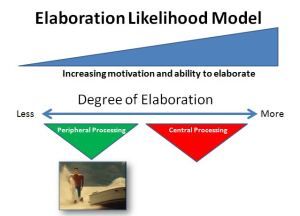
     There are several psychological communication theories to suggest the campaign is positioned to succeed with consumers.  Foremost among them is Richard Petty’s Elaboration Likelihood Model.  The symbolic visual metaphor of Paul Bunyan on water skis is easy for the viewer to peripherally process and elaborate about placing himself in the same role.  The more the viewer thinks about the symbolic tie, the more he is likely to consider the message argument that health insurance is important and MNsure is a place to shop for it. (Figure 2)

     Extensive new advertising research by Werner Reinartz and Peter Saffert from the University of Cologne suggests that using elaborative metaphors is the most effective tool in successful messaging.   Writing for the Harvard Business Review, Reinartz and Saffert show how advertisements that combine elaboration with originality are the most effective in achieving strategic objectives.

     Of course, there’s also humor.   

     “Well, our goal is to get awareness first and foremost,” said Kroening.

     “We think humor is going to stand out more than anything, and we thing people are going to want to see the version over and over again and we hope that they act on it.  That’s our goal, the action.  We love to change behavior for our clients.”  

MNsure ad featuring Paul Bunyan in a doctor's office

MNsure ad featuring Paul Bunyan in a doctor’s office

     It’s a big goal.  MNsure Executive Director April Todd-Malmlov says the campaign is targeting 25-percent of Minnesotans, or 1.3 million people who either don’t have health insurance, or want a better deal on the coverage they already have.  The MNsure marketplace goes online October 1st for health care coverage starting January 1, 2014.   Ultimately, MNsure and BBDO Proximity will measure success by how many people sign up.

    “We wanted this to be a noticeable, simple message that there is hope for all Minnesotans,” said Kroening. “We wanted to break through and do it with a wink, but there is a very serious message and an action on the other end of it.”

    Can’t wait to see Paul do the Bush Lake Ski Jump.

Paul Bunyan Tree

Intel – igent: When Social Action Campaigns are Smart and Strategic (And good for Business)

8 Jul

            The very company that has implored us for years to “look inside” for authenticity has now asked us to widen our vision for a different kind of empowerment.  The result is a wonderfully effective example of aligning creative communication with strategic brand goals.

             Computer chip maker Intel has launched a new ad campaign highlighting its sponsorship of the 10×10 Fund to educate girls around the world.  The cornerstone of that sponsorship is a new documentary called Girl Rising. (Figure 1) It’s a strategically smart corporate social responsibility commitment (CSR) that uniquely takes Intel’s brand of empowering technology and extends it to empowering girls in underdeveloped countries. 

Figure 1 - Intel's ad campaign promoting the 10x10 Fund's Girl Rising documentary

Figure 1 – Intel’s ad campaign promoting the 10×10 Fund’s Girl Rising documentary

             But the genius of the new ad campaign developed by Venables Bell & Partners is the lesson it offers in smartly using several psychological communication theories and applying it to advertising to meet brand objectives.

             The campaign cleverly leverages Martin Fishbein’s Expectancy-Value Theory to change attitudes about young girls by affecting beliefs and expectations about their role in modern society. 

Girl Rising Appraisal Theory

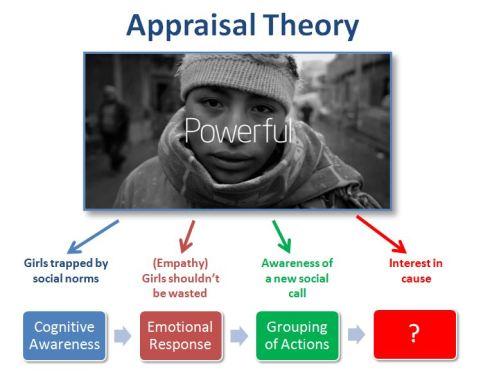
Figure 2 – Appraisal Theory

             But the ad also superbly models Appraisal Theory by using the power of emotion and mood to establish a cognitive connection to the message of girl empowerment. (Figure 2) The ad brilliantly begins by making the viewer aware of the social norms that entrap girls in many emerging counties.  The awareness leads to an emotional response that forms new thinking about a social call and possible interest in the cause. 

             But most important that positive feeling about the ad also creates a positive feeling toward the brand.  And in this case it lends awareness to Intel’s CSR commitment.

             It’s not just communication theory coming alive, it’s strategic, and dare I say… Intel-igent.

Ship my Pants — The Strategy Behind Kmart’s Edgy Commercial

15 Apr


      Kmart has reinvented the Blue Light Special and it’s… well, a bit blue.  Perhaps too blue for traditional television and that’s part of the unique strategy.

      The original discount department store has pulled a little sophomoric potty humor out of isle ten in hopes of gaining more attention in a retail marketplace dominated by Walmart, Target and Amazon. 

Kmart's "Ship My Pants" commercial created by DraftFCB Chicago.

Kmart’s “Ship My Pants” commercial created by DraftFCB Chicago.

      DraftFCB in Chicago has produced a brilliantly off-color and humorous message promoting Kmart’s ability to “ship my pants,” or anything else from kmart.com for free.   

      The message is very strategic.  Kmart is simply trying to regain lost customers by using humor to remind them that they don’t have to go to Amazon or Walmart to shop online. (Figure 1)

Figure 1

Figure 1

     The unique part of the strategy is to avoid television, and go directly to social media where edgy messaging can exceed the more sanitized boundaries of broadcast television.  It’s a messaging strategy more agencies and brands are exploiting in a multi-digital channel viral world.  In Kmart’s case, it was a brilliant success.  In the first 48-hours, “Ship my Pants” received more than two million YouTube views.

     Kmart is far from alone.  NJOY smokeless cigarettes also just scored a viral hit with Courtney Love dropping the f-bomb in an internet-only commercial that says bad girls can still be bad. 


    Several years ago, Ford didn’t have to say a word while promoting a sport version of its successful European compact car named Ka.  It targeted young urban men with an edgy internet video, the likes of which could never air in the United States.  


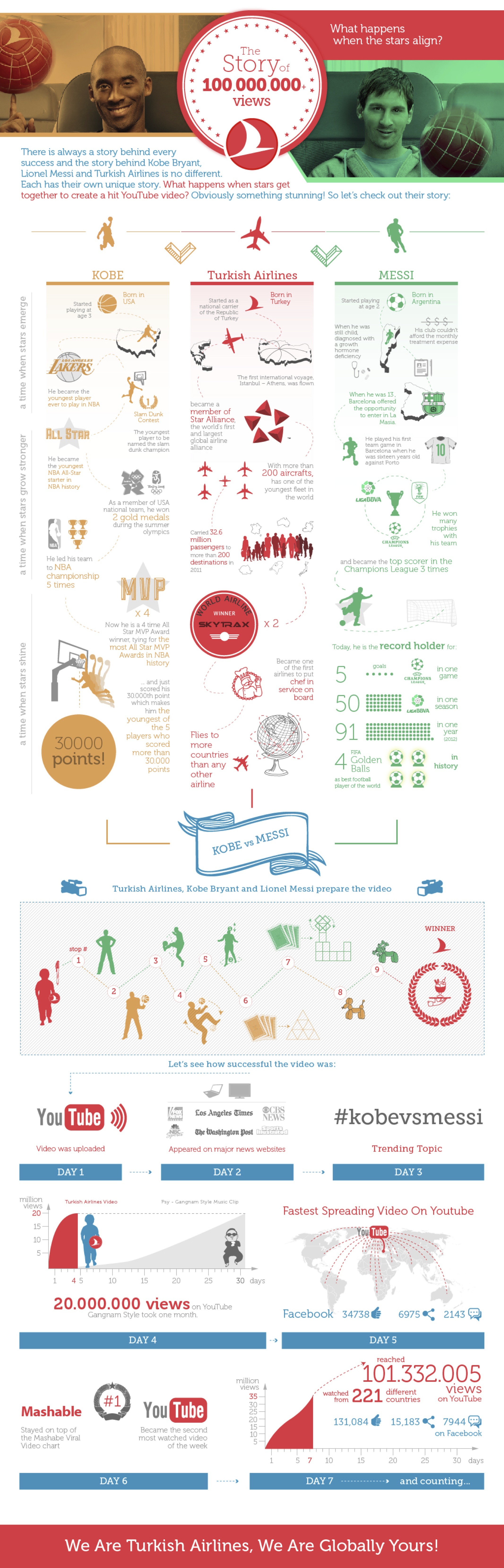
     Sometimes the strategy is not about being edgy, it’s about entertainment.  Turkish Airlines just achieved viral video gold with a commercial featuring two of the world’s best known athletes competing for the attention of a young fan.  The video was such a huge success that the airline created its own infographic explaining how it worked. (See below)

     Central to the strategy in all of these campaigns is the sharable functionality of social media.  Brand loyalists, followers, and viewers of these commercials who like and share the message among friends are in many respects more valuable than an expensive spot on prime time television.  In Kmart’s case, the strategy creates some opportunistic buzz for the brand at a time when JC Penney is hemorrhaging customers and every other discount retailer is still fighting for market share in the economic recovery.  

     Kmart and DraftFCB prove that creativity is still alive and well and fun… if not a little naughty. 

[Note: To keep up with more great video commercials, follow advertising savant John Eighmey]

Courtesy: Turkish Airlines

Courtesy: Turkish Airlines

The Best Super Bowl Ads That Did NOT Air During The Game

11 Feb
Volkswagen's Das Hund

Volkswagen’s Das Hund

         So you’ve seen all the Super Bowl Ads.  The gals cried over the Clydesdale reunion, the men wanted more of Kate Upton, everyone sang with Jimmy Cliff, and in living rooms across America Paul Harvey’s voice once again made time stand still. 

          There was one Super Bowl ad that didn’t cost a penny and didn’t air on CBS, yet scored a strategic touchdown on social media.  Two more ads that skipped the Super Bowl were equally as creative and targeted, but they too stood on the sidelines as their brands chose different offerings—one a pared down version.

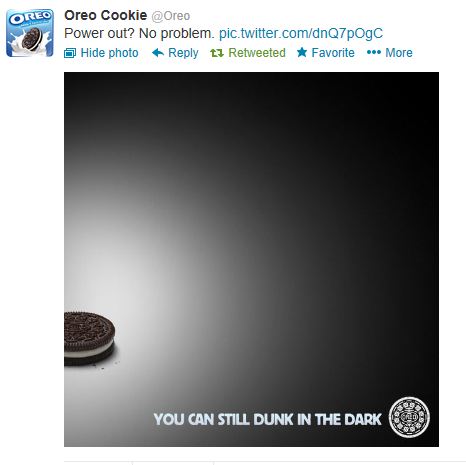
          The most brilliant message was posted on Twitter 20 minutes into the third quarter blackout inside the Super Dome.  The creative team at Oreo cookies, which had earlier aired an ad about people fighting over the virtues of light and dark, fired up their computer and went to the dark side.  They created a simple picture and copy: “You can still dunk in the dark.”  Targeted at social media savvy consumers trolling for entertainment during the black out, Oreo’s brand loyalists found the message and the picture turned viral in minutes.  

Oreos Super Bowl Tweet 2

          For advertising scholar John Eighmey, the stroke of brilliance by Oreo’s team demonstrates that brands don’t necessarily need a multi-million dollar ad budget to get attention.  In a post-mortem forum of the 2013 Super Bowl ads held at the University of Minnesota, Eighmey said, “It proves you don’t need infrastructure, just really smart people.”  He adds, “If you’re smart with strategy, you can react quickly.”

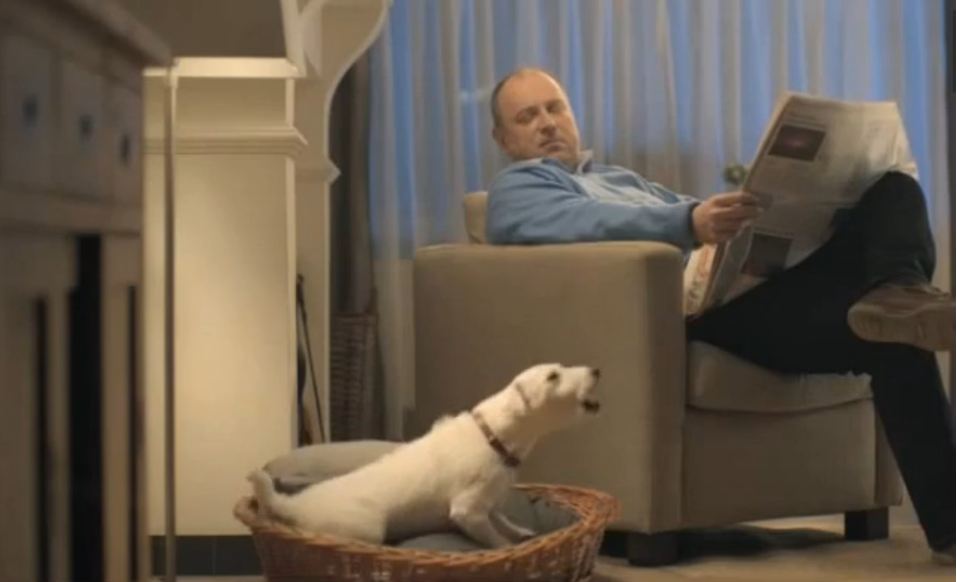
          Another exceptionally targeted ad that never aired during the Super Bowl has just hit the airwaves in Europe.  Volkswagen’s agency DDB played off of well established psychological research showing viewers of advertising most remember dogs and babies.  In Das Hund, DDB gives us the comical story of a dog who thinks he’s a car and falls in love with the new VW.    The target audience is not just dog lovers, but drivers who covet style and performance.   USA Today’s Ad Meter shows Super Bowl viewers liked VW’s Jamaican Get in-Get Happy, but with so much pregame exposure one can’t help but wonder if Das Hund wouldn’t have been a better choice.  


       And then there’s Coca-Cola.  I have to admit, I’m a big fan of Coke’s messaging strategy and its new brand extension of encouraging people to conduct random acts of happiness.  I’ve written in a previous post about Coca-Cola experimenting with this strategy in South America.  In the Super Bowl’s first quarter, Coke gave us a new U.S. 30-second version of the same concept complete with a soundtrack from Roger Hodgson formerly of Supertramp.  However, the 1:30 version is actually stronger and dare I say—more satisfying. 

          I’m only one voice, but I would have loved to have seen this version in the Super Bowl instead, perhaps even tied to a social media campaign about sharing one’s own acts of kindness. 

         Game on.   

AdAge/Blue Fin Labs - Top Social Super Bowl Commericals of 2013

AdAge/Blue Fin Labs – Top Social Super Bowl Commericals of 2013

The Strategy Behind Coca-Cola’s Offense on Obesity and Attitudes

15 Jan


               The branding factory that is Coca-Cola has popped the cap off a pair of highly strategic campaigns this week aimed at two different audiences but with one over-arching goal—changing attitudes.

                 First, there is the very bold and highly focused commercial taking on the weighty issue of obesity.  The 2-minute spot is an expensive piece of real estate on U.S. television, but in it Coke confronts head-on the growing conversation about the role sugary soft drinks may or may not play in the nation’s obesity epidemic.

                 Like any smart and engaging company, Coca-Cola has done its environmental scanning and clearly sees the risks evolving in the marketplace.  New York Mayor Michael Bloomberg’s assault on large serving size beverages is just the beginning of what could possibly be a disruptive series of regulations and consumer backlash.

                 Coke’s new ad called “Coming Together” has a simple message:  Obesity comes from too many calories and not enough exercise.  While Coke admits it is part of the problem, it also holds that it’s part of the solution.  The message put’s them clearly in the middle of the national conversation.  

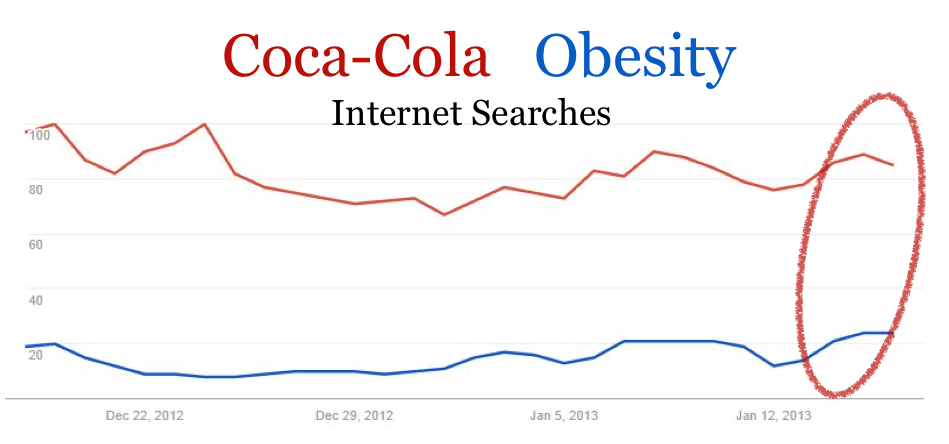
Figure 1 - Google Trends data for Coca-Cola and Obesity

Figure 1 – Google Trends data for Coca-Cola and Obesity

                The campaign is strategic not just in its message but its placement.  The ad aired on the evening cable news networks of MSNBC, Fox, and CNN.  Not only would the ad likely be seen by government decision makers and regulators, it knew the networks would also view it as a news story thereby exponentially extending the message’s reach.  The resulting attention created instant growth in internet searches for both Coke and obesity (Figure 1), and according to Alexa visits to Coke’s website grew 40-percent.


                 In its second campaign this week, Coke takes an equally strategic tract but with a different goal.   This time coke gets back to its by roots and core brand promise of sharing happiness.   But in this whimsical spot by Oglivy Brazil, the sharing is of random acts of kindness.  Strategically targeted toward ethnic urban dwellers, Coke extends its already powerful brand by encouraging people to share something other than a Coke. 

                 Two examples of how strong brands can use their equity and loyalty to not only create conversations, but to affect attitudes and behaviors that reinforce the brand’s core values.

The Best Ads of 2012 – Huffing and Puffing Brand “Magic”

29 Dec
Clint Eastwood emerging from the shadows in Chrysler's "Halftime in America."

Clint Eastwood emerging from the shadows in Chrysler’s “Halftime in America,” one of 2012’s best U.S. ads.

     The year that was in advertising may have given us Halftime in America,” but it also produced agencies working overtime everywhere else.  Once again, some of the most creative and strategic television campaigns were produced for foreign brands.  Together, they form a chorus signing to the power of using higher level values, metaphors, and emotion to sell a brand promise to the viewer.  

     There’s no better place to start than with Three Little Pigs.   The creative genius of BBH in London takes a childhood nursery rhyme and makes it real in an effort to sell newspapers.  Or, does it?  The strategic idea is that viewers, readers, and social media mavens can create the discussions that drive the news and its coverage—only at The Guardian. 

       It’s not just the framed Wolf doing the puffing.  Grandpa does it, too.  The McCann agency in Oslo, Norway climbed the value ladder to return us to another time when flying was magic.   Its brilliant message is that Norway’s Wideroe is the airline of wonder and freedom, not baggage fees and delays.  It begs the viewer to come to the airline where flying is magic again.

      Another one of 2012’s best is the beer ad you’ll never see in America.  In this case the Aussies take a tired American cliché and turn it on its head.  The folks at Carlton Draught and their agency Clemenger BBDO Melbourne cleverly mock every Hollywood cops & robbers’ schema ever made in an ad they call Beer Chase.

      The chase scene is not only fun to watch but is exceptionally strategic. Its target audience is beer drinking men who prefer their suds from a tap instead of a can.  It even has a unique selling proposition: beer so good you don’t want to spill a drop.

      Finally, 2012 gave us an ad that demonstrates the power of emotion.  Wiedner + Kennedy in Portland produced a powerful message for Proctor & Gamble’s foreign markets that doesn’t sell soap as much as it sells an idea:  we are our mothers.   Their commercial called Best Job is a clear demonstration of the balance theory concept that advertising savant John Eighmey calls “likability of the ad.”    If you like the ad, you’ll like the brand.  In this powerful message, athletes and moms everywhere are the winners.  P & G, too.

     Four ads, four boldly creative messages.  Can’t wait to see what’s ahead for 2013.   Now, where’s my bowl of popcorn?