Archive | Topical News RSS feed for this section

90,000 Stars — Reflections on a Fallen Marine.

1 Dec


             The tears that dropped like rain on a Minnesota prairie didn’t come from the cool air blowing on tired eyes.  They came from the heart.  Many more came from the soul.

             “Tim, I’ve never seen anything like this,” said the prideful farmer looking across the prairie from the base of St. Patrick of Cedar Lake Catholic Church. 
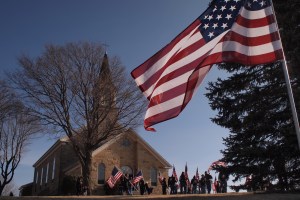
St. Patrick of Cedar Lake Catholic Church. The final resting place of Lance Cpl Dale Means.

St. Patrick of Cedar Lake Catholic Church. The final resting place of Lance Cpl Dale Means.

               “I can’t tell you how proud I am of this town.”  He didn’t have to say anymore.  The tears rolling off his cheeks filled the empty space where words disappear.     

             In this part of Scott County all roads lead to St. Patrick’s.  But on this day people only needed one, the road  where 1,800 American flags pointed the way.

             When the news spread days earlier that a certain son was coming home, it was hardly the celebration anyone wanted.  Dale Means was the kind of man a small town takes pride in.  He was a son, a husband, and a United States Marine.  On November 18th, what pride couldn’t promise a road side bomb took away.  What Minnesota gave, Afghanistan claimed. 
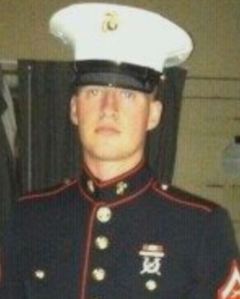
Marine Lance Cpl. Dale Means.

Marine Lance Cpl. Dale Means.

             Tragically, no news travels faster than that of a fallen service member.  When Larry Eckhardt heard, he knew what he had to do.  He packed up his trailer full of 2,000 American flags and set out from his home in Little York, Illinois.

             “Well, I went to a soldier’s funeral and there was probably pretty close to about two-thousand people there and only about 50 to a hundred flags,” Eckhardt said.  “I didn’t think that was right.”

             More than 400 miles later Eckhardt pulled into New Prague with a full trailer, a near empty gas tank, and a plea for help.  Bonnie Valek was among those who heard the call.    

Larry "The Flagman" Eckhardt

Larry “The Flagman” Eckhardt

             “Yesterday they had on the radio station, if they could get fifty volunteers.  And I volunteered.  And they had well over a hundred on the snap of a finger,” Valek said.             

            In a little more than an hour, this community known for planting crops was planting flags.  By the time they were done, the sons and daughters of New Prague with the help of Larry the Flagman built a tri-colored wall of patriotism that stood 1,800 strong.  The flags didn’t just bring volunteers, they brought pride.  Pride brought everyone else.

             Among the people lining Main Street was a man in a leather jacket with a face sculpted by the cold fall wind.  Upon recognizing a familiar face from television he reached out his hand with a tight grip.

            “Thank you, Tim,” he said.  “I’m so glad you’re here, people need to see this.”  He introduced himself only as Scotty, but like so many here the only name that mattered was that of the Marine they claimed as their own.

             “It’s amazing,” Scotty said.  “When I heard about the funeral procession I had to come out.  At first I was one.  Then five minutes later I was ten.  Then I was 50.  Then 100.”    He paused and looked up and down the street.  “Now, I must be a thousand.”

             As the hearse carrying Lance Corporal Means’ body slowly crept past the gauntlet of people, pride, and flags, there was hardly a dry eye.  Jen Ophus was among those fighting off the tears.  

Flags lining the funeral procession route for Lance Cpl. Dale Means to St. Patrick of Cedar Lake Catholic Church.

Flags lining the funeral procession route for Lance Cpl. Dale Means to St. Patrick of Cedar Lake Catholic Church.

             “I think it’s, really impressive,” Ophus said.  “I think it’s something that we should all do and show our respect.  I don’t think it’s seen enough.”

             Further down the street, Ron Dols called it an awakening experience.  “Unfortunately this country doesn’t show its patriotism enough.  And I think this is a good example of it.”

             Lance Corporal Means may have given his life along a lonely trail a half a world away, but at this critical moment he and his family were hardly alone.  His last trip to the church on the hill would be protected by 23,000 stripes and 90,000 stars.  Larry Eckhardt made sure of it.

             “I call it his last gift to the community,” Eckhardt said.  “Because, it does bring the community together and as long as they remember the flags, they’re going to remember him.”

 *            *            *

          Lance Corporal Mean’s funeral was #97 for Larry Eckhardt and his flags.  He was leaving the next day to drive his trailer to Iowa for the funeral of another fallen soldier.  To learn more about Larry Eckhardt and his flags, you can follow him on Facebook

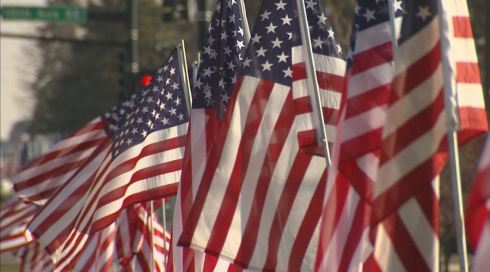
Flags along Main Street in downtown New Prague, Minnesota for the funeral procession of Marine Lance Cpl. Dale Means on November 28, 2012.

Flags along Main Street in downtown New Prague, Minnesota for the funeral procession of Marine Lance Cpl. Dale Means on November 28, 2012.
How Social Media is Driving Political Engagement — What TV News Can Learn

22 Oct


Illustration courtesy of Social Media Daily

           The social media forces that have changed and influenced television viewing habits, are now changing political engagement too.  Political communication that was once dominated by television commercials and yard signs has gone digital—and personal. 

            New research from Pew Internet reveals a significant number of Americans using social media—66%–are using social networking sites (SNS) to both follow politics and candidates and share their own political views.  

            Here are some of the top lines:

  • 38% of those who use SNS & Twitter use social media to “Like” or promote material related to politics or social issues.
  • 34% of social media users have used tools to post their own thoughts or comments on political or social issues.
  • 33% have reposted political or social issues content that originally posted by someone else.
  • 31% have encouraged others to take action on a political or social issue.

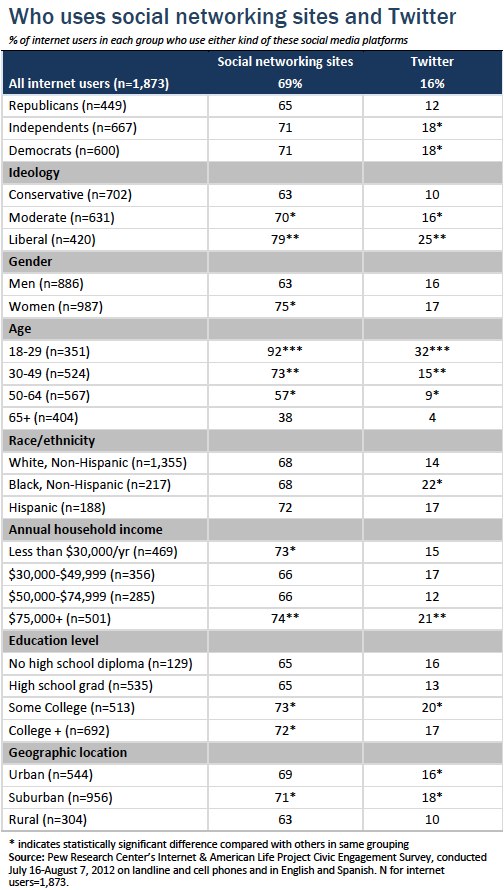
             The Pew research also indicates that the power users skew heavily young and somewhat liberal. (Figure 1)  That finding would support the explosive social media usage among viewers of the 2012 Democratic National Convention. 

Figure 1 – Pew Internet

             For television programmers, especially TV newsrooms, this latest set of data points is a gift for building strategies to engage younger viewers in way that is native and natural to them.  As television entertainment producers have built social media engagement into live viewing of comedies, drama, and reality episodes, TV news operations have the same opportunity especially when it comes to live political events such as debates, forums, and rallies.

             Some of the tactical engagement methods should include:

  • Create branded discussion forums by hashtagging events for people to follow.  Example: #Fox9debates.
  • Use the hashtagged comments to drive on-air discussion and talk back with guests and experts.
  • Establish website chat rooms during major events that are moderated by newsroom talent. 
  • On-air talent should direct viewers to specific content on the web or Facebook and encourage them to share it.

             The reality of today’s connected world is that viewers are constantly screen-splitting, meaning they’re watching TV and interacting with a mobile device at the same time.  By encouraging viewers to engage with your brand on another channel only builds the brand and helps them achieve the information and entertainment gratifications that they are seeking.  Television programmers who don’t do this risk losing their viewers to someone else who will.

             Here’s a few more important facts on the Pew Internet study. (Figure 2)  The Pew research team lead by Lee Raine interviewed 2253 adults between July 16 and August 2, 2012.   They found that 60% of American adults use either SNS or Twitter.  Of the American adults who are online, 69% use SNS such as Facebook, LinkedIn and Google+, and 16% use Twitter. 

Figure 2 – Pew Internet Survey Democraphics


Presidential Debate Lesson — It’s the Metaphors, Stupid!

6 Oct


Sesame Street’s Big Bird

           Two men approached the presidential stage in Denver, but only one commanded it and walked off with a memorable message for the American voter to consider.  

             One of these men had a focused, clear message with passion and purpose.  The other appeared rhetorically disheveled.  If Aristotle were measuring the persuasive outcomes based upon authority, emotion and logic (ethos, pathos, logos) then Mitt Romney would have gone to the head of the class.

             One of the key takeaways from the first presidential debate is not necessarily how poorly President Obama may have performed, but why Mitt Romney was more effective and memorable in framing one of his key messages: government is too big. 

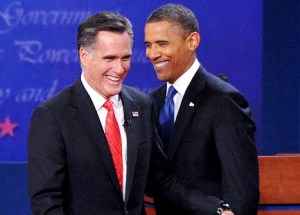
Presient Barack Obama and GOP nominee Mitt Romney at the presidential debates, October 3, 2012.

             He did it with two metaphors.  The most powerful stands seven feet fall and eats bird seed.  The second, recast Washington as voodoo government.             When moderator Jim Lehrer tried to elicit a response from Romney on the size of government, here was his response:

 “I’m sorry Jim, I’m gonna stop the subsidy to PBS.  I love Big Bird.  I actually like you, too.  But I’m not gonna keep on spending money on things to borrow money from China to pay for it.”

             His second most powerful message took a long-time democratic boogeyman—trickle-down economics—and turned in on its head.

 And what we’re seeing right now is, in my view is a trickle-down government approach which has government thinking it can do a better job than free people pursuing their dreams. And it’s not working.”

        Psychological researchers have long established that people process and remember what they already know.   Ralph E. Reynolds of Iowa State University writing in the Journal of Educational Psychology strongly established how metaphorical writing vastly improved recall and understanding.  Likewise, Thomas J. Reynolds has published extensive works in the Journal of Advertising Research on how metaphorical references build stronger advertising messages.  The theory extends to political communication as well.  Eugene Miller of the University of Georgia notes that political rhetoric has always relied heavily on metaphors whether it’s assigning players to the president’s “team,” to creating programs such as the “New Deal,” “New Frontier,” or “War on Poverty.”  One of the most effective uses in a campaign came from Walter Mondale in 1984 when he blatantly stole a line from a Wendy’s hamburger commercial to describe rival Gary Hart’s domestic policies: “Where’s the beef?”  The metaphor was devastatingly effective.  Within weeks Hart’s campaign ended and Mondale won the democratic nomination. 

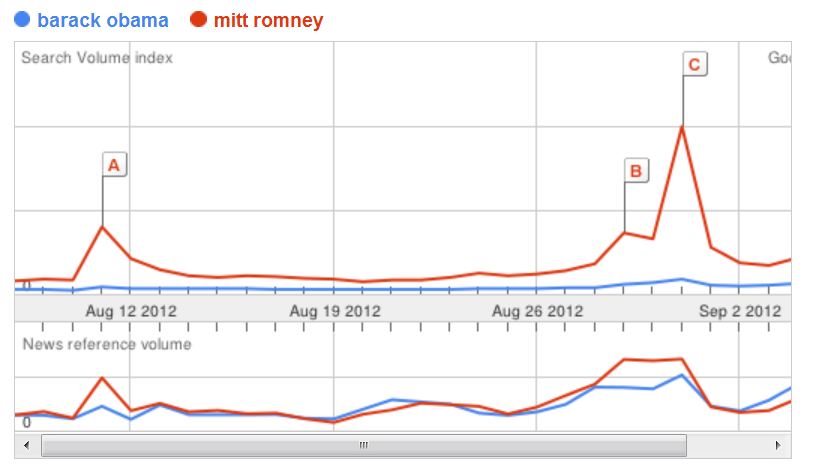
         In this new era of explosive mediated social dialog, the Big Bird metaphor has become an instant internet meme.  Within minutes of Romney’s reference, satirical Big Bird pages surfaced on Twitter and t-shirt designers went to their screen printers.  Internet searches for both Romney and Big Bird skyrocketed. (Figure 1)  By week’s end, the Big Bird reference even became material for Saturday Night Live’s Weekend Update.  

Figure 1: Google Trends web search volumes. RED-Mitt Romney, BLUE-Big Bird

           Mitt Romney’s chief goal in the coming weeks is to change the attitudes of the extremely narrow percentage of voters who have yet to make up their minds.  In the first debate, he’s given them two symbolic images to consider.  Wouldn’t it be ironic if come election day the chief lesson of the fall campaign didn’t come from 1600 Pennsylvania Ave, but instead from an address on Sesame Street.

An Emmy Award Salute to a Vietnam Veteran’s Legacy

3 Oct

             On a windswept Minnesota prairie where the trees whisper the memories of Vietnam, the quiet chorus is now joined by golden girl with a ringing voice.

            The trees that stand tall and grow on forty acres of rolling hills were all planted by Vietnam veteran Geoff Steiner.  Each one has a name, each has a memory.  Nearly every tree is planted in honor of a soldier who never came home.  Steiner did.  But he still lives with the horrors of a war that both took lives and changed lives—forever.

            Last Veterans Day, I traveled to Steiner’s tree memorial with fellow producers Mark Anderson and Rod Rassman.  Together with editor Sam Scaman we produced a segment on Steiner for a documentary film called Veterans Day 11-11-11

           Our profile of Steiner has just won the Emmy Award for best single military story.  We humbly accept the award in honor of Geoff Steiner and all of the Vietnam veterans who now live in eternal peace.   May God’s blessings be with them.     

A Diabetic’s Guide to Eating at the State Fair!

25 Aug


OK, it’s once again time for the annual trek to the 320 acres of fried food on a stick we call the Minnesota State Fair.

For most hearty Minnesotans, a visit to the fair is the one day where fun replaces common sense, where a balanced diet is as foreign as a balanced budget is to congress.

At the extreme risk of being “That Guy,” the fair poses a challenge for folks who really DO have to watch their diet.  As a parent of two children with type-1 diabetes, a day at the fair is a constant guessing game of how to insulin dose and carb-cover.  Get it wrong, and blood sugars go through the roof and the girls feel sick for the next day.  It’s even worse for cardiac patients who have to keep a keen eye on their fat and cholesterol.

The dietitians at Park Nicollet’s International Diabetes Center have put together a wonderful Food Facts list to help us navigate the fair and still have a lot of fun.  Under the guise of ‘knowledge is power’ they’ve broken down the calorie, carb, and fat content of most of the major food items.

“They don’t need to derail their diet, they don’t need to feel like they’re stuck outside of the group and not enjoying anything,” said Park Nicollet dietitian Mary Ziotas Zacharatos.  “They’re able to eat the things that they like and have more awareness of what their putting in their mouth.”

Park Nicollet Dietitian Mary Ziotas Zacharatos says to enjoy the fair, go with a bunch of friends and share small samples of food.

One of biggest offenders is the Booming Onion.  At 1,565 calories it has 186 grams of carb and 84 grams of fat.

“Most people don’t think about it because it’s an onion and it’s got a little bit of batter on it. But it really could derail your diet,” said Zacharatos.

Those fried cheese curds are another food item to be aware of.  One little paper tray of those golden nuggets of heaven actually add up to 533 calories, and 34 grams of carb and another 34 grams of fat.

Believe it or not, a better choice is a corn dog.  At 210 calories, it only contains 25 grams of carb and ten grams of fat.  Zacharatos says it’s a nearly perfect blend of protein, carb and fat for walking around at the fair.

Zacharatos says you don’t necessarily have to avoid some of the higher calorie and carb food items, just SHARE them.

“The best part about the state fair is to go with a whole group of people and just try a bunch of different things.  That way you can enjoy everything,” said Zacharatos.

Social Media ROI — Turning “Likes” Into Cash For Somalia

10 Aug

“Though it’s only half a month away, the media’s gone.                           An entertaining scandal broke today, but I can’t move on.”                           – Helicopters, by Barenaked Ladies

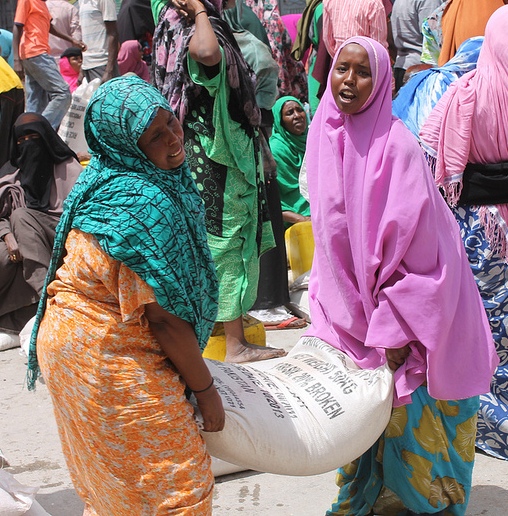
Somali refugees recieving a sack of rice distributed by the American Refugee Committee in Mogadishu. (Courtesy ARC)

Like a flash in the night, they opened eyes.  The television lenses that zoomed in on Somalia a year ago focused the world’s attention on a devastating famine that killed 30,000 children in the span of just three months.  And then, with the click of a Klieg light they were gone.  Just another story, another crisis that turns on and off in a world preoccupied with the latest live trend on Twitter.

The reality for hundreds of thousands of refugees in Somalia is that survival is not a pop culture status update.  At the end of each day, the only status that matters is if they’re still alive.  But it led the Minneapolis-based American Refugee Committee to pose dire question—could it harness the power of social media to actually feed people?  Their answer has them converting “Likes” into food.

In the late summer of 2011, ARC in collaboration with the California design firm IDEO launched the I Am a Star for Somalia campaign.  The goal was to use social media to encourage people around the world to do small things to help ARC fight the famine.  By encouraging people to become part of the “Star” community, they were essentially asking them to take an inward view of the crisis rather than just watch it on TV.  This summer, ARC has advanced the campaign with the effort serving as a blue print for non-profits seeking to earn a return on investment in their social media ventures.

Paper chain hanging in the ARC headquarters in Minneapolis.

ARC secured a $50,000 pledge from Hormuud Telecommunications, Mogadishu’s largest phone provider, to support food distribution in ARC’s refugee camps.  But rather than simply accept a check, ARC designed a campaign to engage followers and build a broader community and awareness to the Somali crisis.  They tied the pledge directly into their “I Am a Star” efforts with the goal of gathering 50,000 Facebook engagements—each one generating a dollar from Hormuud’s pledge.

But ARC took it one step further.  For every engagement, volunteers build a link in a paper chain that is now spreads throughout the ARC headquarters.  Pictures and status updates are added on the progress of the chain which in turns builds more support from followers.

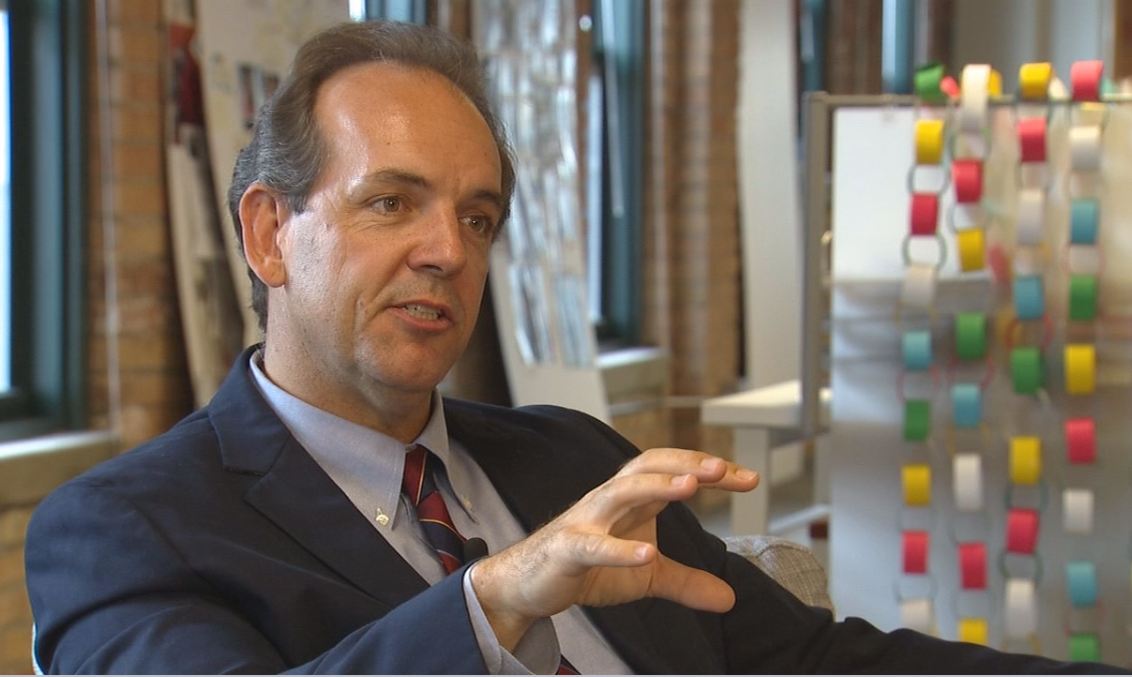
“To us I think they represent the links between people around the world who are showing solidarity for Somalia,” said ARC’s Daniel Wordsworth.

American Refugee Committee President Daniel Wordsworth.

“And I think it’s also a physical way that people can demonstrate their commitment but also a way for the people in Somalia to see people in Malaysia, Yemen, London and Sweden coming together in helping Somalia get through this.”

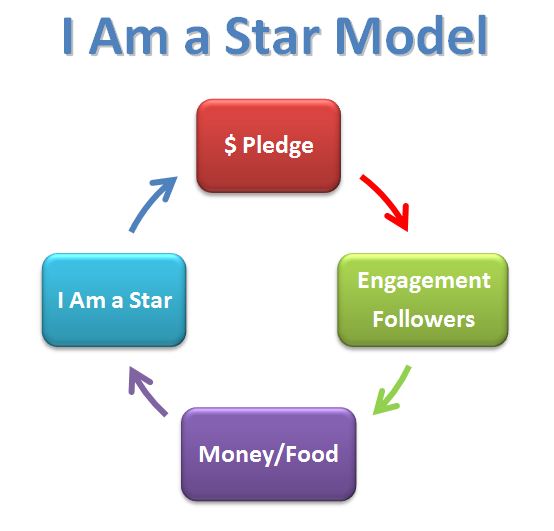
For non-profits and businesses alike, ARC has adopted an effective model that uses social media for community building and fundraising.  It begins with an issue and then a highly strategic and goal-oriented response with built in performance measures.  In this case, ARC began with the famine crisis, formed its “Star” campaign, secured a pledge and then used the pledge to build a community, awareness and money.   But equally important in the campaign is ARC’s target of a goal and a deadline—50,000 engagements by August 11.  The goal gives the campaign a mechanism by which ARC and its followers can measure progress, and the deadline gives it urgency for people to act.

Figure 1

But most important, ARC has now built a sustainable community for Somalia.  By generating upwards of 30,000 additional followers to its “Star” campaign, it can now use that community as leverage to gain more pledges, more engagement, and distribute more food.  (Figure 1)  It becomes a circular model for future campaigns and famine relief—and all of it as the TV lights shift to the latest Twitter trend.

“I think we all know that famines come and people see it on the news and then a year later it’s hard to remember it all,” said Wordsworth.  “So I think that what we’re trying to do is keep Somalia in the forefront of people’s minds.”

Feisty the Seal: Anatomy of a Duluth Flood Meme

22 Jun

Meme \`meem\ n:  an idea, behavior, style, or usage that spreads from person to person within a culture 

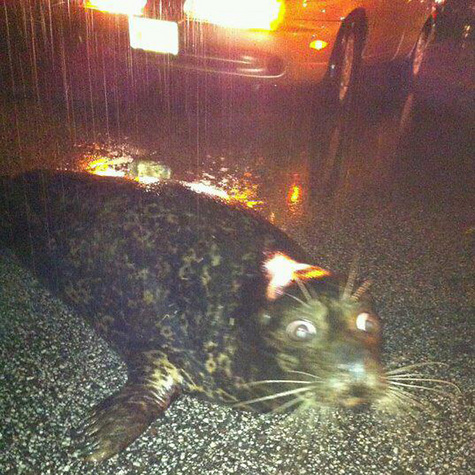
Figure 1 – Feisty the harbor seal captured on June 20th on Grand Avenue in Duluth by Elli Buchar.

The lens by which the world viewed the Duluth flooding disaster this week was actually viewed through a sympathetic set of eyes.  Never mind that they belonged to a nearly blind harbor seal named Feisty.

When 10 inches of rain fell on the bluffs that anchor the city of Duluth, Minnesota the runoff cascaded down its hills with the force of a dozen rivers at spring break-up.  The rushing water in the middle of the night on June 20th swallowed cars, roads, homes and even the Lake Superior Zoo.  The raging floods drown eleven animals and flooded out the pen holding two aging and sight impaired seals named Feisty and Vivien.  At the height of the disaster in the middle of the night, no one knew the plight of the zoo animals until Ellie Buchar saw something unusual along Grand Avenue—Feisty.  She snapped a picture, shared it online, and within a matter of hours this nearly blind seal became the vision by which the rest of the world viewed the disaster. (Figure 1)

Just how powerful was this meme?  I was standing along Olney Street interviewing Gene Swanson who was in danger of losing his house to the raging King’s Creek when my phone rang.  It was one of my news producers at her computer monitor from 170 miles away wanting to know why I wasn’t at the zoo?   Never mind the people desperately trying to save their homes and lives.   “What about the animals?” demanded the producer.  (I could give a dozen journalistic counter arguments–but that’s another post at another time.)

Feisty’s story is a case study in contagion and memes in this new age of social media.   It provides a unique pathway for understanding why they become so powerful.

In this case, social psychologist Jaap van Ginneken would argue that Feisty served as what he calls a strong replicator.  Such replicators evoke an emotion that cause people to take notice and share.  Image plays an essential role—the strongest replicators have child-like images with large eyes.  Finally, the replicator must be positioned in an unexpected way—a surprise.

Feisty’s image on Grand Avenue fit perfectly into the model:

  • Strong Replicator: stressed animal
  • Child-like face: helplessness
  • Surprise: found in middle of street 

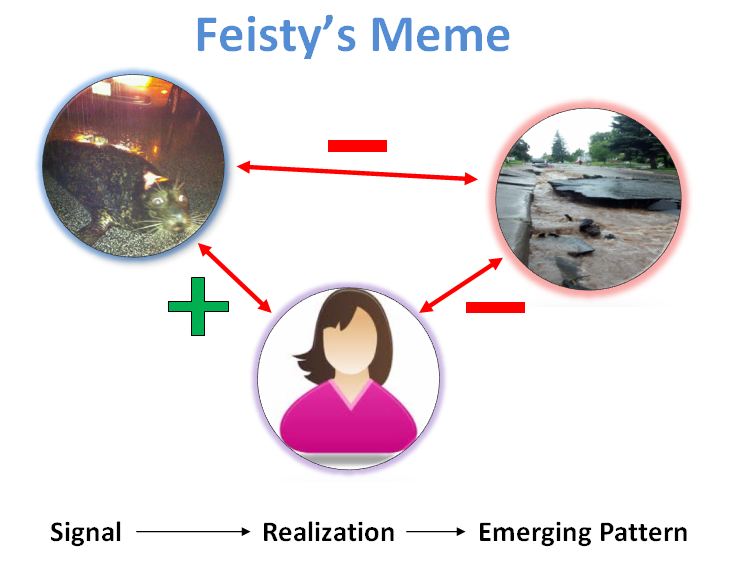
    Figure 2

The image served as a critical signal to viewers, especially women that something was happening.  This signal is the beginning of a cognitive cycle where the viewer forms a positive association with Feisty and in context forms a negative association with the floods.  (Figure 2)  When the viewer hits the “send” button on their computer and others share, a meme is born.

That’s essentially what happened on July 20thand why a helpless animal has become the face of such a human disaster.

Figure 3 – Feisty in her new temporary home at the Como Park Zoo in St. Paul, MN

It should come as no surprise that Feisty’s viral picture is exactly why she and her half-sister are now safe and recovering at the Como Park Zoo in St. Paul.  When Como’s zookeepers saw her viral picture they immediately called the Lake Superior Zoo offering help.  Several hours later both seals and a polar bear were traveling to their new temporary home.  (Figure 3)

Como’s Sr. Zookeeper Alli Jungheim says they’re all feeding and adjusting well to their new home.  “We’ll take care of them like they are our own,” said Jungheim.

For now the seals are safe.  But, there’s so much more work to ensure the rest of Duluth is safe, too.

Facebook Usage Down. Why This is Not The End–Yet

14 Jun


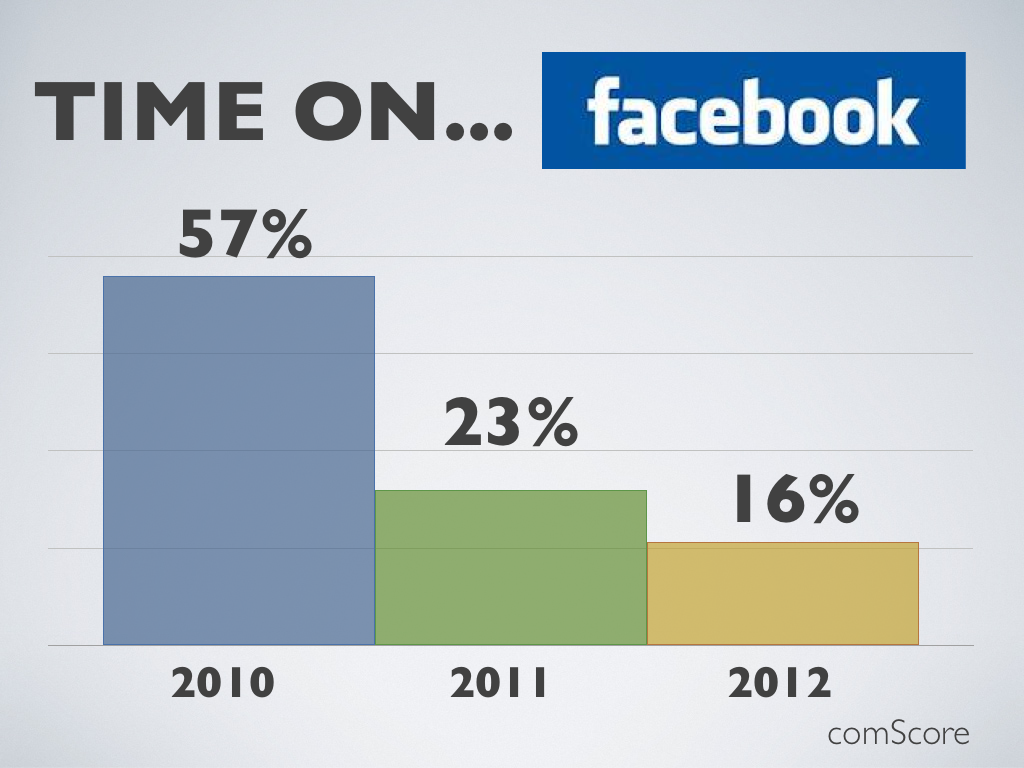
Figure 1 – April-to-April increase of user time per month on Facebook

The latest user research on Facebook indicates the dominant social media site is losing some of its luster.   A series of recent data sets indicates Facebook engagement is maturing and users may be losing a sense of the novelty that once came with the social networking site.

New research from the web analytics firm comScore Inc. shows that unique visitors to Facebook in April rose to 158 million, an increase of only 5% from the year before.  Its growth rate was down 24% from April of 2011 and 89% from April of 2010.

ComScore’s data obtained by the Wall Street Journal also shows a slowdown in growth rate of time spent on Facebook.   In April, users spent a little more than 6 hours a month on the site, an increase of 16% from the year before.  That compares to a 23% increase in April of 2011 and 57% in 2010.  (Figure 1)

Additional research from Reuters and Ipsos indicates 34% of Facebook users were spending less time on the site than they did just six months ago.   The phone survey of more than 1000 participants represented recall and was perhaps not as accurate of a measurement as the analytics study generate by comScore.

Nevertheless, they all tap into an insight that the fascination with Facebook may be peaking.

Among Facebook’s core users of young adults 18-35 there are mixed reviews.   Allysa Sajady is a 20-something grad student who still uses Facebook, but admits not as often. 


Jackie Randall is a dentistry student who no longer has the time to constantly update her friends.


The waning fascination with Facebook is easily explained with a nearly 100 year old psychological model known as the Wundt Curve. (Figure 2)

Figure 2 – Wundt Curve

Wilhelm Wundt created the model to help explain the newness of an idea or product.  In the model, the X axis (vertical) represents enjoyment, and the Y axis (horizontal) represents stimulus intensity or newness.  The curve portrays rising enjoyment as an idea or product is new and then falling enjoyment as the product becomes overly familiar.  The primary lesson from Wundt is that sustainable relationships are created when a familiar product is changed just enough to make the experience new again.  In other words, the optimum position on the curve is slightly outside the X & Y intercepts.

That’s exactly what Facebook has attempted to do by creating the new timeline feature and by acquiring the photo sharing application Instagram.  With those two moves Facebook is staking its claim on sustainable side of the Wundt Curve.   Yahoo and MySpace have floundered deep inside the curve.

For all of its sudden criticism, Facebook is still a behemoth brand.  ComScore notes that Facebook has already collected 71% of all 221 million U.S. internet users.  They spend more than six hours a month on Facebook far exceeding the four hours a month they spend on all of Google’s sites and the 3.5 hours they spend on Yahoo sites according to comScore.

For those who make a living following social media trends, Facebook is far from dead.

“Absolutely not,” said Dan Antonson of S-M-C Pros of Minneapolis.  “I think technology is always going to trend, it’s always going to change. And I think what we’re seeing is a shift, absolutely a shift in behavior.  But that shift doesn’t necessarily mean that Facebook isn’t working,” said Antonson.


In fact, for Antonson Facebook is working.  “I mean, when you look at some of these recent reports of one-in-five page views on the internet being Facebook, it’s hard to say it’s going away anytime soon.”

It may not go away, but the challenge for Facebook is to keep changing the experience enough to keep it new to the user.