Archive | Branding RSS feed for this section

Paul Bunyan and MNsure – The Strategy behind Healthcare Reform’s Odd Couple

20 Aug


    Every good advertising campaign needs a novel idea and a strategy.  The new ads for the State of Minnesota’s emerging healthcare exchange called MNsure have both.

    Minneapolis-based ad agency BBDO Proximity knew that to make Minnesotans aware of the changing face of healthcare coverage any ad campaign needed a face of its own to stand out.  The face they found stands 10 feet tall, wears a flannel shirt and carries an axe.  Oh, and his best friend is a blue ox named Babe.  Both are immortalized in Minnesota folk lore and sculpted in repose at one of the state’s most photographed sites in Bemidji.   

MNsure ad featuring Paul Bunyan water skiing

MNsure ad featuring Paul Bunyan water skiing

    For BBDO’s creative team, it was the equivalent of cutting down a tree with one swing of an axe.    “First of all, they’re very recognizable,” said BBDO Proximity’s Executive Creative Director Brian Kroening. 

    “I think most Minnesotans at one time or another have seen Paul and Babe.  And we thought it would be very interesting if our idea would put them to work on behalf of all Minnesotans,” said Kroening. 

Figure 1

Figure 1

    The genius behind the campaign is making Paul as human as possible.  The opening ad in the campaign features Paul attempting to water ski on Lake Waconia.  The results are not good.  Therein lies the chief message argument—not only is Minnesota the land of ten thousand lakes, it’s also the land of ten thousand reasons to have health insurance.  The highly strategic message peels as easily as bark form a birch tree. (Figure 1)  The campaign will follow with more ads putting Paul & Babe in familiar Minnesota schemas that include a gym, sledding, even ice fishing. 
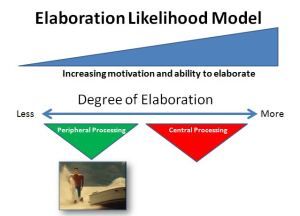
Figure 2

Figure 2

     There are several psychological communication theories to suggest the campaign is positioned to succeed with consumers.  Foremost among them is Richard Petty’s Elaboration Likelihood Model.  The symbolic visual metaphor of Paul Bunyan on water skis is easy for the viewer to peripherally process and elaborate about placing himself in the same role.  The more the viewer thinks about the symbolic tie, the more he is likely to consider the message argument that health insurance is important and MNsure is a place to shop for it. (Figure 2)

     Extensive new advertising research by Werner Reinartz and Peter Saffert from the University of Cologne suggests that using elaborative metaphors is the most effective tool in successful messaging.   Writing for the Harvard Business Review, Reinartz and Saffert show how advertisements that combine elaboration with originality are the most effective in achieving strategic objectives.

     Of course, there’s also humor.   

     “Well, our goal is to get awareness first and foremost,” said Kroening.

     “We think humor is going to stand out more than anything, and we thing people are going to want to see the version over and over again and we hope that they act on it.  That’s our goal, the action.  We love to change behavior for our clients.”  

MNsure ad featuring Paul Bunyan in a doctor's office

MNsure ad featuring Paul Bunyan in a doctor’s office

     It’s a big goal.  MNsure Executive Director April Todd-Malmlov says the campaign is targeting 25-percent of Minnesotans, or 1.3 million people who either don’t have health insurance, or want a better deal on the coverage they already have.  The MNsure marketplace goes online October 1st for health care coverage starting January 1, 2014.   Ultimately, MNsure and BBDO Proximity will measure success by how many people sign up.

    “We wanted this to be a noticeable, simple message that there is hope for all Minnesotans,” said Kroening. “We wanted to break through and do it with a wink, but there is a very serious message and an action on the other end of it.”

    Can’t wait to see Paul do the Bush Lake Ski Jump.

Paul Bunyan Tree

Intel – igent: When Social Action Campaigns are Smart and Strategic (And good for Business)

8 Jul

            The very company that has implored us for years to “look inside” for authenticity has now asked us to widen our vision for a different kind of empowerment.  The result is a wonderfully effective example of aligning creative communication with strategic brand goals.

             Computer chip maker Intel has launched a new ad campaign highlighting its sponsorship of the 10×10 Fund to educate girls around the world.  The cornerstone of that sponsorship is a new documentary called Girl Rising. (Figure 1) It’s a strategically smart corporate social responsibility commitment (CSR) that uniquely takes Intel’s brand of empowering technology and extends it to empowering girls in underdeveloped countries. 

Figure 1 - Intel's ad campaign promoting the 10x10 Fund's Girl Rising documentary

Figure 1 – Intel’s ad campaign promoting the 10×10 Fund’s Girl Rising documentary

             But the genius of the new ad campaign developed by Venables Bell & Partners is the lesson it offers in smartly using several psychological communication theories and applying it to advertising to meet brand objectives.

             The campaign cleverly leverages Martin Fishbein’s Expectancy-Value Theory to change attitudes about young girls by affecting beliefs and expectations about their role in modern society. 

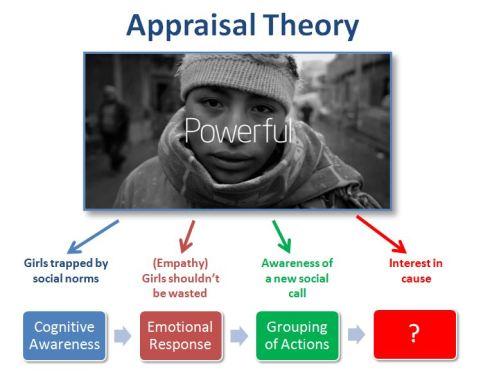
Girl Rising Appraisal Theory

Figure 2 – Appraisal Theory

             But the ad also superbly models Appraisal Theory by using the power of emotion and mood to establish a cognitive connection to the message of girl empowerment. (Figure 2) The ad brilliantly begins by making the viewer aware of the social norms that entrap girls in many emerging counties.  The awareness leads to an emotional response that forms new thinking about a social call and possible interest in the cause. 

             But most important that positive feeling about the ad also creates a positive feeling toward the brand.  And in this case it lends awareness to Intel’s CSR commitment.

             It’s not just communication theory coming alive, it’s strategic, and dare I say… Intel-igent.

Obama on Gun Control — A Message Management Case Study

30 Mar
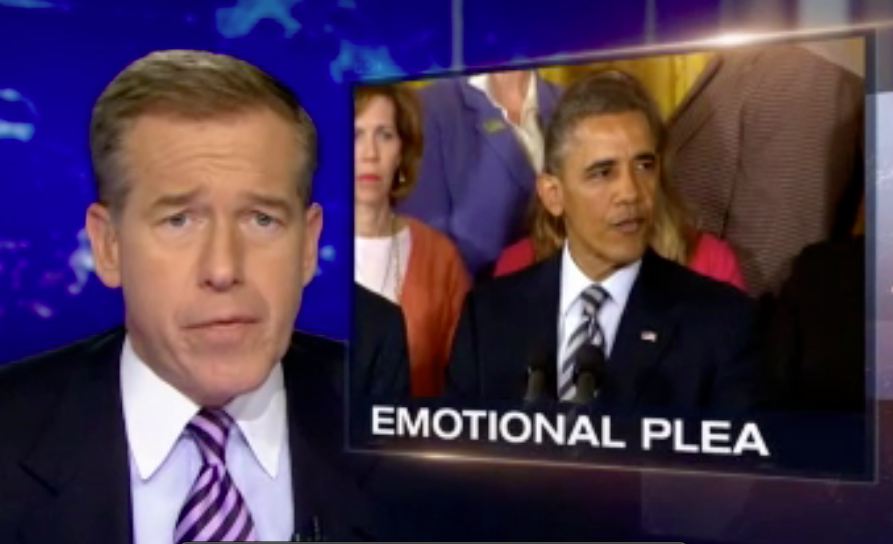
President Obama's gun safety push presented as the lede story on the NBC Nightly News on March 28, 2013

President Obama’s gun safety push presented as the lede story on the NBC Nightly News on March 28, 2013

              President Obama’s latest push on gun safety was hardly a shot in the dark.   His call for universal background checks on March 28th was a highly coordinated, multi-event, multi-channel message that offers a strategic communication model on a dynamic public policy issue.

                 With the raw emotions subsiding over the tragic Sandy Hook school shootings and the success of gun rights advocates at thwarting new legislative bans on military-style semiautomatic rifles, the Obama administration clearly needed to re-engage public opinion and build groundswell.    With little political support for banning military-style assault rifles, his new objective is keeping alive the proposal of universal background checks for all gun purchases.  The new strategy involves putting public pressure on congress.  The new tactics involved a national day of action with a highly coordinated series of events and social media engagements that would swamp news coverage and buzz in a 24-hour cycle. 

Figure 1 - Barak Obama Tweet on March 28, 2013

Figure 1 – Barak Obama Tweet on March 28, 2013

                 At the core of the new strategy was a White House press event featuring the victims and survivors of gun violence.  

               “Tears are not enough,” said the President. 

               He urged activists and citizens alike to “turn that heartbreak into something real” by urging their congressmen to pass meaningful gun control legislation.  By using the bully pulpit of the presidency, Obama was able to command the necessary national news coverage and earn the A-1 lede slot on the network evening news. 

Accent Signage shooting survivor John Souter speaking at a Minneapolis news conference.

Accent Signage shooting survivor John Souter speaking at a Minneapolis news conference.

                But just as important to the strategy was sending the same message to communities across the country, especially in blue states such as Minnesota and communities where gun violence is a salient issue.  In that effort the White House coordinated with gun safety organizations to hold more than 100 media events across the country that day featuring local gun violence victims pleading for action.                         

               In Minneapolis, the event featured John Souter, a survivor of the tragic workplace shooting at Accent Signage on September 27th.  Six of his co-workers died.  Souter was shot twice.   It was his first time speaking about the unspeakable.                 

                “How has it changed me?” contemplated Souter.   “I’m not the same person that’s for sure.  I don’t laugh like I used to.  These things are with you every day.”

                He commanded the attention of every news camera, every reporter’s notebook in town.  The local news conferences served as a force multiplier to the president by ensuring that local gun violence victims would be seen and positioned next to the president’s remarks in the evening news coverage.


Barak Obama Facebook post on March 28th, 2013

Figure 2 –  Barak Obama Facebook post on March 28, 2013

                It was also no accident that in the middle of Souter’s emotional testimony, the Barack Obama Twitter page posted a simple message:  “Fact:  Since 1968, 1.3 million Americans have died from gun violence.” (Figure 1)                                

               The more than a half a dozen tweets were joined by Obama’s Facebook posting of an infographic showing support for universal background checks seemingly as popular at apple pie. (Figure 2)  The posting received 64,000 likes and more than 10,000 shares. 

               Likewise, the video of the president’s White House speech immediately uploaded to YouTube recieved nearly 13,000 views. (See video below)              

                By the metrics of social media engagements, earned media, and buzz, the strategy was superbly executed.    It shows that strategic engagement is no accident and it offers a modern model in multi-channel communication.   But real success in this case is whether the strategy activates votes in congress.  For the moment that is a much harder task.  The whip counts are still out.

The Mobile Apps Revolution—How Brands and TV News Can Extend Engagement

11 Mar
TV news video app for iPad

TV news video app for iPad

     The spark that Guglielmo Marconi flung across the Atlantic in 1901 heralded a new world order.  From that moment forward, information transmission was forever divided between landlines and airwaves.  The past verses the future.  More than a century later the disruptive forces of technological innovation are still real—if Marconi could only see us now.

     The palm-sized computers we now hold in our hands have sparked an applications revolution that is every bit the information game-changer that Marconi ushered in with his wireless telegraph.  Just as radio led to television, computers led to the internet.  Now, mobile devices are leading to them both through applications—or apps. 

Figure 1 - ComScore U.S. Digital Future in Focus

Figure 1 – ComScore U.S. Digital Future in Focus

     The growth and usage of smartphone apps is prolific and real.  ComScore’s latest analysis of internet usages shows 37% of online minutes now come from mobile devices. (Figure 1)  Furthermore, four out of every five mobile minutes are spent on an app.

     Recent mobile research by Nielsen shows the average smartphone user now has 41 apps on their device. (Figure 2)  The dominant app by usage is Facebook followed by Google Maps. 

Figure 2 - Nielsen Smartphone Usage

Figure 2 – Nielsen Smartphone Usage

     Brands that that don’t embrace this new information revolution, including information providers such as news organizations, severely risk becoming marginalized in changing marketplace. 

     Sunil Gupta of the Harvard Business School has just laid out an impressive operational model for brands to build their own apps to extend their brand value on mobile platforms.   He does it by focusing on five categories:

    1. Add Convenience
    2. Offer Unique Value
    3. Provide Social Value
    4. Offer Incentives
    5. Entertain

     In Gupta’s model, he’s put the consumer first.  Far too many mobile news apps I’ve seen put the information consumer somewhere else.   Tap the icon and what comes up are stories that are 24 hours old, limited video, and information cluttered with pop-up ads.  Here’s what Gupta’s model might look like if we apply it in a customer-centric fashion.

1.       Add Convenience.  Here’s where most news apps fail with outdated information.  News junkies come to you for quick and current information, therefore stories and headlines need to be constantly updated.  Post short clips of video from the stories that are appearing, even if they are from a smartphone of a reporter in the field.  ComScore’s research indicates 60% of online searches for weather forecasts are all done on mobile devices, therefore those forecasts should also be constantly current.

 2.       Add Value.  Speaking of weather, one way to add value to a weather or news app is to create an alert system for approaching severe weather.  Another value-added strategy could partner with a local transportation agency to allow the app user to track commute times along a predetermined travel route.  Also, headlines broken down by zip code.

 3.       Provide Social Value.  Here’s where the app developers could build a feature to display the latest Tweets and Facebook postings from the organization.

4.       Offer Incentives.  The app could feature built-in coupons that tie in with a promotion or sponsor.  On-screen coupons to use at live events such as food discounts at ball games would be used as a strategy to build both app users and extend on-air sales.

 5.       Entertain.  This is where the app could offer clips of behind the scenes moments from entertainment programming such as American Idol or upcoming episodes of primetime news lead-ins.

     It’s a lot to think about in an era of shrinking staff resources and budgets.  But just as Marconi once upon a time proved to be a disruptive force in information technologies, mobile devices are proving they are just as disruptive.  The signals TV stations transmit from their towers are no longer the video and information dominant structures they once were.  As digital platforms grow and evolve, information content organizations need to develop multi-platform strategies or risk becoming yesterday’s news.

The Best Super Bowl Ads That Did NOT Air During The Game

11 Feb
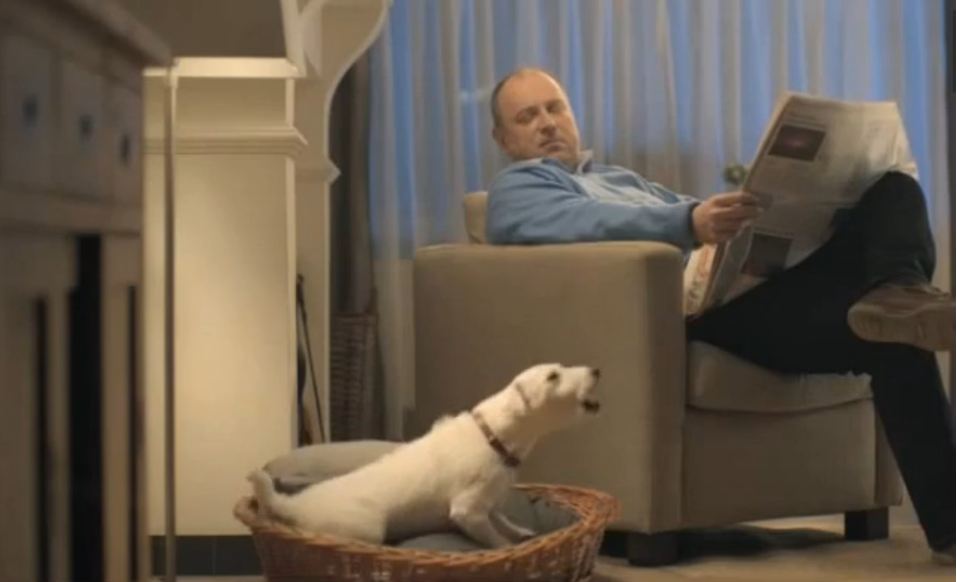
Volkswagen's Das Hund

Volkswagen’s Das Hund

         So you’ve seen all the Super Bowl Ads.  The gals cried over the Clydesdale reunion, the men wanted more of Kate Upton, everyone sang with Jimmy Cliff, and in living rooms across America Paul Harvey’s voice once again made time stand still. 

          There was one Super Bowl ad that didn’t cost a penny and didn’t air on CBS, yet scored a strategic touchdown on social media.  Two more ads that skipped the Super Bowl were equally as creative and targeted, but they too stood on the sidelines as their brands chose different offerings—one a pared down version.

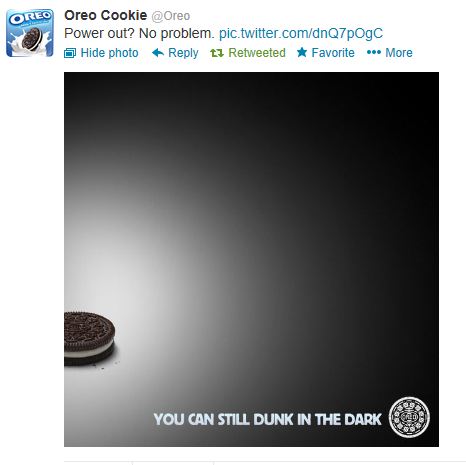
          The most brilliant message was posted on Twitter 20 minutes into the third quarter blackout inside the Super Dome.  The creative team at Oreo cookies, which had earlier aired an ad about people fighting over the virtues of light and dark, fired up their computer and went to the dark side.  They created a simple picture and copy: “You can still dunk in the dark.”  Targeted at social media savvy consumers trolling for entertainment during the black out, Oreo’s brand loyalists found the message and the picture turned viral in minutes.  

Oreos Super Bowl Tweet 2

          For advertising scholar John Eighmey, the stroke of brilliance by Oreo’s team demonstrates that brands don’t necessarily need a multi-million dollar ad budget to get attention.  In a post-mortem forum of the 2013 Super Bowl ads held at the University of Minnesota, Eighmey said, “It proves you don’t need infrastructure, just really smart people.”  He adds, “If you’re smart with strategy, you can react quickly.”

          Another exceptionally targeted ad that never aired during the Super Bowl has just hit the airwaves in Europe.  Volkswagen’s agency DDB played off of well established psychological research showing viewers of advertising most remember dogs and babies.  In Das Hund, DDB gives us the comical story of a dog who thinks he’s a car and falls in love with the new VW.    The target audience is not just dog lovers, but drivers who covet style and performance.   USA Today’s Ad Meter shows Super Bowl viewers liked VW’s Jamaican Get in-Get Happy, but with so much pregame exposure one can’t help but wonder if Das Hund wouldn’t have been a better choice.  


       And then there’s Coca-Cola.  I have to admit, I’m a big fan of Coke’s messaging strategy and its new brand extension of encouraging people to conduct random acts of happiness.  I’ve written in a previous post about Coca-Cola experimenting with this strategy in South America.  In the Super Bowl’s first quarter, Coke gave us a new U.S. 30-second version of the same concept complete with a soundtrack from Roger Hodgson formerly of Supertramp.  However, the 1:30 version is actually stronger and dare I say—more satisfying. 

          I’m only one voice, but I would have loved to have seen this version in the Super Bowl instead, perhaps even tied to a social media campaign about sharing one’s own acts of kindness. 

         Game on.   

AdAge/Blue Fin Labs - Top Social Super Bowl Commericals of 2013

AdAge/Blue Fin Labs – Top Social Super Bowl Commericals of 2013

The Strategy Behind Coca-Cola’s Offense on Obesity and Attitudes

15 Jan


               The branding factory that is Coca-Cola has popped the cap off a pair of highly strategic campaigns this week aimed at two different audiences but with one over-arching goal—changing attitudes.

                 First, there is the very bold and highly focused commercial taking on the weighty issue of obesity.  The 2-minute spot is an expensive piece of real estate on U.S. television, but in it Coke confronts head-on the growing conversation about the role sugary soft drinks may or may not play in the nation’s obesity epidemic.

                 Like any smart and engaging company, Coca-Cola has done its environmental scanning and clearly sees the risks evolving in the marketplace.  New York Mayor Michael Bloomberg’s assault on large serving size beverages is just the beginning of what could possibly be a disruptive series of regulations and consumer backlash.

                 Coke’s new ad called “Coming Together” has a simple message:  Obesity comes from too many calories and not enough exercise.  While Coke admits it is part of the problem, it also holds that it’s part of the solution.  The message put’s them clearly in the middle of the national conversation.  

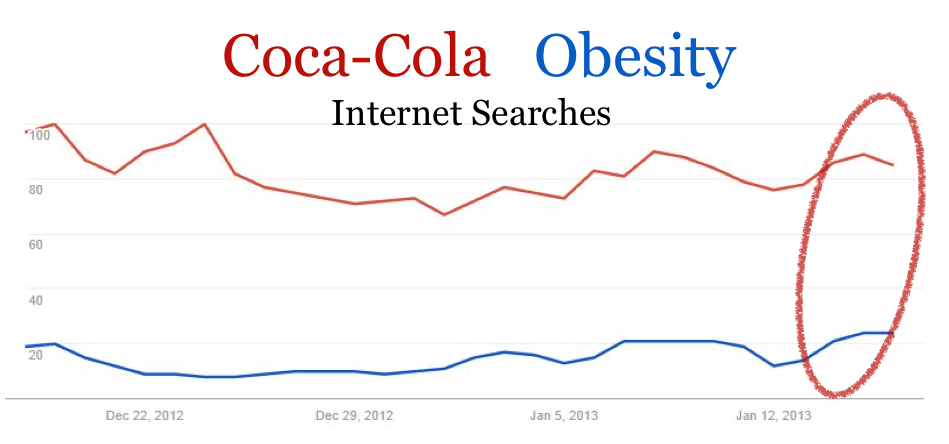
Figure 1 - Google Trends data for Coca-Cola and Obesity

Figure 1 – Google Trends data for Coca-Cola and Obesity

                The campaign is strategic not just in its message but its placement.  The ad aired on the evening cable news networks of MSNBC, Fox, and CNN.  Not only would the ad likely be seen by government decision makers and regulators, it knew the networks would also view it as a news story thereby exponentially extending the message’s reach.  The resulting attention created instant growth in internet searches for both Coke and obesity (Figure 1), and according to Alexa visits to Coke’s website grew 40-percent.


                 In its second campaign this week, Coke takes an equally strategic tract but with a different goal.   This time coke gets back to its by roots and core brand promise of sharing happiness.   But in this whimsical spot by Oglivy Brazil, the sharing is of random acts of kindness.  Strategically targeted toward ethnic urban dwellers, Coke extends its already powerful brand by encouraging people to share something other than a Coke. 

                 Two examples of how strong brands can use their equity and loyalty to not only create conversations, but to affect attitudes and behaviors that reinforce the brand’s core values.

The Best Ads of 2012 – Huffing and Puffing Brand “Magic”

29 Dec
Clint Eastwood emerging from the shadows in Chrysler's "Halftime in America."

Clint Eastwood emerging from the shadows in Chrysler’s “Halftime in America,” one of 2012’s best U.S. ads.

     The year that was in advertising may have given us Halftime in America,” but it also produced agencies working overtime everywhere else.  Once again, some of the most creative and strategic television campaigns were produced for foreign brands.  Together, they form a chorus signing to the power of using higher level values, metaphors, and emotion to sell a brand promise to the viewer.  

     There’s no better place to start than with Three Little Pigs.   The creative genius of BBH in London takes a childhood nursery rhyme and makes it real in an effort to sell newspapers.  Or, does it?  The strategic idea is that viewers, readers, and social media mavens can create the discussions that drive the news and its coverage—only at The Guardian. 

       It’s not just the framed Wolf doing the puffing.  Grandpa does it, too.  The McCann agency in Oslo, Norway climbed the value ladder to return us to another time when flying was magic.   Its brilliant message is that Norway’s Wideroe is the airline of wonder and freedom, not baggage fees and delays.  It begs the viewer to come to the airline where flying is magic again.

      Another one of 2012’s best is the beer ad you’ll never see in America.  In this case the Aussies take a tired American cliché and turn it on its head.  The folks at Carlton Draught and their agency Clemenger BBDO Melbourne cleverly mock every Hollywood cops & robbers’ schema ever made in an ad they call Beer Chase.

      The chase scene is not only fun to watch but is exceptionally strategic. Its target audience is beer drinking men who prefer their suds from a tap instead of a can.  It even has a unique selling proposition: beer so good you don’t want to spill a drop.

      Finally, 2012 gave us an ad that demonstrates the power of emotion.  Wiedner + Kennedy in Portland produced a powerful message for Proctor & Gamble’s foreign markets that doesn’t sell soap as much as it sells an idea:  we are our mothers.   Their commercial called Best Job is a clear demonstration of the balance theory concept that advertising savant John Eighmey calls “likability of the ad.”    If you like the ad, you’ll like the brand.  In this powerful message, athletes and moms everywhere are the winners.  P & G, too.

     Four ads, four boldly creative messages.  Can’t wait to see what’s ahead for 2013.   Now, where’s my bowl of popcorn?               

The Best Beer Ad You Wont See in America

15 Sep

            Leave it to the Aussies to take an American cliché and turn it on its head.   

            The folks at Carlton Draught and their ad agency Clemenger BBDO Melbourne have cleverly mocked every Hollywood cops & robbers schema in an ad they call “Beer Chase.”  

            The chase scene is not only fun to watch but is exceptionally strategic.  Its target audience is social media savvy urban men who are beer drinkers and prefer their suds from a tap instead of a can.  It even has a unique selling proposition: beer so good you don’t want to spill a drop. 

            Part of Carlton’s brand is its reputation for quirky ad campaigns that its loyalists have come to expect.  In this age of social media, “Beer Chase” hits that brand sweet spot by encouraging fans and non-fans alike to virally share the ad among friends. 

            When was the last time we saw an American brewer with an ad like this?           

            It’s Brilliant!  Oh wait… that’s been taken.

Coca-Cola & Facebook. How Coke Writes the Book on Sharing—Again.

5 Sep

Facebook post by Coca-Cola

Coca-Cola didn’t become the world’s most recognized brand by keeping the cap on the bottle.

The not-so-secret success to Coke has always been its laser beam focus creating happiness that tastes better when it’s shared.

It should therefore come as no surprise that Coca-Cola has popped the cap on another major branding success—50 Million Facebook “Likes.”   In the process, Coca-Cola offers a blueprint in how to engage brand evangelists in social media space.

Facebook post by Coca-Cola

In every respect, Facebook is the perfect match for Coca-Cola.   Coke is a brand whose core identity is about sharing and it has masterfully positioned the brand on a social platform built for sharing.  But the key to Coke’s success on Facebook is how it engages its followers—always with a question or an invitation for people to share their own ideas.

To celebrate its 50 millionth “Like” Coca-Cola has created a special Facebook app inviting followers to share their thoughts on how to improve the world.   Coke promises to select one idea early next year and contribute to the cause.

The lesson for other brands on Facebook is that the platform is not a place for corporate news or industrial relations.  It’s a space where organizations can showcase their core values and let followers engage in what it means to them.

Now… where’s my bottle cap opener? 

Badge of Honor—The Police Website That Will ARREST YOUR MIND.

26 Aug

The Milwaukee Police Department’s new website milwaukeepolicenews.com

That rumble just heard in the Midwest was Milwaukee’s former Police Chief Harold Brier turning in his grave.

The tough-as-nails chief ruled Cream City’s industrial streets for 20 years with shoe leather and shear force.  But now one of his successors has added a decidedly different weapon to his belt, one that is more strategic, social, and dare I say it—entertaining.

The result just may send that rumble through cyberspace as well.

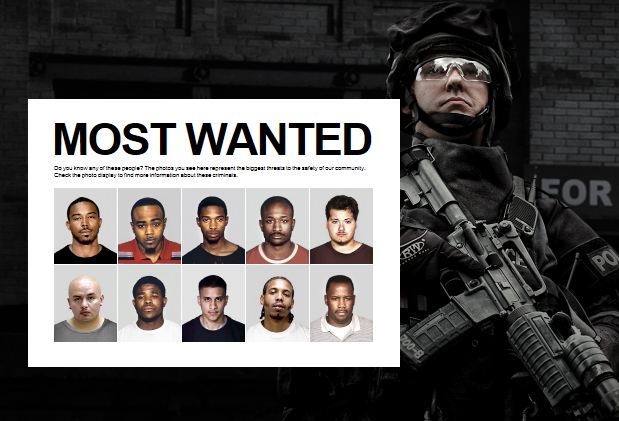
Milwaukee’s Most Wanted on milwaukeepolicenews.com

The new website just rolled out by Milwaukee Police redefines government communication.  The sleek design, easy navigation and bold 3D visual imagry effectively brands the department as crime fighters and invites the public to get involved through smart interactive content.

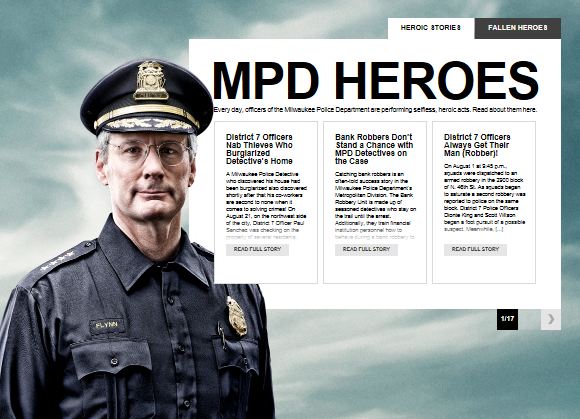
Scroll down the screen and the site takes the user seamlessly through calendar-based crime reports, statistics, Milwaukee’s Most Wanted, and sharable profiles of everyday heroes.

The heroes page on milwaukeepolicenews.com

According to AdAge, the website was the brain child of current Chief Edward Flynn who enlisted ad agency Cramer-Krasselt to help them create a website that people would want to visit.  The goal is to enlist citizens to “Be a Force” in their own neighborhoods by empowering them with easily accessible information about what’s happening along their own block.

The old chief in an older time would never have conceived of such a strategic communication weapon as this.  It begs every organization—government or not—to assess how many old chiefs it has stuck in the past.

Hail to the new chief.