The Making of a Meme Called “Batkid”

16 Nov

Batkid It's not who I am

     It was a week of tragedy and insecurity.   A typhoon named Haiyan tested our faith in humanity and a fledgling American healthcare law questioned our trust in government.  The world needed a super-hero.  It got one in a five year old masked boy.

     His real name is Miles Scott.  In his short life he’s proven himself brave enough to battle leukemia, so why not battle injustice too.  His request to the Make-A-Wish Foundation of San Francisco was simple: to become a caped crusader. 
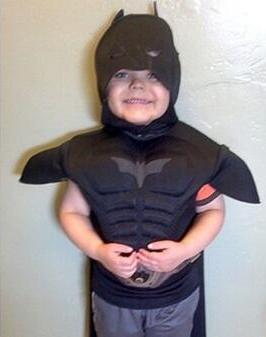
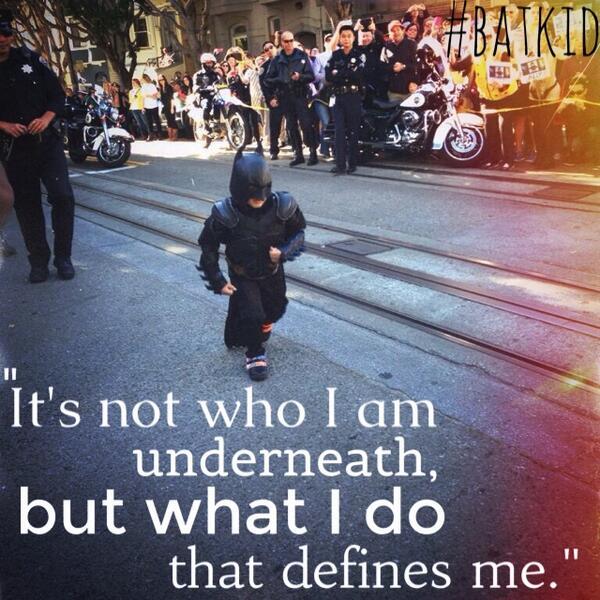
Figure 1 - Miles Scott, A.K.A., Batkid.

Figure 1 – Miles Scott, A.K.A. Batkid.

     What happened next is a case study in contagion,  social media memes, and a collective desire for something positive.  All it took was a picture and a narrative.  It was as simple and accessible as a bat symbol in the sky.

     In this narrative, social psychologist Jaap van Genneken, Ph.D., would suggest that young Miles became what he calls a strong replicator.  Such replicators evoke an instant and powerful emotion that causes people to take notice and share.  An image plays an essential role in creating this contagion—the strongest replicators are child-like images.   But in order for the image to have an effect, it must be set in an unexpected way—a surprise.  The image of Miles in his bat costume was precisely the trigger. (Figure 1)  Colliding the image of an innocent child with that of a super-hero gladiator created a powerful set of metaphors that were hard to ignore. 
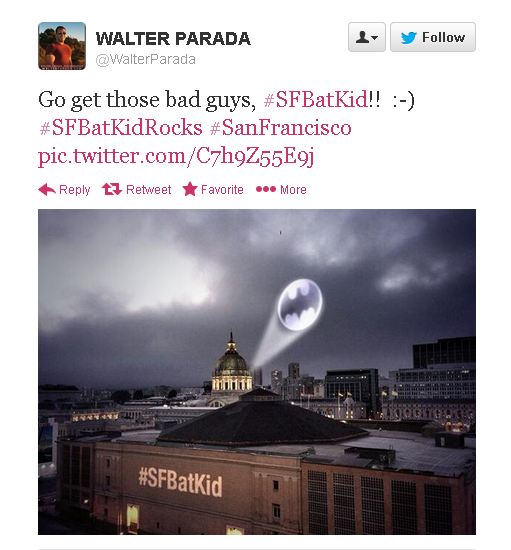
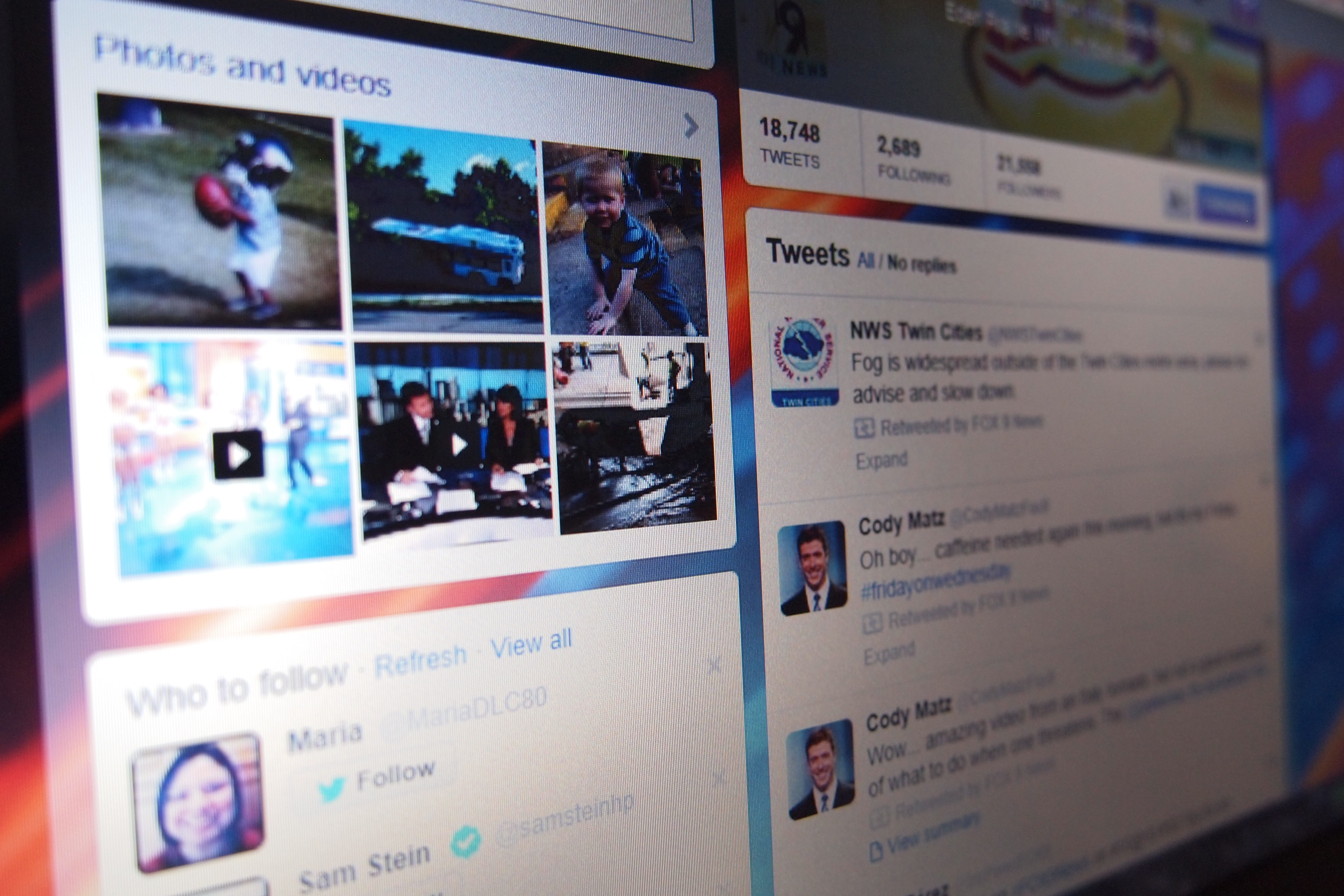
Figure 2 - #Batkid Tweet on November 15, 2013.

Figure 2 – #Batkid Tweet on November 15, 2013.

     The image serves as a signal to the viewer that there is more to the narrative.  It’s actually the beginning of a critical cognitive cycle that forms a negative association with cancer and positive associations with the child, and the efforts to grant his wish of becoming a super-hero for a day.  When viewers saw the image on social media and hit the send button, a meme was born–Batkid. 

     But when 13,000 people showed up on the streets of San Francisco to participate in the narrative of helping Batkid capture the Riddler and Penguin, the meme spread even faster with the speed of Instagram and Twitter. (Figure 2)   A virtual display by Trendsmap shows how the meme spread world-wide with some of the heaviest Twitter traffic in Europe. (Figure 3) 
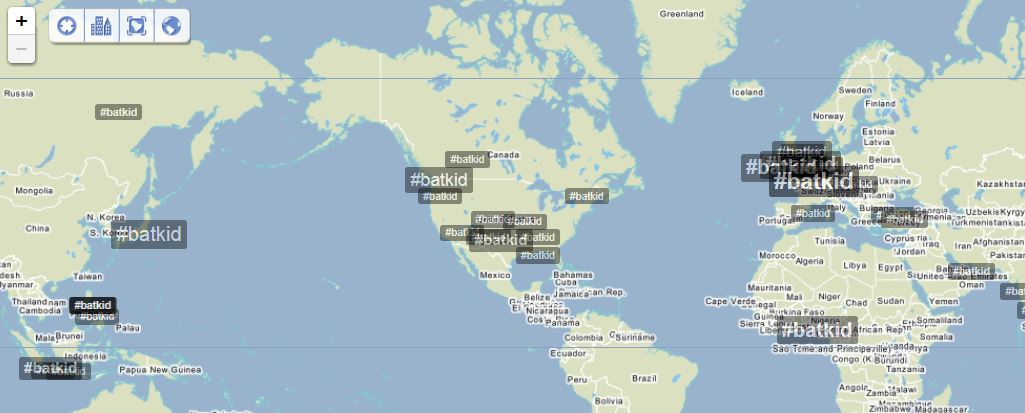
Figure 3 - Global Trendsmap of #Batkid.

Figure 3 – Global Trendsmap of #Batkid.

     The meme even reached the pinnacles of power.  The U.S. Department of Justice issued an indictment against the Riddler and Penguin. (See attachment below)  And by the end of the day, Batkid got the world’s ultimate legitimacy in a Vine message from President Obama. 


     In many ways it was the perfect meme at the perfect time.  Like Captain Chesley Sullenberger’s heroic landing of Flight 1549 in the Hudson River at the peak of the Great Recession in 2009, the world needed something to celebrate.   The same is true now.  Thousands of innocent human beings perished this week.  All were innocent souls.   It took another innocent soul to remind us of our frailties—and of our capacity for good. 

     That’s why when the Bat Phone rang, thousands answered.

It’s Aaron – Packers’ Aaron Rodgers’ Strategic Use of Video to Extend Personal Brand

8 Nov


   On the football field, no one connects with receivers better than the Green Bay Packers’ Aaron Rodgers.  Just ask the Minnesota Vikings.  But outside of Lambeau Field, Rogers has launched a campaign to connect with everyday people.

    It’s simply called, “It’s Aaron.”  

Packers quarterback Aaron Rogers talking with a Antwan from Milwaukee's Operation Dream

Packers quarterback Aaron Rodgers talking with a Antwan from Milwaukee’s Operation Dream

    The heart of the campaign uses TV commercials and an accompanying website to funnel viewers into a series of online videos profiling three non-profit organizations and the young lives they impact.   The schema of each video has Rodgers making a surprise appearance with some of these children and giving his gift of time.  By doing so, Rodgers brings attention to a deserving child and a worthy cause while at the same time exposing another side of himself to a new audience outside of football.   By choosing video as a medium, it creates an accessible and lasting connection to viewers based upon its level of realism and emotion.

   The videos are not only strategic, the campaign itself is smart and has substantial groundings in communication research.  Carl Hovland in his well documented Yale studies in the early 1950’s established how source effects have powerful persuasive influences.  Rogers’s celebrity status makes him a credible source to extend awareness and legitimacy to the non-profits he’s giving exposure to.  

   But the persuasive strength of the videos utilizes more than just source effects.  It also forces the viewer form new attitudes by reconciling their own beliefs and expectations about the kids and the non-profits Rodgers is associating himself with.  It’s an extremely subtle but effective process that psychologist Martin Fishbein called Expectancy-Value Model.   Using Rodgers’ IndependenceFirst video as an example, the story line creates a EVM attitude conversion. [Figure 1] 

Figure 1

Figure 1

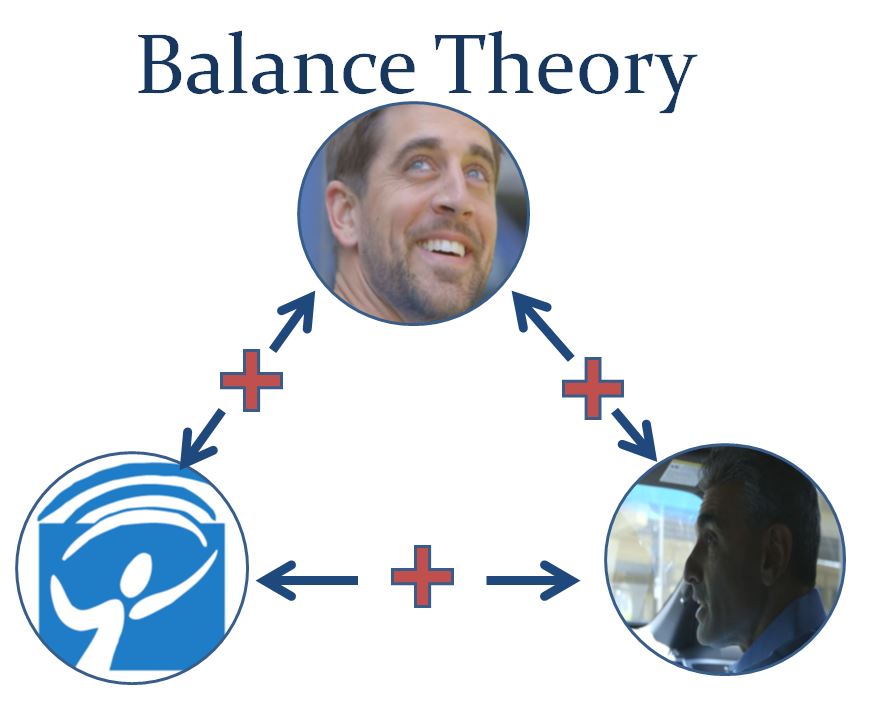
    The “It’s Aaron” campaign is a joint venture between Rodgers and Wisconsin personal injury attorney David Gruber.   By associating himself with Rodgers, Gruber too benefits from the source effects of Rogers’ celebrity status.   By combining their efforts, the two professionals benefit from a balance theory approach in associating themselves with positive messages about positive organizations. [Figure 2]  In the process, Rodgers and Gruber have created the strategic means of extending both of their personal brands to enable audiences to get to know them on a different level. 

Figure 2

Figure 2

    While based in theory, the videos themselves do tend to lack in execution.  It’s questionable whether the videos’ scattered focus and creative production can sustain a viewer’s attention for more than five minutes, especially as more consumers are accessing such content on mobile platforms where attention spans are shorter.

   But it’s clearly a campaign that didn’t happen by accident.  It’s more than just a simple series of videos.  The title may be “It’s Aaron,” but it could also be called “It’s Smart.”

#WolvesAreComing – How FSN’s New Timberwolves Marketing Campaign Came From Students at the U of Minnesota

1 Nov


    Big ideas don’t necessarily come from big agencies.  They come from wherever inspiration lies.  In the case of the new Minnesota Timberwolves image campaign, the big ideas came from a group of students at the University of Minnesota’s Strategic Communication Program.

    “Our idea was to kind to reach people like us,” said Kelsey Batkiewicz, one of the students who worked on the campaign.

    Batkiewicz’s class of nearly two dozen students divided into three teams and worked on competing strategies and pitches on the Timberwolves marketing campaign for Fox Sports North.  

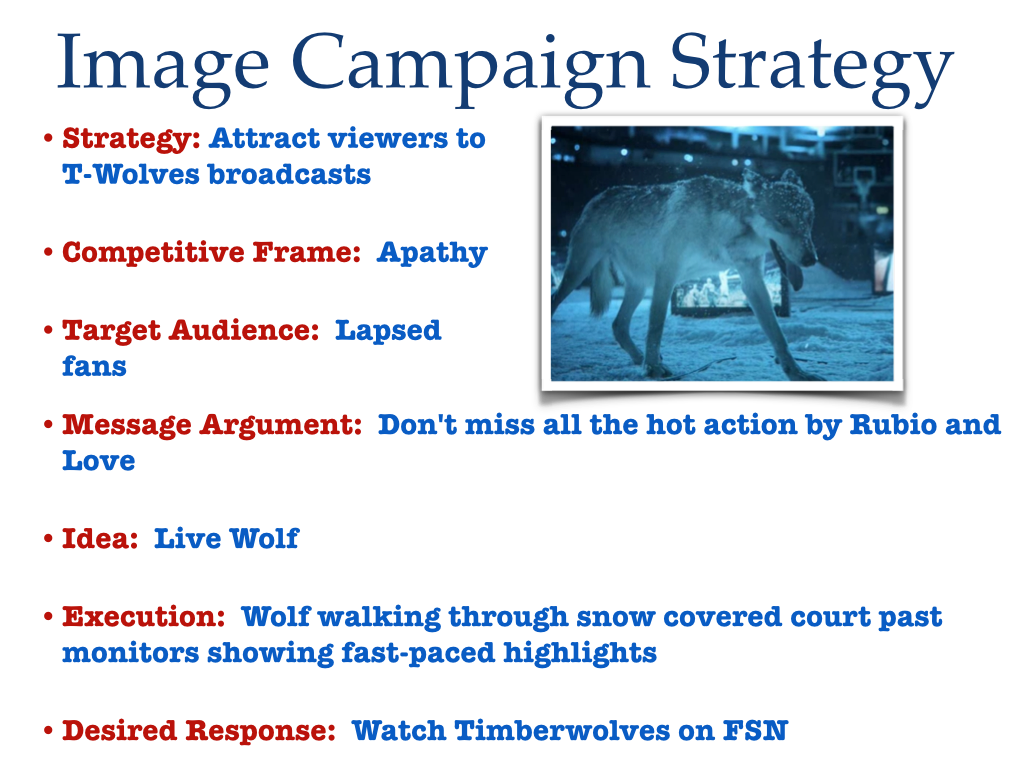
    The creative concept of the thirty-second image spot she said was to have a live wolf  walking through a snow covered basketball court and past TV monitors containing fast paced imagery of Timberwolves highlights on FSN.  [Figure 1]    

Timberwolves Background 4

Figure 1 – Image from FSN Timberwolves promo

     “Well, the snow was actually made out of paper, which is really funny.  It looks so real in the commercial,” said Batkiewicz .   “And so it’s really that contrast from the cold winter to the awesomeness that’s inside the target center and what goes on during those games.”

    The promotional video as conceived by Batkiewicz’s team and produced by FSN uses no announcer’s track, only metaphorical imagery designed to make the viewer elaborate about  the fast-paced excitement of watching stars Ricky Rubio and Kevin Love play on television.  The communication strategy peels off the screen. [Figure 2] 

Figure 2

Figure 2

    Additionally, the students collaborated with FSN on creating a social media campaign and hashtags, one of which is #WolvesAreComing, to help create a social community for the buildup of the new season.

    The competition is a collegiate outreach effort of Fox Sports called the Fox  Creative University.   It collaborates with major universities in each of the markets where Fox Sports has a regional cable network to give students an opportunity to contribute to a real-world marketing campaign.  

U of M graduate Kelsey Batkiewicz and her classmates with the FSN Timberwolves broadcast team. (Courtesy: Dr. John Eighmey)

U of M graduate Kelsey Batkiewicz (first row, second from left) and her classmates with Tom Hanneman and the FSN Timberwolves broadcast team. (Courtesy: Dr. John Eighmey)

    “Everybody is trying to figure out what’s the future, what’s going to trend with the younger audience,” said Mike Dimond, Fox Sports North Senior Vice President and General Manager.  “It’s really an opportunity for us to learn as much as it is for them to learn.”  

    The students’ professor, Dr. John Eighmey said there was really no secret to their success.  “I just taught them the concepts, and they created their own ideas and ran with them,” said Eighmey.

    Dimond said his team at FSN was so impressed with the students’ input on the Timberwolves campaign that they’ve gone back to the U of M and Eighmey’s current strategic communication students to have them design the media campaign for the 2015 Hockey Day in Minnesota.

    “I don’t think I could have had any better experience during my time at the U of M,” said Batkiewicz.    “It was hands down the best.”

#    #    # 

Disclosure:  Fox Television Stations, where I am currently employed, along with Fox Sport North are both divisions of 21st Century Fox.  Additionally, I hold a Master of Arts degree in strategic communication from the U of Minnesota School of Journalism and Mass Communication, the same school attended by Ms. Batkiewicz.   I was neither paid nor encouraged by any of these organizations to write this blog post.

“Giving is the Best Communication” — The Year’s Best Ad From a Brand You’ve Never Heard of

29 Sep


   One of the most viral and powerful advertisements this fall doesn’t sell a product.  Instead, it sells an idea.  And in the process, it brilliantly illustrates the power of brand extension with a smart and strategic piece of communication.

    It comes from a cell phone company in Thailand named Truemove-H.  The three minute film spans a 30-year story, one that begins with an act of sympathy and kindness and ends with a surprise act of gratitude.   The film contains no product placement, no overt sales pitch, only the powerful idea of the value of paying life forward.  The message from Truemove-H:  “Giving is the best communication.” 

   Proof of the Ad’s power lies in the fact that it just surpassed 9-million YouTube views in one week. 

"Giving" by Thailand's Truemove H phone service

“Giving” by Thailand’s Truemove H phone service

   As a piece of communication, the film is a daring and brilliantly strategic tool to build brand salience in a hyper-competitive category. 

    In this case it effectively uses Appraisal Theory to connect emotion and mood to influence a specific action.   The film makes the viewer cognitively aware of how giving can have its own unexpected reward. (Figure 1)  The deep emotional response of empathy—even guilt—leads to the formation of new attitudes about how giving can impact people’s lives.   The desired action is to cause people to give more of themselves.   In this case, Truemove-H’s goal is to get people to give by calling more often.   But just as important, it seals an emotionally positive connection to the brand—a connection likely to be top of mind the next time a Thai consumer searches for new phone service. 

Figure 1 - Applying Appraisal Theory to Truemove-H's "Giving" advertisement.

Figure 1 – Applying Appraisal Theory to Truemove-H’s “Giving” advertisement.

    It takes a powerful brand to communicate with this kind of boldness.  Coca-Cola is one of the few North American brands willing to leverage its brand values to encourage social change.  One of its best recent examples is a campaign that originated in South America to encourage random acts of kindness.

    In a recent post, I wrote how computer chip maker Intel used Appraisal Theory to force people to make an emotional conversion to empower young women across the globe.  Like Truemove-H, the campaign did not feature a single product placement or sales pitch.

   Together they are three examples of strategically smart communication campaigns that entice the viewer to make a powerful emotional response to a brand goal. 

    Gratefully, in each case no operators are standing by.

Coach Jerry Kill’s Seizure and how the Gophers can Correct a Crisis Communication Failure

24 Sep


    Football coaches universally are a different breed.  Never ones to look back, they’re always focused on the next game with the zeal of a running back focused on the goal line.     

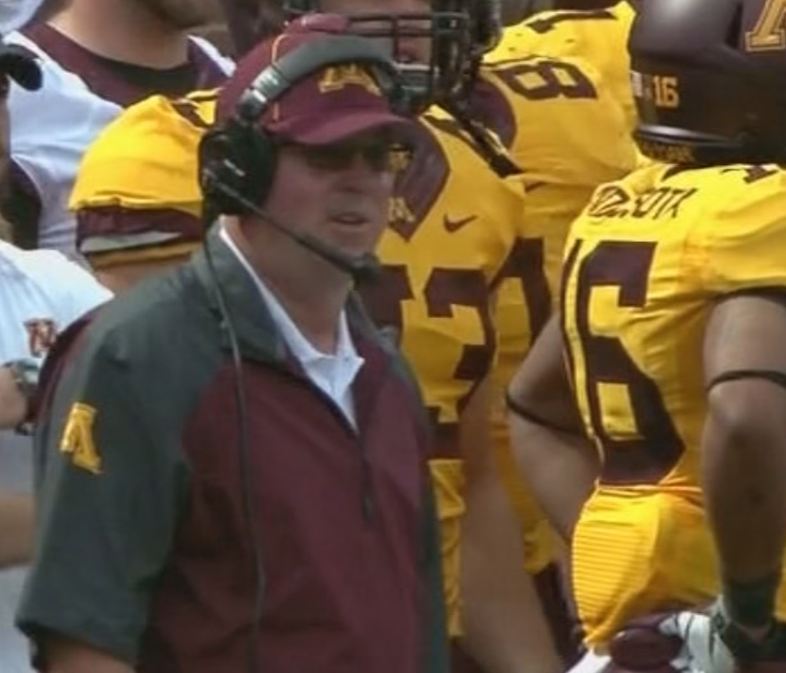
    However, such laser beam focus cost Minnesota Gophers’ head football coach Jerry Kill a golden opportunity to control and contain a growing contagion of doubt after his latest epileptic seizure on the sidelines at TCF Bank Stadium.      

Minnesota Football Coach Jerry Kill

Minnesota Football Coach Jerry Kill

    The seizure during halftime of the game against Western Illinois was his fourth since becoming the Gophers’ head coach in 2010.  During that time Coach Kill’s struggle with epilepsy has been well documented.  But this latest episode produced a sudden spark of dissent from StarTribune sports columnist Jim Souhan that was fanned into flames by sports talk radio.     

    The silence from the University of Minnesota was deafening.  The 72 hours following the sideline seizure produced a classic case study in crisis communication mismanagement.      

    Among the failures:

  • Athletic Director Norwood Teague waiting two days to make a statement supporting his coach.
  • Jerry Kill refusing to talk about the episode once he returned to work. (see video at the top of this article)
  • The University not publically challenging the dissent against Coach Kill.

     But the biggest failure of all was the complete lack of a coherent communications strategy.  Call it a communications seizure.   Given Coach Kill’s recent medical history, it’s probable he may suffer another attack.  If and when it does happen, the University can ill afford to have another breakdown.    

    The athletic department and the football program have a minimum of four audiences they need to address: The general public, ticket holders and boosters, the news media, and Minnesotans afflicted with epilepsy.

     Here’s what a reasonable and actionable strategic communications plan would like.


    This is just a start.  There are other important audiences that need addressing in this crisis including the football players, recruits, and even the entire Athletics Department.      

    For a football program that goes to great lengths to game the competition, it clearly has no game plan for the PR challenge of Coach Kill’s epilepsy.  I encourage them to steal this play book.

Student support for Coach Jerry Kill at the Sept. 21st, 2013 home game. (Courtesy @Gophersports Twitter)

Student support for Coach Jerry Kill at the Sept. 21st, 2013 home game. (Courtesy @Gophersports Twitter)

Have a Coke, Dinner, and a Tweet — Coca-Cola’s Live Integration of Advertising and Social Media.

10 Sep

     Across Europe, Coca- Cola is asking people to share more than just a Coke.  In doing so it has created an ingenious campaign that not just extends its brand value but has also increased social engagement.

     Key to the campaign is Coca-Cola popping the bottle cap on the insight that in Romania, 60% of people don’t eat meals together.  Instead, they eat alone in front of the TV.   With the help of ad agency MRM Worldwide-Romania, Coke created a series of TV ads around the theme of “Let’s Eat Together.”  Central to the ads was the agency and Romania’s Pro TV inserting live Tweets into the commercials, many of them invitations for people to come over for dinner. 

    In a matter of weeks, hundreds of live Tweets aired in the commercials and by Coca-Cola’s account the campaign earned more than a million social media impressions. 

     The campaign has expanded now to Italy where celebrity chefs created meals for total strangers all with the goal of getting people to sit down together to share a meal.

http://www.youtube.com/watch?v=Sh2v1XfQ-SE

     Of course, the strategy of the campaign is to boost sales by increasing rate of use.  Coca-Cola has been exceptionally effective getting consumers to associate Coke with happiness.  In this campaign, Coca-Cola is encouraging people to not just share a Coke during a pleasurable moment, but during dinner.  In the process it has also encouraged them to share the experience on social media. 

     It’s a powerful brand extension executed wonderfully by a powerful brand.   Who’s hungry?

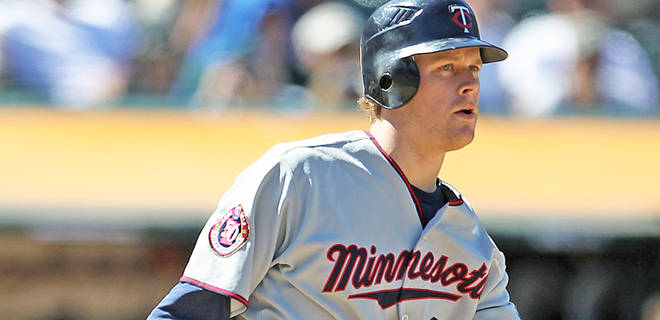
Justin Morneau’s Farewell—A Crisis Communication Teaching Tool

2 Sep

Justin Morneau 1     In a game of hardball, Justin Morneau was just pulled from the lineup.  After a 14 year career with the Minnesota Twins organization, the former MVP and fan favorite has been traded to the Pittsburgh Pirates.

     It’s a move that reminds fans that baseball is a business. 

     But Morneau is smart enough to realize he is more than a consequence of that business, he is also a brand unto himself.  And any time there is an event that makes a brand’s enthusiasts (fans) question their loyalty and support or threatens the relationship, there is a potential crisis.   Morneau’s response serves as a simple blueprint for executives, brand managers and communicators everywhere in how to respond. 

      In a simple 223 word letter to fans printed in the Minneapolis StarTribune and the St. Paul Pioneer Press, Morneau offers a three-step model:

  1.  Gratitude: Appreciation for the opportunity and loyalty.
  2.  Contrition:  Apology for not achieving more.
  3.  Praise:  Love for the people and the relationships with them.

      Here’s his letter:  Justin Morneau 2

First of all, I would like to say thank you to all of the Twins fans. I would also like to thank the Minnesota Twins organization for giving me a chance to realize my dream of being a Major League baseball player. I was drafted by the Minnesota Twins in 1999. Since that day I have been very proud and fortunate to call myself a Minnesota Twin.

I was a wide-eyed 22 year kid when I made my big league debut in 2003. I received a warm welcome that day and have felt welcomed ever since. I feel like I was a kid when I first got here, but was able to grow up in this organization and become someone my friends and family could be proud of. My wife, kids and family are Minnesotans and this has become my second home. Minnesotans are some of the kindest, most genuine people I have ever met.

I am sorry that during my time here we weren’t able to achieve our ultimate goal of winning the World Series, but I will forever carry many wonderful memories of my time here. I will always cherish every day I was lucky enough to play in front of you fans in a Minnesota uniform.

Thank you for all of your support throughout the years.

Your friend, Justin Morneau

          Classy.   Wouldn’t it be great if athletes and communicators in every league would steal this page from Morneau’s play book?

A Diabetic’s Guide to Eating at the State Fair!

30 Aug

Timothy Blotz's avatarStand by...


OK, it’s once again time for the annual trek to the 320 acres of fried food on a stick we call the Minnesota State Fair.

For most hearty Minnesotans, a visit to the fair is the one day where fun replaces common sense, where a balanced diet is as foreign as a balanced budget is to congress.

At the extreme risk of being “That Guy,” the fair poses a challenge for folks who really DO have to watch their diet.  As a parent of two children with type-1 diabetes, a day at the fair is a constant guessing game of how to insulin dose and carb-cover.  Get it wrong, and blood sugars go through the roof and the girls feel sick for the next day.  It’s even worse for cardiac patients who have to keep a keen eye on their fat and cholesterol.

The dietitians at Park Nicollet’s International…

View original post 282 more words

Paul Bunyan and MNsure – The Strategy behind Healthcare Reform’s Odd Couple

20 Aug


    Every good advertising campaign needs a novel idea and a strategy.  The new ads for the State of Minnesota’s emerging healthcare exchange called MNsure have both.

    Minneapolis-based ad agency BBDO Proximity knew that to make Minnesotans aware of the changing face of healthcare coverage any ad campaign needed a face of its own to stand out.  The face they found stands 10 feet tall, wears a flannel shirt and carries an axe.  Oh, and his best friend is a blue ox named Babe.  Both are immortalized in Minnesota folk lore and sculpted in repose at one of the state’s most photographed sites in Bemidji.   

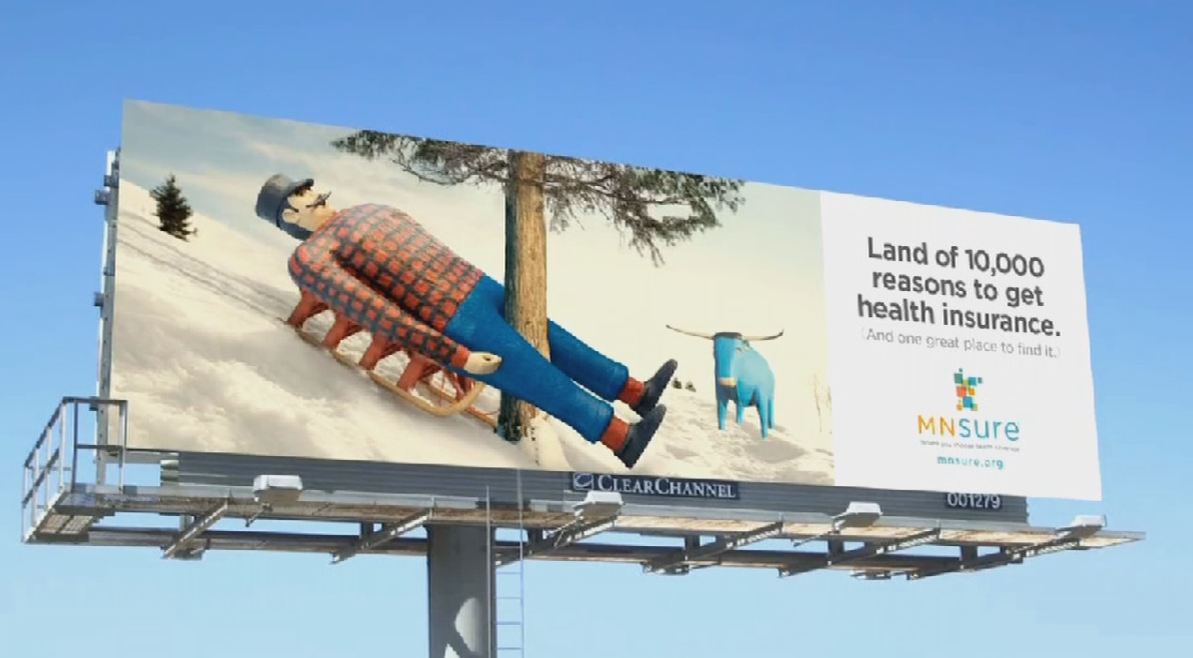
MNsure ad featuring Paul Bunyan water skiing

MNsure ad featuring Paul Bunyan water skiing

    For BBDO’s creative team, it was the equivalent of cutting down a tree with one swing of an axe.    “First of all, they’re very recognizable,” said BBDO Proximity’s Executive Creative Director Brian Kroening. 

    “I think most Minnesotans at one time or another have seen Paul and Babe.  And we thought it would be very interesting if our idea would put them to work on behalf of all Minnesotans,” said Kroening. 

Figure 1

Figure 1

    The genius behind the campaign is making Paul as human as possible.  The opening ad in the campaign features Paul attempting to water ski on Lake Waconia.  The results are not good.  Therein lies the chief message argument—not only is Minnesota the land of ten thousand lakes, it’s also the land of ten thousand reasons to have health insurance.  The highly strategic message peels as easily as bark form a birch tree. (Figure 1)  The campaign will follow with more ads putting Paul & Babe in familiar Minnesota schemas that include a gym, sledding, even ice fishing. 

Figure 2

Figure 2

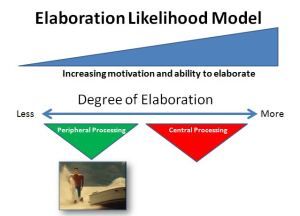
     There are several psychological communication theories to suggest the campaign is positioned to succeed with consumers.  Foremost among them is Richard Petty’s Elaboration Likelihood Model.  The symbolic visual metaphor of Paul Bunyan on water skis is easy for the viewer to peripherally process and elaborate about placing himself in the same role.  The more the viewer thinks about the symbolic tie, the more he is likely to consider the message argument that health insurance is important and MNsure is a place to shop for it. (Figure 2)

     Extensive new advertising research by Werner Reinartz and Peter Saffert from the University of Cologne suggests that using elaborative metaphors is the most effective tool in successful messaging.   Writing for the Harvard Business Review, Reinartz and Saffert show how advertisements that combine elaboration with originality are the most effective in achieving strategic objectives.

     Of course, there’s also humor.   

     “Well, our goal is to get awareness first and foremost,” said Kroening.

     “We think humor is going to stand out more than anything, and we thing people are going to want to see the version over and over again and we hope that they act on it.  That’s our goal, the action.  We love to change behavior for our clients.”  

MNsure ad featuring Paul Bunyan in a doctor's office

MNsure ad featuring Paul Bunyan in a doctor’s office

     It’s a big goal.  MNsure Executive Director April Todd-Malmlov says the campaign is targeting 25-percent of Minnesotans, or 1.3 million people who either don’t have health insurance, or want a better deal on the coverage they already have.  The MNsure marketplace goes online October 1st for health care coverage starting January 1, 2014.   Ultimately, MNsure and BBDO Proximity will measure success by how many people sign up.

    “We wanted this to be a noticeable, simple message that there is hope for all Minnesotans,” said Kroening. “We wanted to break through and do it with a wink, but there is a very serious message and an action on the other end of it.”

    Can’t wait to see Paul do the Bush Lake Ski Jump.

Paul Bunyan Tree

Social Media Uses & Gratifications and the Lessons for Local TV News

31 Jul

 OLYMPUS DIGITAL CAMERA    Call it a case of consumer preference mirroring theory.   Or in this instance, a split-screen view on the modern screen-splitting media consumer. 

      The latest research is out on how social media consumers engage with local legacy media outlets and it offers an instructive lesson in well-established communication theory and how local TV stations can use it to their advantage.

      The research conducted by TVB in collaboration with Colligent gives important insights into what they call “Cultural Currency.”  The study analyzed 167 million Facebook and Twitter users and how they engaged with local TV stations, newspapers and radio stations throughout the United States.  The results show local television stations dominate with consumers wanting to share video and pictures in addition to those who frequently comment on Facebook and maintain conversations on Twitter. (Figure 1)  Newspapers lead with those who retweet posts.   Local radio stations attract the most frequent Facebook “likes” and multiple comments.  

Figure 1

Figure 1

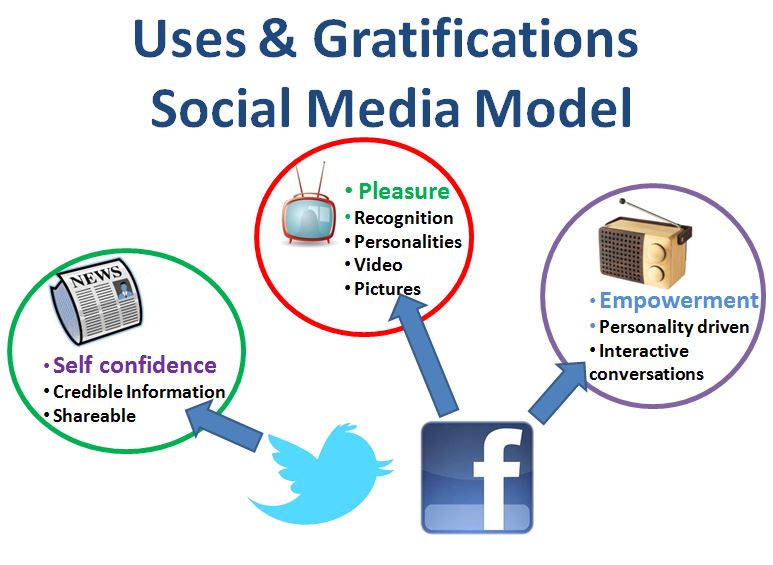
      Nearly all of these results are predictive based upon communication Uses and Gratifications Theory.  In its simplest form, U&G holds that people use certain media based upon their psychological needs.  Elihu Katz developed a U&G typology where people read books to create a sense of inner self, television and film provide pleasure, whereas newspapers provide self confidence and stability. 

      Likewise, Louis Leung has found a significant connection to social media by people who feel the need for recognition and empowerment.  Leung’s research reveals that the more a user’s recognition needs are met through social media, the more empowered they feel and therefore are more likely to contribute content and share content with their friends. 

Figure 2 - Survey of 1100 KMSP-TV viewers, January 2011

Figure 2 – Survey of 1100 KMSP-TV viewers, January 2011

      My own research of Fox 9 News viewers in Minneapolis found very similar social media motivations that are consistent with U&G theory.  A survey of 1100 viewers indicated a strong desire to connect and contribute to conversations generated by Fox 9 newscasts and its personalities. (Figure 2)  In fact, nearly 4 out of every 5 viewers expressed the desire to interact with and contribute to Fox 9 through social media.  Likewise, 66% wanted personal insights from reporters and on-air talent on what goes on behind the headlines.   Perhaps not surprisingly, 60% indicated they wanted to get to know more about the on-air personalities more than what they see on television.  But the most tangible finding revealed 70% of viewers would likely watch a Fox 9 newscast based upon an intriguing social media post. 

      The research offered three major insights on what local television viewers want in social media:

1.       To become friends!

2.       Conversations and the recognition that comes through contributing comments, pictures and video.

3.       Unique and exclusive content.

      Combine these insights with the new user-based research from TVB and we can create a new U&G model to illustrate predictive social media behavior. (Figure 3)   With social media (Facebook & Twitter) at the center of the model, one sees the strong U&G ties to individual local media channels.   

Figure 3

Figure 3

      Television, with its strengths in providing pleasure, engaging news personalities, and credible images is a natural draw for Facebook users who seek recognition through contributing pictures and video.  Additionally, there is a lure to connect with the personalities who come into their living rooms on a daily basis.  Connecting with them creates a sense of fulfillment and self-importance.

      Newspapers, with their vast journalistic resources become a hub of credible up-to-date information.   The immediacy of this information aligns perfectly with Twitter where consumers turn to learn about events happening at that very moment.  Retweeting that information from a newspaper tells the consumer’s followers and friends that they are “in the know” and provides the sense self confidence that they are in tune with what’s happening in the world around them.

      The accessibility of local radio, especially stations with personality-driven talk formats and multiple interactive topics is a natural draw for multiple Facebook likes and comments, again based upon the need for recognition and self-importance.

       The model offers lessons, especially for local television stations.   As people look for pleasure, connections, and recognition, U&G theory holds that television stations are in a unique position to provide it through social media.  The latest research from TVB supports it.