The Best Ads of 2012 – Huffing and Puffing Brand “Magic”

29 Dec
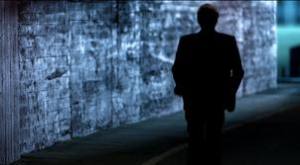
Clint Eastwood emerging from the shadows in Chrysler's "Halftime in America."

Clint Eastwood emerging from the shadows in Chrysler’s “Halftime in America,” one of 2012’s best U.S. ads.

     The year that was in advertising may have given us Halftime in America,” but it also produced agencies working overtime everywhere else.  Once again, some of the most creative and strategic television campaigns were produced for foreign brands.  Together, they form a chorus signing to the power of using higher level values, metaphors, and emotion to sell a brand promise to the viewer.  

     There’s no better place to start than with Three Little Pigs.   The creative genius of BBH in London takes a childhood nursery rhyme and makes it real in an effort to sell newspapers.  Or, does it?  The strategic idea is that viewers, readers, and social media mavens can create the discussions that drive the news and its coverage—only at The Guardian. 

       It’s not just the framed Wolf doing the puffing.  Grandpa does it, too.  The McCann agency in Oslo, Norway climbed the value ladder to return us to another time when flying was magic.   Its brilliant message is that Norway’s Wideroe is the airline of wonder and freedom, not baggage fees and delays.  It begs the viewer to come to the airline where flying is magic again.

      Another one of 2012’s best is the beer ad you’ll never see in America.  In this case the Aussies take a tired American cliché and turn it on its head.  The folks at Carlton Draught and their agency Clemenger BBDO Melbourne cleverly mock every Hollywood cops & robbers’ schema ever made in an ad they call Beer Chase.

      The chase scene is not only fun to watch but is exceptionally strategic. Its target audience is beer drinking men who prefer their suds from a tap instead of a can.  It even has a unique selling proposition: beer so good you don’t want to spill a drop.

      Finally, 2012 gave us an ad that demonstrates the power of emotion.  Wiedner + Kennedy in Portland produced a powerful message for Proctor & Gamble’s foreign markets that doesn’t sell soap as much as it sells an idea:  we are our mothers.   Their commercial called Best Job is a clear demonstration of the balance theory concept that advertising savant John Eighmey calls “likability of the ad.”    If you like the ad, you’ll like the brand.  In this powerful message, athletes and moms everywhere are the winners.  P & G, too.

     Four ads, four boldly creative messages.  Can’t wait to see what’s ahead for 2013.   Now, where’s my bowl of popcorn?               
90,000 Stars — Reflections on a Fallen Marine.

1 Dec


             The tears that dropped like rain on a Minnesota prairie didn’t come from the cool air blowing on tired eyes.  They came from the heart.  Many more came from the soul.

             “Tim, I’ve never seen anything like this,” said the prideful farmer looking across the prairie from the base of St. Patrick of Cedar Lake Catholic Church. 

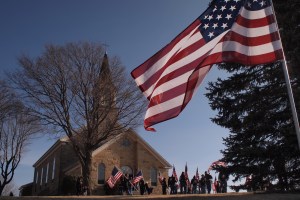
St. Patrick of Cedar Lake Catholic Church. The final resting place of Lance Cpl Dale Means.

St. Patrick of Cedar Lake Catholic Church. The final resting place of Lance Cpl Dale Means.

               “I can’t tell you how proud I am of this town.”  He didn’t have to say anymore.  The tears rolling off his cheeks filled the empty space where words disappear.     

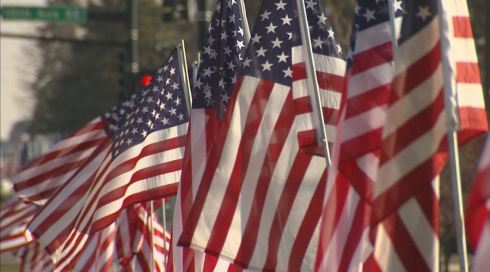
             In this part of Scott County all roads lead to St. Patrick’s.  But on this day people only needed one, the road  where 1,800 American flags pointed the way.

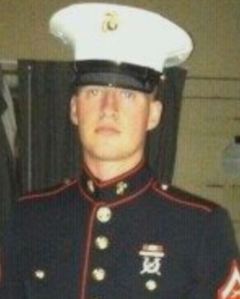
             When the news spread days earlier that a certain son was coming home, it was hardly the celebration anyone wanted.  Dale Means was the kind of man a small town takes pride in.  He was a son, a husband, and a United States Marine.  On November 18th, what pride couldn’t promise a road side bomb took away.  What Minnesota gave, Afghanistan claimed. 

Marine Lance Cpl. Dale Means.

Marine Lance Cpl. Dale Means.

             Tragically, no news travels faster than that of a fallen service member.  When Larry Eckhardt heard, he knew what he had to do.  He packed up his trailer full of 2,000 American flags and set out from his home in Little York, Illinois.

             “Well, I went to a soldier’s funeral and there was probably pretty close to about two-thousand people there and only about 50 to a hundred flags,” Eckhardt said.  “I didn’t think that was right.”

             More than 400 miles later Eckhardt pulled into New Prague with a full trailer, a near empty gas tank, and a plea for help.  Bonnie Valek was among those who heard the call.    

Larry "The Flagman" Eckhardt

Larry “The Flagman” Eckhardt

             “Yesterday they had on the radio station, if they could get fifty volunteers.  And I volunteered.  And they had well over a hundred on the snap of a finger,” Valek said.             

            In a little more than an hour, this community known for planting crops was planting flags.  By the time they were done, the sons and daughters of New Prague with the help of Larry the Flagman built a tri-colored wall of patriotism that stood 1,800 strong.  The flags didn’t just bring volunteers, they brought pride.  Pride brought everyone else.

             Among the people lining Main Street was a man in a leather jacket with a face sculpted by the cold fall wind.  Upon recognizing a familiar face from television he reached out his hand with a tight grip.

            “Thank you, Tim,” he said.  “I’m so glad you’re here, people need to see this.”  He introduced himself only as Scotty, but like so many here the only name that mattered was that of the Marine they claimed as their own.

             “It’s amazing,” Scotty said.  “When I heard about the funeral procession I had to come out.  At first I was one.  Then five minutes later I was ten.  Then I was 50.  Then 100.”    He paused and looked up and down the street.  “Now, I must be a thousand.”

             As the hearse carrying Lance Corporal Means’ body slowly crept past the gauntlet of people, pride, and flags, there was hardly a dry eye.  Jen Ophus was among those fighting off the tears.  

Flags lining the funeral procession route for Lance Cpl. Dale Means to St. Patrick of Cedar Lake Catholic Church.

Flags lining the funeral procession route for Lance Cpl. Dale Means to St. Patrick of Cedar Lake Catholic Church.

             “I think it’s, really impressive,” Ophus said.  “I think it’s something that we should all do and show our respect.  I don’t think it’s seen enough.”

             Further down the street, Ron Dols called it an awakening experience.  “Unfortunately this country doesn’t show its patriotism enough.  And I think this is a good example of it.”

             Lance Corporal Means may have given his life along a lonely trail a half a world away, but at this critical moment he and his family were hardly alone.  His last trip to the church on the hill would be protected by 23,000 stripes and 90,000 stars.  Larry Eckhardt made sure of it.

             “I call it his last gift to the community,” Eckhardt said.  “Because, it does bring the community together and as long as they remember the flags, they’re going to remember him.”

 *            *            *

          Lance Corporal Mean’s funeral was #97 for Larry Eckhardt and his flags.  He was leaving the next day to drive his trailer to Iowa for the funeral of another fallen soldier.  To learn more about Larry Eckhardt and his flags, you can follow him on Facebook

Flags along Main Street in downtown New Prague, Minnesota for the funeral procession of Marine Lance Cpl. Dale Means on November 28, 2012.

Flags along Main Street in downtown New Prague, Minnesota for the funeral procession of Marine Lance Cpl. Dale Means on November 28, 2012.

Six Words… My Family’s Mission to Conquer Diabetes

20 Nov

                I’m very grateful and humbled to have just been honored with the Juvenile Diabetes Research Foundation Award for Public Awareness at the JDRF MinnDakotas Gala in Minneapolis.  It is the dream and prayers of my wife Susan and our daughters to find a cure for Type-1 diabetes.  Through the generosity of Minnesotans we raised more than $500,000 to fund the research to achieve that goal.  With the help of Scott Leech at BrandSpeak, this is the story of our journey with diabetes in addition to the transcript of my acceptance speech challenging all of us to help families everywhere write their own ending to this disease.

Six Words

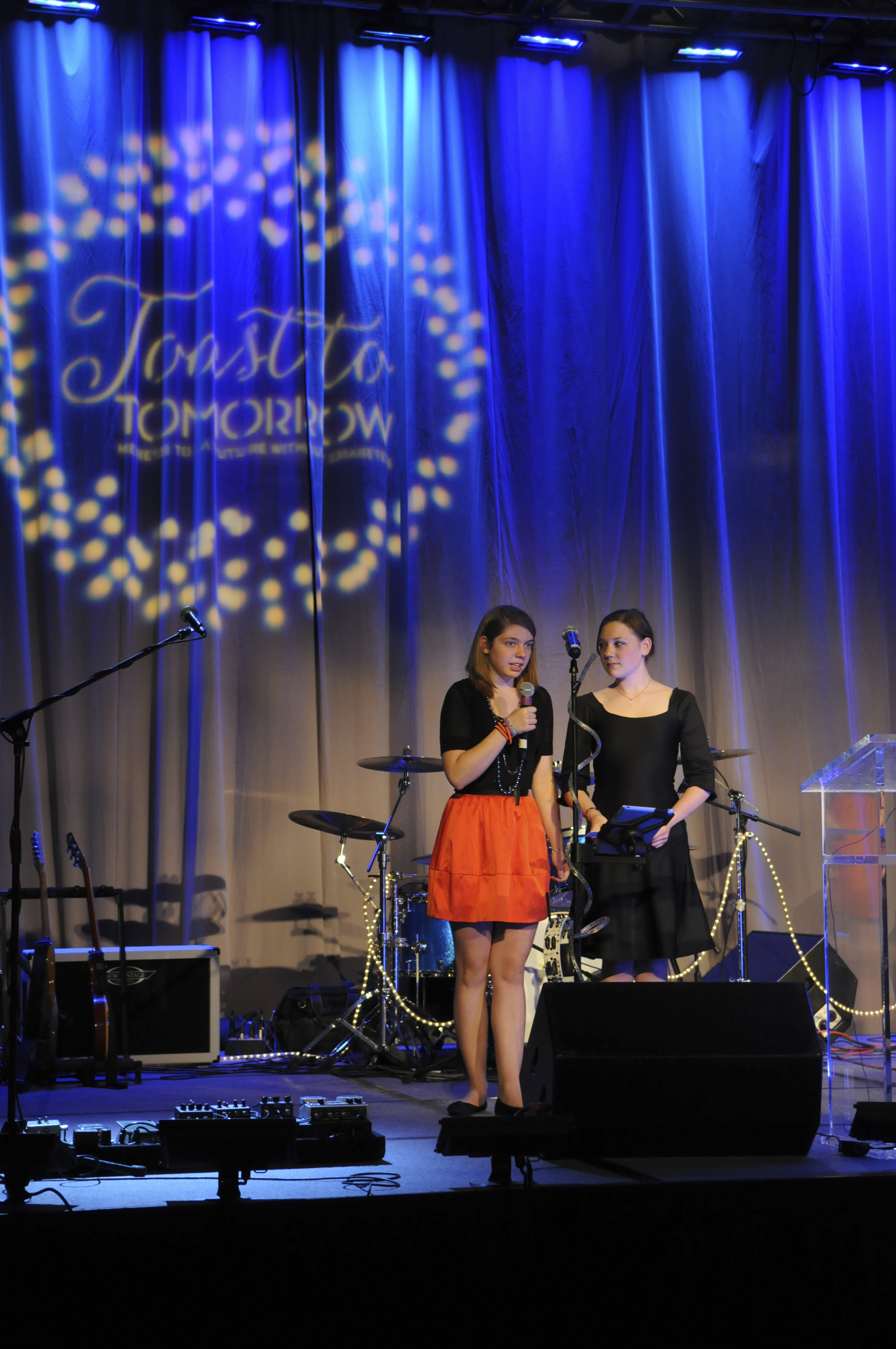
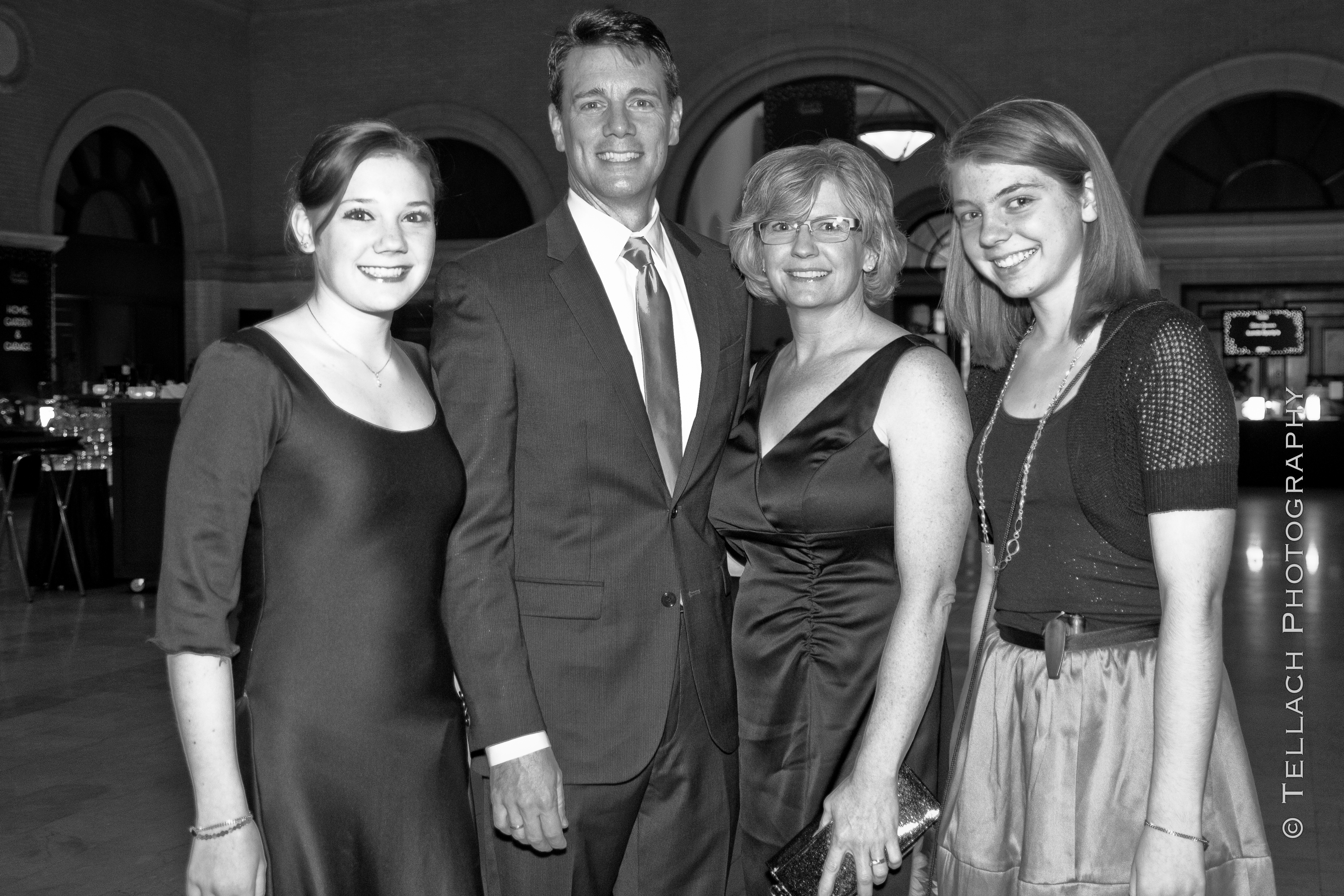
            Susan and I are among the luckiest parents in the world.   When you have two daughters who light up your life and fearlessly step before you to testify to their own struggles with type-1 diabetes, it makes us proud and very humble.

            It’s only appropriate that you have a chance to meet them tonight, because they are the reason why Susan I are here.  They are the arc of our storyline, the inspiration for the narrative of our lives.   

Maddy & Emme Blotz presenting their father with the JDRF Award for Public Awareness at the Depot in Minneapolis, October 6, 2012.

            But the story of why we are here tonight did not begin with a diagnosis.  It’s actually a bed-time story.  It’s a bed-time story that began with a hard day about a year after that first diagnosis in 2001.   It was a typical day of chasing Maddy around the house with a needle to give her another insulin injection.  As I put her to bed and bent over to kiss her goodnight, she looked up with tear-filled eyes and said, “Daddy, I don’t want diabetes anymore.”

            Six words.

            To a parent, they are the most powerful six words you will hear.  They were more than just a child’s plea.  They were a calling.  A chorus.  A commandment.    No longer as parents would we be allowed to simply sit back and just manage diabetes.  We had to do something about it.

            In every respect I’m no different than you.  We want a cure.  My wife wants a cure.  I’m getting the recognition tonight, but Susan is the rock star.  She’s the one who’s spent countless nights cuddling a child, measuring keytones and waiting for blood sugars to drop.  She’s the one taking the calls from the school nurse.  She’s the one crying when the A1-C results come back.  She is the one who loves her daughters so much that she’d do anything for a cure.   Together, we have tried to use the public platform for which I have access, to educate and advocate for a cure.  

            All of us want to do something about it otherwise you wouldn’t be here tonight.  In the audience we have mothers and fathers, sons and daughters, friends and neighbors.  But also among us tonight we have doctors and researchers.  God gave them the ability heal, gave them the ability to ask tough questions, hypothesize the answers and prove them.   The rest of us are here because we have the ability to help them. 

            So, this is our story.  It is a story we share together.  In this narrative we all have a beginning whether that beginning was a father who has diabetes, a brother, a son, a daughter, a friend, or perhaps yourself.   Events like tonight are the middle of the story.  We all have them.  Our own narratives lead us down different walks of life and different paths with diabetes.  But we’re all trying to write the same ending.

            Won’t you help us?

            Six words.

            This is a bed-time story we need to put to bed.  Please join us.  Help us rewrite the title of this story from “I don’t want diabetes anymore,” to “I don’t have diabetes anymore.”

            Thank you for being with us tonight and blessings to you all.

*           *          *

“Your First Time.” Dissecting Lena Dunham’s Controversial and Strategically Targeted Obama Ad

27 Oct


     In a presidential campaign season cluttered with the white noise of attack ads and misinformation, along comes a simple and yet metaphorically powerful appeal.

     It comes by way of twenty-something writer, actor, director Lena Dunham.  The star of the HBO series “Girls” has made a name and brand for herself by revealing many of her own coming of age moments.   

     Dunham’s latest self-effacing reveal is her about her “first time.”  No, not that first time.  

     It’s the first time she voted for a president—Barack Obama.

     The sexually tinged metaphor is powerful, if not controversial.   But from a pure communications point of view, it also one of the more strategically targeted and crafted messages of the fall election.

    Let’s break it down.

            Strategy:  Attract Young Women Voters    

    • Competitive Frame:  Apathy
    • Message Argument:  Make your first vote count
    • Target Market:  Young college-aged women “achievers” who’ve never voted
    • Desired Response:  Vote for Barack Obama

     Idea:  Sexual Innuendo

            Execution:  Woman-to-woman couch conversation

     Part of what makes this appeal noteworthy is its simplicity.  There’s no flashing graphics, no dramatic voice-over, no gotcha video clips, no scary music.  To her peer group, Dunham’s girlfriend-to-girlfriend manner commands attention—let’s talk.  Her exposed millennial sleeve tattoo commands credibility—I’m one of you.   

     Together, they give her standing to talk about why they need to “do it” with the right guy: “A guy who cares whether you get health insurance, and specifically whether you get birth control.”

     The metaphors are powerful, the message consequential.  Which is why it has gathered so much criticism.  The independent women’s forum has called it sexist, and writer Ben Shapiro calls it tasteless.  

      Whatever you call it, it’s also very strategic.  

How Social Media is Driving Political Engagement — What TV News Can Learn

22 Oct


Illustration courtesy of Social Media Daily

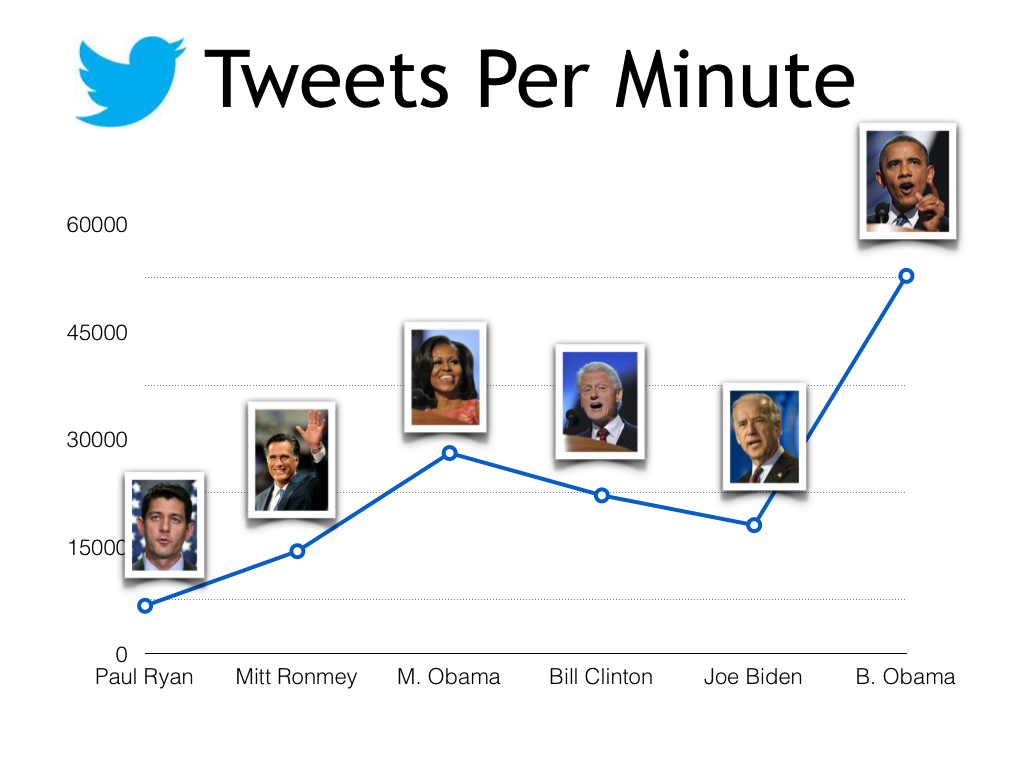
           The social media forces that have changed and influenced television viewing habits, are now changing political engagement too.  Political communication that was once dominated by television commercials and yard signs has gone digital—and personal. 

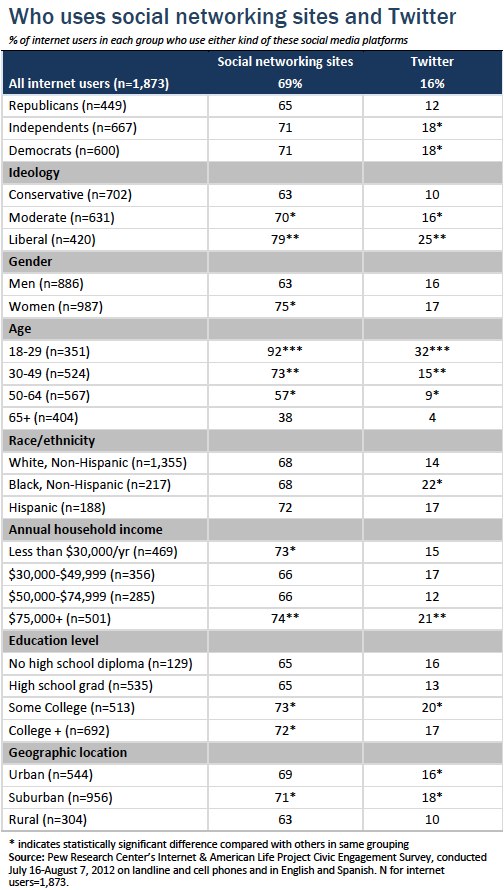
            New research from Pew Internet reveals a significant number of Americans using social media—66%–are using social networking sites (SNS) to both follow politics and candidates and share their own political views.  

            Here are some of the top lines:

  • 38% of those who use SNS & Twitter use social media to “Like” or promote material related to politics or social issues.
  • 34% of social media users have used tools to post their own thoughts or comments on political or social issues.
  • 33% have reposted political or social issues content that originally posted by someone else.
  • 31% have encouraged others to take action on a political or social issue.

             The Pew research also indicates that the power users skew heavily young and somewhat liberal. (Figure 1)  That finding would support the explosive social media usage among viewers of the 2012 Democratic National Convention. 

Figure 1 – Pew Internet

             For television programmers, especially TV newsrooms, this latest set of data points is a gift for building strategies to engage younger viewers in way that is native and natural to them.  As television entertainment producers have built social media engagement into live viewing of comedies, drama, and reality episodes, TV news operations have the same opportunity especially when it comes to live political events such as debates, forums, and rallies.

             Some of the tactical engagement methods should include:

  • Create branded discussion forums by hashtagging events for people to follow.  Example: #Fox9debates.
  • Use the hashtagged comments to drive on-air discussion and talk back with guests and experts.
  • Establish website chat rooms during major events that are moderated by newsroom talent. 
  • On-air talent should direct viewers to specific content on the web or Facebook and encourage them to share it.

             The reality of today’s connected world is that viewers are constantly screen-splitting, meaning they’re watching TV and interacting with a mobile device at the same time.  By encouraging viewers to engage with your brand on another channel only builds the brand and helps them achieve the information and entertainment gratifications that they are seeking.  Television programmers who don’t do this risk losing their viewers to someone else who will.

             Here’s a few more important facts on the Pew Internet study. (Figure 2)  The Pew research team lead by Lee Raine interviewed 2253 adults between July 16 and August 2, 2012.   They found that 60% of American adults use either SNS or Twitter.  Of the American adults who are online, 69% use SNS such as Facebook, LinkedIn and Google+, and 16% use Twitter. 

Figure 2 – Pew Internet Survey Democraphics


Presidential Debate Lesson — It’s the Metaphors, Stupid!

6 Oct


Sesame Street’s Big Bird

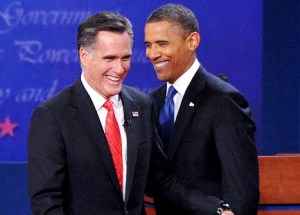
           Two men approached the presidential stage in Denver, but only one commanded it and walked off with a memorable message for the American voter to consider.  

             One of these men had a focused, clear message with passion and purpose.  The other appeared rhetorically disheveled.  If Aristotle were measuring the persuasive outcomes based upon authority, emotion and logic (ethos, pathos, logos) then Mitt Romney would have gone to the head of the class.

             One of the key takeaways from the first presidential debate is not necessarily how poorly President Obama may have performed, but why Mitt Romney was more effective and memorable in framing one of his key messages: government is too big. 

Presient Barack Obama and GOP nominee Mitt Romney at the presidential debates, October 3, 2012.

             He did it with two metaphors.  The most powerful stands seven feet fall and eats bird seed.  The second, recast Washington as voodoo government.             When moderator Jim Lehrer tried to elicit a response from Romney on the size of government, here was his response:

 “I’m sorry Jim, I’m gonna stop the subsidy to PBS.  I love Big Bird.  I actually like you, too.  But I’m not gonna keep on spending money on things to borrow money from China to pay for it.”

             His second most powerful message took a long-time democratic boogeyman—trickle-down economics—and turned in on its head.

 And what we’re seeing right now is, in my view is a trickle-down government approach which has government thinking it can do a better job than free people pursuing their dreams. And it’s not working.”

        Psychological researchers have long established that people process and remember what they already know.   Ralph E. Reynolds of Iowa State University writing in the Journal of Educational Psychology strongly established how metaphorical writing vastly improved recall and understanding.  Likewise, Thomas J. Reynolds has published extensive works in the Journal of Advertising Research on how metaphorical references build stronger advertising messages.  The theory extends to political communication as well.  Eugene Miller of the University of Georgia notes that political rhetoric has always relied heavily on metaphors whether it’s assigning players to the president’s “team,” to creating programs such as the “New Deal,” “New Frontier,” or “War on Poverty.”  One of the most effective uses in a campaign came from Walter Mondale in 1984 when he blatantly stole a line from a Wendy’s hamburger commercial to describe rival Gary Hart’s domestic policies: “Where’s the beef?”  The metaphor was devastatingly effective.  Within weeks Hart’s campaign ended and Mondale won the democratic nomination. 

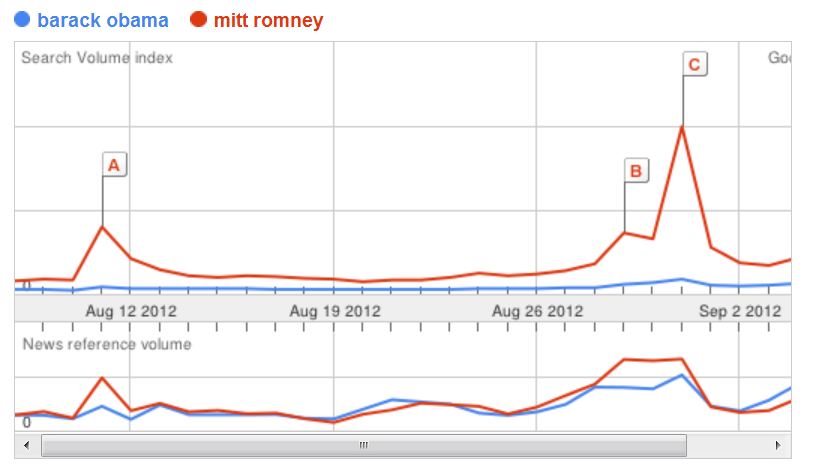
         In this new era of explosive mediated social dialog, the Big Bird metaphor has become an instant internet meme.  Within minutes of Romney’s reference, satirical Big Bird pages surfaced on Twitter and t-shirt designers went to their screen printers.  Internet searches for both Romney and Big Bird skyrocketed. (Figure 1)  By week’s end, the Big Bird reference even became material for Saturday Night Live’s Weekend Update.  

Figure 1: Google Trends web search volumes. RED-Mitt Romney, BLUE-Big Bird

           Mitt Romney’s chief goal in the coming weeks is to change the attitudes of the extremely narrow percentage of voters who have yet to make up their minds.  In the first debate, he’s given them two symbolic images to consider.  Wouldn’t it be ironic if come election day the chief lesson of the fall campaign didn’t come from 1600 Pennsylvania Ave, but instead from an address on Sesame Street.

An Emmy Award Salute to a Vietnam Veteran’s Legacy

3 Oct

             On a windswept Minnesota prairie where the trees whisper the memories of Vietnam, the quiet chorus is now joined by golden girl with a ringing voice.

            The trees that stand tall and grow on forty acres of rolling hills were all planted by Vietnam veteran Geoff Steiner.  Each one has a name, each has a memory.  Nearly every tree is planted in honor of a soldier who never came home.  Steiner did.  But he still lives with the horrors of a war that both took lives and changed lives—forever.

            Last Veterans Day, I traveled to Steiner’s tree memorial with fellow producers Mark Anderson and Rod Rassman.  Together with editor Sam Scaman we produced a segment on Steiner for a documentary film called Veterans Day 11-11-11

           Our profile of Steiner has just won the Emmy Award for best single military story.  We humbly accept the award in honor of Geoff Steiner and all of the Vietnam veterans who now live in eternal peace.   May God’s blessings be with them.     

The Best Beer Ad You Wont See in America

15 Sep

            Leave it to the Aussies to take an American cliché and turn it on its head.   

            The folks at Carlton Draught and their ad agency Clemenger BBDO Melbourne have cleverly mocked every Hollywood cops & robbers schema in an ad they call “Beer Chase.”  

            The chase scene is not only fun to watch but is exceptionally strategic.  Its target audience is social media savvy urban men who are beer drinkers and prefer their suds from a tap instead of a can.  It even has a unique selling proposition: beer so good you don’t want to spill a drop. 

            Part of Carlton’s brand is its reputation for quirky ad campaigns that its loyalists have come to expect.  In this age of social media, “Beer Chase” hits that brand sweet spot by encouraging fans and non-fans alike to virally share the ad among friends. 

            When was the last time we saw an American brewer with an ad like this?           

            It’s Brilliant!  Oh wait… that’s been taken.

Coca-Cola & Facebook. How Coke Writes the Book on Sharing—Again.

5 Sep

Facebook post by Coca-Cola

Coca-Cola didn’t become the world’s most recognized brand by keeping the cap on the bottle.

The not-so-secret success to Coke has always been its laser beam focus creating happiness that tastes better when it’s shared.

It should therefore come as no surprise that Coca-Cola has popped the cap on another major branding success—50 Million Facebook “Likes.”   In the process, Coca-Cola offers a blueprint in how to engage brand evangelists in social media space.

Facebook post by Coca-Cola

In every respect, Facebook is the perfect match for Coca-Cola.   Coke is a brand whose core identity is about sharing and it has masterfully positioned the brand on a social platform built for sharing.  But the key to Coke’s success on Facebook is how it engages its followers—always with a question or an invitation for people to share their own ideas.

To celebrate its 50 millionth “Like” Coca-Cola has created a special Facebook app inviting followers to share their thoughts on how to improve the world.   Coke promises to select one idea early next year and contribute to the cause.

The lesson for other brands on Facebook is that the platform is not a place for corporate news or industrial relations.  It’s a space where organizations can showcase their core values and let followers engage in what it means to them.

Now… where’s my bottle cap opener?