Archive | Advertising RSS feed for this section

“Your First Time.” Dissecting Lena Dunham’s Controversial and Strategically Targeted Obama Ad

27 Oct


     In a presidential campaign season cluttered with the white noise of attack ads and misinformation, along comes a simple and yet metaphorically powerful appeal.

     It comes by way of twenty-something writer, actor, director Lena Dunham.  The star of the HBO series “Girls” has made a name and brand for herself by revealing many of her own coming of age moments.   

     Dunham’s latest self-effacing reveal is her about her “first time.”  No, not that first time.  

     It’s the first time she voted for a president—Barack Obama.

     The sexually tinged metaphor is powerful, if not controversial.   But from a pure communications point of view, it also one of the more strategically targeted and crafted messages of the fall election.

    Let’s break it down.

            Strategy:  Attract Young Women Voters    

    • Competitive Frame:  Apathy
    • Message Argument:  Make your first vote count
    • Target Market:  Young college-aged women “achievers” who’ve never voted
    • Desired Response:  Vote for Barack Obama

     Idea:  Sexual Innuendo

            Execution:  Woman-to-woman couch conversation

     Part of what makes this appeal noteworthy is its simplicity.  There’s no flashing graphics, no dramatic voice-over, no gotcha video clips, no scary music.  To her peer group, Dunham’s girlfriend-to-girlfriend manner commands attention—let’s talk.  Her exposed millennial sleeve tattoo commands credibility—I’m one of you.   

     Together, they give her standing to talk about why they need to “do it” with the right guy: “A guy who cares whether you get health insurance, and specifically whether you get birth control.”

     The metaphors are powerful, the message consequential.  Which is why it has gathered so much criticism.  The independent women’s forum has called it sexist, and writer Ben Shapiro calls it tasteless.  

      Whatever you call it, it’s also very strategic.  

The Best Beer Ad You Wont See in America

15 Sep

            Leave it to the Aussies to take an American cliché and turn it on its head.   

            The folks at Carlton Draught and their ad agency Clemenger BBDO Melbourne have cleverly mocked every Hollywood cops & robbers schema in an ad they call “Beer Chase.”  

            The chase scene is not only fun to watch but is exceptionally strategic.  Its target audience is social media savvy urban men who are beer drinkers and prefer their suds from a tap instead of a can.  It even has a unique selling proposition: beer so good you don’t want to spill a drop. 

            Part of Carlton’s brand is its reputation for quirky ad campaigns that its loyalists have come to expect.  In this age of social media, “Beer Chase” hits that brand sweet spot by encouraging fans and non-fans alike to virally share the ad among friends. 

            When was the last time we saw an American brewer with an ad like this?           

            It’s Brilliant!  Oh wait… that’s been taken.

Twinkies Strikes Gold–The Best Olympics Ad You Wont See

1 Aug

Perhaps one of the best advertisements of the Olympics is one you won’t see on NBC.

The folks from Hostess have created a whimsical and brilliant social media film that simply says there are Olympians… and then there’s the rest of us.  And for the rest of us, there is a special golden reward—Twinkies.


The ad created by the Berstein-Rein agency takes the well established Theory of Trying and turns it on its head.  (Think Home Depot: “You can do it, we can help.)

But as fun as this ad is to watch, it’s also a strategically smart piece of communication and critically timed as Hostess goes through bankruptcy.  It targets every person who has tried at something and failed.  Because that includes most of us, it guarantees that fans of the ad will share it on social media.

Additionally, it speaks to what marketers would call lapsed users—consumers who haven’t bought Twinkies in a while. It reminds them that Twinkies are still here, still good, still golden.

So go ahead, treat yourself. (You know you want to)


Screen Splitting—How Brands and TV News can Overcome Simultaneous iPad and TV Viewing Habits

28 Apr

It wasn’t long ago that the biggest enemy to television advertisers and programmers alike was the TV remote.  Ah, for the good old days.

New mobile technologies and platforms have given consumers virtually effortless and instant access to hundreds of competing communication channels.  And now we learn that they’re increasingly accessing these channels while actually watching TV—or not watching.  Welcome to television’s latest nightmare.  The monster keeping brands and programmers up all night isn’t necessarily getting bigger, it’s just multiplying.

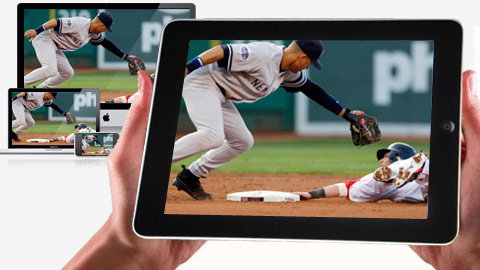
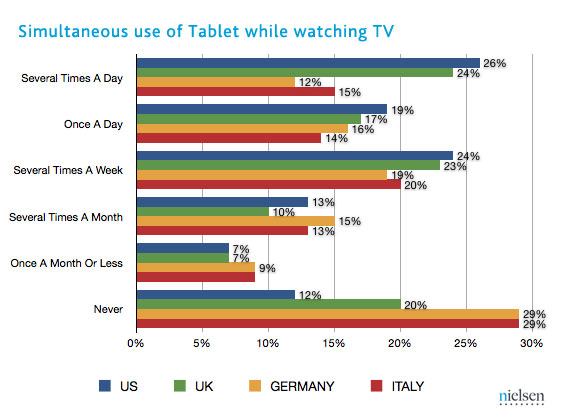
Two new data sets of consumer research provide valuable insights into how audiences are using media, often at the same time.  The behavior is called screen splitting.  It’s arisen from the explosive growth in mobile technology and even new platforms such as the iPad and tablet computing.  The Nielsen Company’s latest survey of connected device owners indicates depth of this new behavior.  Fully 88 percent of tablet owners and 86 percent of smartphone owners said they used their device while watching TV at least once during a 30 day period.  For 45 percent of the American tablet owners, screen splitting was a daily event, 26 percent said they simultaneously used their tablet while watching TV several times a day. (Figure 1)  The data was similar for smartphone owners.
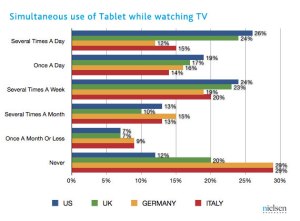
Figure 1 - Courtesy Nielsen Co. (4th qtr 2011)

The second data set suggests the media switching happens at an almost frenetic pace among many viewers.  Innerscope Research specializes in conducting biometric studies of consumer viewing habits.  In a recent study commissioned by Time Warner, Innerscope outfitted 30 participants with biometric belts that recorded their physical responses as they used media throughout more than 300 hours of time away from work.  The participants also wore special glasses embedded with cameras that tracked what platform they used and for how long.  The results showed that consumers in their 20’s, or digital natives, switch media venues about 27 times per non-working hour.  To put that in perspective—about 13 times per standard half-hour television show or newscast.  Older consumers who didn’t grow up with the new technologies, those who Innerscope calls digital immigrants, shifted media at a 35 percent lower rate—just 17 times per non-working hour.

Together, the research sets tell us how our viewers are no longer sitting at the table to consume our products.  Instead, they’re running through the ala carte line.  They’re not eating whole meals, they’re snacking.  As soon as the instant gratification wears off, they’re onto the next snack.

Given this new reality, the question becomes how do brands and programmers adapt?  From a conceptual point of view, their product has to be positioned to hit the viewer’s emotional and intellectual sweet spot.  Advertising researcher and scholar John Eighmey gives us a conceptual model he calls Reward Theory.  It conveniently categorizes the elements that must interplay with each other for consumers to latch onto a piece of visual communication to consume, enjoy, and share.  It is the same model that explains why YouTube videos go viral. (Figure 2)

Figure 2- John Eighmey's Reward Model for explaining viewers engage in and share content.

First and foremost, the content must be stimulating.  It must be enjoyable to watch, clever, or surprising.  Second, it must have an element of empathy or personal identification. Third, it must lack confusion.  Fourth, is narrative or theme familiar to the viewer? That is, does he or she recognize the theme or scenario in which the information is presented?  Fifth, it must have news value such as a new claim or idea.  Finally, the message has brand reinforcement in that it creates positive attitudes about the message or messenger.

From a practical and operational mode, strong brands have learned that they must create stimulating content and integrate it 360 degrees across multiple platforms and channels.  For Coca-Cola and Proctor and Gamble it’s no longer acceptable to run just a TV ad and a print ad and call it a day.  They now know their brand and content has to live in traditional media, social media, digital media—all the channels that their customers use.

TV Newsrooms must adapt the same strategy.  Some already are.  KTTV, Fox 11 in Los Angeles is now routinely using Google+ to involve viewers in “hangouts” with their anchors during the newscasts.  The hangout participants can even chat with the anchors during the commercial breaks and watch the behind-the-scenes action in the studio.

It’s a smart approach.  Nielsen’s fourth quarter 2011 research on simultaneous TV and tablet usage shows 47% of the general population visited a social networking site during the program they were watching on TV.  Additionally, 37% claim to look up information related to the program they’re watching. (Figure 3)

Figure 3 - Nielsen Co.

If viewers are going to be screen splitting, the goal is to get them to interact with your brand on the second screen or channel.  Here are some tactics for TV newsrooms:

  •  Reporters should steer viewers to Facebook or Twitter for additional content or pictures (you may lose their attention briefly, but you keep them engaged in your brand).
  • During major stories, or continuing coverage, create a branded hash tag for viewers to follow and  interact with.  Display the “lower third” super of the hash tag during the related content.
  • Read what other viewers have to say on Facebook.
  • Let followers know their specific content or posts will be used on-air (everyone likes to be on TV, even if it’s a quote).
  • Replace all talent name supers with their social media addresses.
  • Work with station web page designer to display the real time Tweets of reporters and anchors on the home page.

What’s hard for many brands, especially newsrooms to understand is that consumers seek, use, and bend media content to meet their integrative needs.  Sometimes those needs are for information and knowledge, often times it’s for entertainment.  The latest research from Nielsen and Innerscope show that if brands and programmers can’t meet those needs, the consumer moves on—fast.  It all comes back to what broadcaster Linda Ellerbee’s daughter once said about television, “Live TV is me sitting in front of the set.  If it’s boring, I’m out of here.”

The Milwaukee Brewers & Aaron Rogers — The Making of a Memorable TV Ad

4 Apr

You don’t have to be a Brewers or Packers fan to enjoy the collision of metaphors in a new baseball advertising campaign.

The folks at 2-Story Creative in Milwaukee have called up the NFL’s Most Valuable Player Aaron Rogers to the pitcher’s mound.  The result is a wonderfully enjoyable piece of communication that gains its power from the use of mixed metaphors.


Whether it’s baseball/football, ace/gun slinger, or wind-up/3-step drop, the collision of ideas forces the viewer to think and elaborate about America’s game and being in the stands.

That’s some heat.  Now, pass the Secret Sauce.

Fiat’s Branding Machine — What Are YOU Looking At?

20 Mar

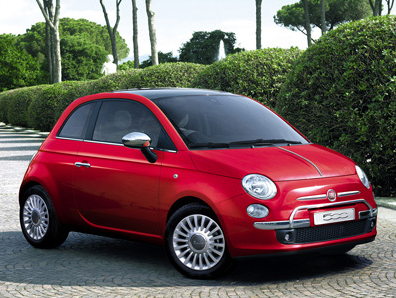
For a tiny car, the Fiat 500 is telling a big story.  And it says a lot about how to create multiple brand narratives around a new product.

Fiat 500

Since its creative splash during Super Bowl XLVI, Fiat has given us two sequels that speak to different audiences highlighting unique product attributes to each one.  The brilliance of the Super Bowl Abarth ad is that it took the age-old “love affair with a car” metaphor and made it real.  The woman seductively bending over at the curb wasn’t just any kind of sex symbol; she was an Italian sex symbol.  It was the embodiment of lust and bust.  “Che cosa guardi?” she screams in Italian.  The translation is simple, “What are you looking at?”  The answer is just as simple–a brand new sexy-hot Italian sports car.


Fiat has since followed with two more ads that stretch the storytelling for different audiences.  The latest incorporates another babe–this one in a car seat.  The ad follows two family guys with tickets to the big game and extra baggage strapped into the back seat.  But they get caught behind a grey-haired senior citizen in his vintage Chrysler Imperial.  (Think Clint Eastwood)  But the speed of the Fiat shows this is clearly not Halftime in America–it’s full throttle.  The message: drive the kids in the fast lane.


Then there’s the House Arrest ad once again featuring the Abarth, but this time in bad boy black.  The car races through the hallways of a mansion stocked with booze and babes.  When the car finally screeches to a halt in the ballroom, the driver climbing out is none other than Charlie Sheen.  The tag line is “Not all bad boys are alike.”  The message: have fun on your terms.


They are three ads with three distinct stories about a new product.  It’s sexy.  It’s practical.  And, it’s fun.  Can’t wait to see what else Fiat has up its sleeve.

Halftime in America. How Chrysler Found a Voice, and Missed an Opportunity

14 Feb

                The silhouette emerging from the darkness on Super Bowl Sunday was more than a man stepping into the light.  It was a car company emerging from the blast furnace of scrap metal.  And, it was a nation emerging with it. 

"Halftime in America"

                The advertisement for Chrysler wasn’t directly selling a product, it was selling an idea—economic patriotism.   It picked up where Chrysler left off in Super Bowl XLV when Eminem introduced the new Chrysler 200 luxury car proclaiming “Detroit was back.”   This year’s message is  that Chrysler has survived a brutal first half of the recession, and if Chrysler can do it so can the rest of America.   As I wrote in a previous post, the ad was no accident and was strategically positioned to elicit a desired response.

  • Idea:  Halftime/Patriotism
  • Target Market Audience:  Anyone who has struggled in the economy
  • Desired Response:  Feel confident about Chrysler—feel confident about yourself
  • Competitive Frame:  Apathy and pessimism
  • Message Argument:  We’ve only just begun—can’t wait for the second half
  • Rationale:  Emotional trigger to build loyalty and awareness to Chrysler 

             The positioning of Clint Eastwood as the metaphoric coach giving the country a sobering Super Bowl halftime pep talk was brilliant casting.  Who’s not going to stand tall with Dirty Harry giving a “Million Dollar Baby” lecture? 

                Apparently, plenty.

                From Fox’s Bill O’Reilly, to former Bush White House Aide Carl Rove, many people saw it as a rallying cry to justify the auto industry bailout.  Additionally, many of those same people saw the halftime in America theme as a metaphoric campaign commercial urging voters to give President Obama a second term.  Media analyst John Rash said the backlash should not be surprising.  

Media Analyst John Rash

                “The commercial is a real shock test in that people can read into it what they bring politically,” said Rash.

                “Many republicans might be able to read here they have a well known conservative who in effect is trying to rally the country for a fresh start in the second half.  To some that would suggest electing a new administration.  Other’s certainly some democrats read into it using the auto bailout in Detroit as a template for the country’s comeback and they hear second half and they think second term.  So, people will project onto a spot what they think politically and socially.”

                But critics of the ad need to hear at least one more perspective.  Anna Ciaramitaro lives in Detroit and has witnessed its slow death in the new economy. 

Detroit resident Anna Ciaramitaro

              “It was one of the best commercials ever made,” said Ciaramitaro. 

                She added, “It was a commercial that touched the heart of Detroit and the people that lived there, the citizens, the residents there that experienced everyday what it’s like rebuilding a city again.  And we just wanted to share that with the rest of America.”

                And this is exactly where Chrysler missed an opportunity.  What if it didn’t just create an ad, what if it had created a community?  What Chrysler missed was the chance to launch a multi-channel campaign where people can tell and create their own “second half” stories.  Here are a couple of ideas:

  1. Branded website:  A separate webpage called secondhalf.com where Chrysler can showcase comeback stories/videos of ordinary Americans and companies.  User generated content would be the key component of this website.   Ideally, the stories would include some thread of how Chrysler products helped in the comeback.  The website should be prominently embedded on Chrysler’s homepage that customers can easily find.  The website branding would be integrated within Chrysler’s media buys:  “Tell your story. Secondhalf.com”
  2. Daily Twitter updates:  A separate Twitter feed of daily success stories tied to the Chrysler brand.
  3. Elementary School Art Contest:  Involve local Chrysler dealerships and schools in an art display that encourages children to tell their own stories through art work of how perhaps their own families have found ways to succeed.   The local Chrysler dealerships would serve as the galleries to display the art and present a cash prize to the school with the best presentation.
  4. Video contest:  An invitation to young film makers to create their own second half ad showcasing a comeback story.  All ads would be screened and judged by Oscar winning director Clint Eastwood.  The winning commercial would then air during the halftime of the NLF kick-off game in September. 

             During the Super Bowl, Chrysler implored the world to “hear the roar of our engines.”   Building a community could provide the echo chamber to let those engines roar from every corner of the planet.

                Yes, Chrysler is a car company.   But as Americans in every walk of life emerge from this brutal recession, Chrysler is also a success story.  Americans love winners.  That’s a sustainable brand value Chrysler can build and drive.

The Best Super Bowl Ads. Three That Were No Accident.

7 Feb

             Super Bowl XLVI has recorded its winners and losers among teams and certainly among brands.

             This year’s annual Super Bowl of advertising has produced another list of memorable commercials, and certainly a list of forgettable and regrettable ones too.

VW - Dog Strikes Back

             Tracking agencies have already ranked the ads based upon their popularity among viewers and it should come as no surprise that Doritos once again finished strong with its mainstay use of humor.

             Part of the purpose of Super Bowl ads is to entertain.  But, it’s important to remember that if those ads don’t creatively communicate a strategic message about the brand or product, then it’s a colossal waste of $3.5 million.

              With that in mind, I picked the minds of two advertising heavy weights.  John Eighmey is the Campbell Mithun Chair of Advertising at the University of Minnesota.  Eighmey spent a good portion of his career at Young & Rubicam in New York and steered the production of many of the great advertising campaigns of the 1970’s and 80’s including the Hallmark card ads that made everyone cry.  From Eighmey’s point of view one commercial this year stood out from the rest: Fiat’s 500 Abarth.

             “It’s the one commercial any creative person would want on his reel.” Eighmey said.

             Many car companies during the past 50 years have tried to sell the idea of having a love affair with a car.  Eighmey says this is the first one to make the metaphor real.   The hot model bending over at the street curb was the personification of love at first sight.  But when woman stood up and started shouting in Italian and charging toward her admirer it became clear that this was the embodiment of every man’s dream—a siren that loved him back.  The sexy tattoo of the Abarth logo on the back of her neck was the only foreshadowing of the surprise to come.


             It wasn’t just a cleaver ad, it targeted a specific audience with a specific message and a specific desired response:

  • Idea:  Love affair with a car
  • Target Market Audience:  American men who love sports cars
  • Desired Response: Test dive this car!
  • Competitive Frame:  All other compact cars
  • Message Argument:  Fall in love with the sexy Italian car that will love you back
  • Rationale:  Introduces legendary European car to an American audience

             Campbell Mithun CEO Steve Wehrenberg noted a number of good Super Bowl ads including the VW Beetle dog training commercial, but the one that stood out for him was the Chevy Silverado Apocalypse.

             This ad too, was no accident.  It used the predictions of the 2012 apocalypse and a bit of end-of-the-world lore about the survivability of Twinkies to differentiate the Silverado from all other pick-up trucks.


             The strategy of the Silverado ad jumps off the screen:

  • Idea: Surviving the apocalypse
  • Target Market Audience: Men who buy pick-ups
  • Desired Response: Buy a Silverado
  • Competitive Frame: Ford F-150 and all over pick-ups
  • Message Argument: A Chevy can survive the end of the world
  • Rationale: Uses humor to tell a story about the reliability of the Silverado

             The ad presents what advertising Godfather Rosser Reeves would call a unique selling proposition—Chevy trucks last.  In an economy where consumers are hanging onto their cars for 10-plus years, the Silverado has value.

             I have to admit, my personal favorite made me stand up and cheer.   It was Chrysler’s “Halftime in America.”  The conceptual positioning of Clint Eastwood as America’s coach giving a halftime economic pep-talk was simply brilliant casting.  Who wouldn’t want to stand tall with Dirty Harry?


             Here again, the means of communication is intentional and very specific.

  • Idea:  Patriotism
  • Target Market Audience: Anyone who has struggled in the economy
  • Desired Response: Feel confident about yourself—feel confident about Chrysler
  • Competitive Frame: Apathy & Pessimism
  • Message Argument:  We’ve only just begun—Can’t wait for the second half (Oh, and thanks for the bailout!)
  • Rationale:  Emotional trigger to build loyalty and awareness to Chrysler cars.

             “Halftime in America” builds upon several salient ideas to help us make a positive association with the Chrysler brand.  First, it blatantly bends the old Ronald Reagan metaphor of “morning in America” which was Reagan’s positive, optimistic view of the country.   Second, the ad was perfectly positioned to run at half time of a hard fought game building upon the sports come-back metaphor.  And third, it awakens the reality that this economy is really not a game; real people have lost—we are turning a corner and refuse to lose again.

             Three ads, three takes.  Can’t wait for Super Bowl XLVII.

Star Wars Sequel: VW Strikes Bark

20 Jan

            Volkswagen has done it again.  The same folks that gave us the Beetle and Farfegnugen have collided Das Auto with Star Wars and once again have succeeded in creating a memorable brand experience.

             The venerable VW has just released a pre-quel to its 2012 Super Bowl ad and it successfully uses a pack of dogs to bend the Star Wars meme from its wildly popular and successful 2011 Super Bowl ad.


             The deliciously wonderful ad by VW’s agency Deutsch is no accident.  It’s a smart and highly purposeful means of communication.   It targets a specific audience and asks them to take a specific action.  Here’s the strategy:

  • Target Market Audience:  Speaks to everyone who LOVED the 2011 Darth Vader ad.
  • Desired Response:  SHARE IT and watch the new Super Bowl ad.
  • Competitive Frame:  All other Super Bowl ads.
  • Message Argument:  It’s entertaining.
  • Rationale:  It builds anticipation for the new product ad and reinforces the intangible value of the VW brand.

             It’s clear the creative forces at VW/Deutsch wanted to borrow from the momentum of the most shared advertisement of 2011.   The Passat ad cleverly used two strong replicators in a child and Darth Vader.   They created an emotional force that caused viewers to watch, enjoy, and pass on.


             This time, VW has kept the Star Wars theme but replaced a child with an arguably stronger replicator: dogs.  Will it take off?  Three million YouTube views in the first 24-hours suggest it’s already in another galaxy.   And all of it with no media buy.   If the most valuable commodity on earth is attention, VW is getting it.

The Best Advertising of 2011

4 Dec

             It’s that time of the year when the “Best of…” lists come out.  My favorite so far is Ad Week’s  top 10 commercials of 2011.  Some of them you’ve seen and some you have not. 

            My two favorites on the list actually promote European brands and are outstanding examples of the strategic use of a concept that advertising psychology expert John Eighmey calls “Attitude Toward the Ad.”  Simply put, if one “likes” the ad, it will affect one’s attitude AND their beliefs and expectations about the brand and the product.  The Super Bowl each year is ground zero for brands which rely on this expectancy-value mode approach to advertising.

            One of the ads that effectively uses this concept mashes up milk with cats and Leonard Bernstein.   The ad for Cravendale milk asks us to think:  What would happen if cats actually had opposable thumbs? 


            The other ad is a wonderful demonstration of taking a well-known metaphor and bending it into another.  In this case the schema is that of a mad-cap movie director, but viewers soon discover all is not as it seems.


         The implicit message here is that the Canal+ movie channel can bring out the “inner-director” in you.

            Both ads are wonderful examples about using the power of creativity to establish positive attitudes toward a brand.   Now, where is the glass of milk and the TV remote?