Screen Splitting—How Brands and TV News can Overcome Simultaneous iPad and TV Viewing Habits

28 Apr

It wasn’t long ago that the biggest enemy to television advertisers and programmers alike was the TV remote.  Ah, for the good old days.

New mobile technologies and platforms have given consumers virtually effortless and instant access to hundreds of competing communication channels.  And now we learn that they’re increasingly accessing these channels while actually watching TV—or not watching.  Welcome to television’s latest nightmare.  The monster keeping brands and programmers up all night isn’t necessarily getting bigger, it’s just multiplying.

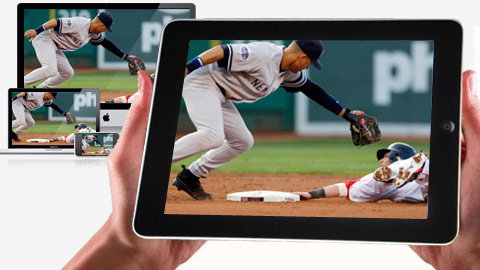
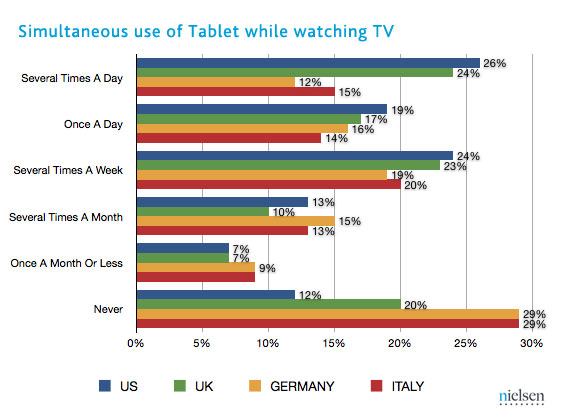
Two new data sets of consumer research provide valuable insights into how audiences are using media, often at the same time.  The behavior is called screen splitting.  It’s arisen from the explosive growth in mobile technology and even new platforms such as the iPad and tablet computing.  The Nielsen Company’s latest survey of connected device owners indicates depth of this new behavior.  Fully 88 percent of tablet owners and 86 percent of smartphone owners said they used their device while watching TV at least once during a 30 day period.  For 45 percent of the American tablet owners, screen splitting was a daily event, 26 percent said they simultaneously used their tablet while watching TV several times a day. (Figure 1)  The data was similar for smartphone owners.

Figure 1 - Courtesy Nielsen Co. (4th qtr 2011)

The second data set suggests the media switching happens at an almost frenetic pace among many viewers.  Innerscope Research specializes in conducting biometric studies of consumer viewing habits.  In a recent study commissioned by Time Warner, Innerscope outfitted 30 participants with biometric belts that recorded their physical responses as they used media throughout more than 300 hours of time away from work.  The participants also wore special glasses embedded with cameras that tracked what platform they used and for how long.  The results showed that consumers in their 20’s, or digital natives, switch media venues about 27 times per non-working hour.  To put that in perspective—about 13 times per standard half-hour television show or newscast.  Older consumers who didn’t grow up with the new technologies, those who Innerscope calls digital immigrants, shifted media at a 35 percent lower rate—just 17 times per non-working hour.

Together, the research sets tell us how our viewers are no longer sitting at the table to consume our products.  Instead, they’re running through the ala carte line.  They’re not eating whole meals, they’re snacking.  As soon as the instant gratification wears off, they’re onto the next snack.

Given this new reality, the question becomes how do brands and programmers adapt?  From a conceptual point of view, their product has to be positioned to hit the viewer’s emotional and intellectual sweet spot.  Advertising researcher and scholar John Eighmey gives us a conceptual model he calls Reward Theory.  It conveniently categorizes the elements that must interplay with each other for consumers to latch onto a piece of visual communication to consume, enjoy, and share.  It is the same model that explains why YouTube videos go viral. (Figure 2)

Figure 2- John Eighmey's Reward Model for explaining viewers engage in and share content.

First and foremost, the content must be stimulating.  It must be enjoyable to watch, clever, or surprising.  Second, it must have an element of empathy or personal identification. Third, it must lack confusion.  Fourth, is narrative or theme familiar to the viewer? That is, does he or she recognize the theme or scenario in which the information is presented?  Fifth, it must have news value such as a new claim or idea.  Finally, the message has brand reinforcement in that it creates positive attitudes about the message or messenger.

From a practical and operational mode, strong brands have learned that they must create stimulating content and integrate it 360 degrees across multiple platforms and channels.  For Coca-Cola and Proctor and Gamble it’s no longer acceptable to run just a TV ad and a print ad and call it a day.  They now know their brand and content has to live in traditional media, social media, digital media—all the channels that their customers use.

TV Newsrooms must adapt the same strategy.  Some already are.  KTTV, Fox 11 in Los Angeles is now routinely using Google+ to involve viewers in “hangouts” with their anchors during the newscasts.  The hangout participants can even chat with the anchors during the commercial breaks and watch the behind-the-scenes action in the studio.

It’s a smart approach.  Nielsen’s fourth quarter 2011 research on simultaneous TV and tablet usage shows 47% of the general population visited a social networking site during the program they were watching on TV.  Additionally, 37% claim to look up information related to the program they’re watching. (Figure 3)

Figure 3 - Nielsen Co.

If viewers are going to be screen splitting, the goal is to get them to interact with your brand on the second screen or channel.  Here are some tactics for TV newsrooms:

  •  Reporters should steer viewers to Facebook or Twitter for additional content or pictures (you may lose their attention briefly, but you keep them engaged in your brand).
  • During major stories, or continuing coverage, create a branded hash tag for viewers to follow and  interact with.  Display the “lower third” super of the hash tag during the related content.
  • Read what other viewers have to say on Facebook.
  • Let followers know their specific content or posts will be used on-air (everyone likes to be on TV, even if it’s a quote).
  • Replace all talent name supers with their social media addresses.
  • Work with station web page designer to display the real time Tweets of reporters and anchors on the home page.

What’s hard for many brands, especially newsrooms to understand is that consumers seek, use, and bend media content to meet their integrative needs.  Sometimes those needs are for information and knowledge, often times it’s for entertainment.  The latest research from Nielsen and Innerscope show that if brands and programmers can’t meet those needs, the consumer moves on—fast.  It all comes back to what broadcaster Linda Ellerbee’s daughter once said about television, “Live TV is me sitting in front of the set.  If it’s boring, I’m out of here.”

The Doolittle Raid on Tokyo–One Family’s Untold Story

13 Apr


President John F. Kennedy once wrote that “Victory has 100 fathers…”  This is a story about a victory that has at least one grandfather—my own.

Seventy years ago this winter, a small team of ordinary tradesmen helped another team of ordinary airmen achieve an extra-ordinary mission.  Together they changed two countries, and perhaps influenced the outcome of WWII.

Picture 1 – Former Northwest Airlines mechanic Philip Blotz. This picture is taken after enlisting in the U.S. Navy as an aircraft mechanic in 1944.

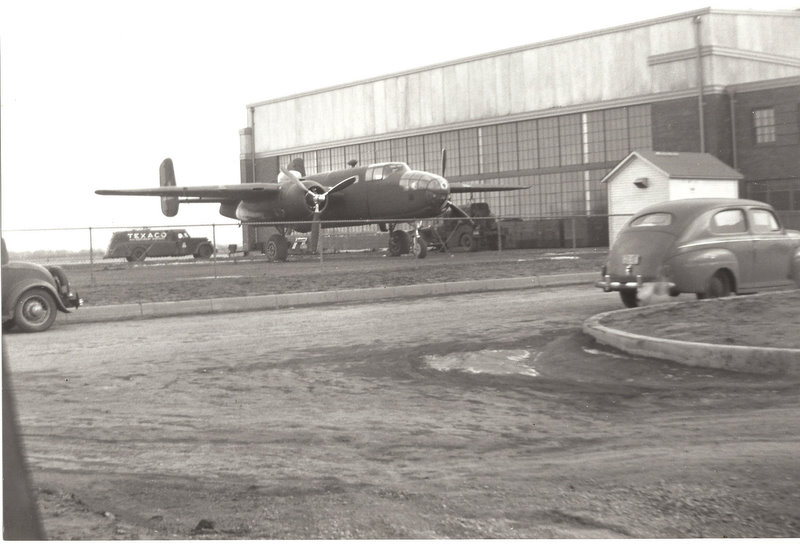
Philip Blotz was a new father and a young aircraft mechanic living in Minneapolis during the outset of the war. (Picture 1)  His apartment on 34thAvenue South was just a short ten block drive to Wold-Chamberlain Field where he worked as a ramp chief for Northwest Airlines.  The winter of ‘41-42 was as bitter as the start of the new war.  The temperature in the Twin Cities dropped to -20 in early January as a fresh blanket of snow covered the Minnesota prairie.  But as Blotz made his daily trek to the frozen air field a surprise was about to arrive in an early spring breeze from the west.  By the end of January a thaw had losened winter’s steely grip.  As Blotz turned to park his car at the mechanics hangar there was a spring gift any young aircraft mechanic would covet—a squadron of new B-25B Mitchell bombers. (Picture 2)

Picture 2 – One of Doolittle’s B-25B Bombers at the Mid-Continent Airlines Hangar in Minneapolis during the winter of 1942. (Courtesy: NWA History Centre)

The planning, work, and rework that happened in Minneapolis during the course of the next few weeks was all conducted under a blanket of secrecy as deep as the prairie snow.  The Army Air Corps had contracted with Mid-Continent Airlines to make significant modifications to the bombers.  The goal was to transform these medium-range aircraft into long-range cruisers.   The mechanics and the crew members of the 17th Bombardment Group were led to believe that the work was to enable the B-25’s to fly on U-boat patrols off the Atlantic coast.   The pilots were soon to learn otherwise.

One morning in Minneapolis, Army Air Corps Capt. Ted Lawson recalled in his book “Thirty Seconds Over Tokyo” how legendary aviator Jimmy Doolittle, then an Air Corps Lt. Colonel,  sent a trusted aide to gather up the pilots for a secret meeting.  Capt. Davey Jones locked the door in a Minneapolis hotel and told the men about an important mission that was under consideration by top brass.  The mission was unprecedented.  It was also daring and dangerous.

“Where?” somebody asked.

“I’m sorry, I can’t tell you any more,” Davey said.  “You’ve heard all the particulars I can give you .  Now who will volunteeer?  It’s perfectly alright if you don’t.  It’s strictly up to you.”

All of us volunteered.

– Ted Lawson in Thirty Seconds Over Tokyo

Two of Doolittle's B-25' awaiting extra fuel tanks at the Mid-Continent Airlines Hangar in January 1942  (Courtesy: Tom Norrbohm)

Picture 3 – This newly acquired photo shows two of Doolittle’s B-25’s awaiting the installation of extra fuel tanks at the Mid-Continent Airlines hangar in January 1942.  This is a critical photo for two reasons.  First, the tail number of the right aircraft matches the manifest of Doolittle’s after action report on the raid on Tokyo.  Second, the aircraft is clearly guarded by two armed sentries which speaks to the secrecy and security concerns of the fuel tank modifications.   (Courtesy: Tom Norrbohm)

Back at the hangar, Blotz and the rest of mechanics were hard at work.  Air Force archives reveal how the men installed two additional gas tanks.  A 160 gallon rubber bag tank was fixed to the top of the bomb bay.  The bag tank completely blocked the crew from getting from one end of the aircraft to the other.  But after the gas was consumed and the fumes vented, the tank could be collapsed in-flight to clear the passage way.  Another 265 gallon steel tank was mounted inside the fuselage later to be replaced by a 225 gallon rubber-lined leak-proof tank.  (Picture 4)
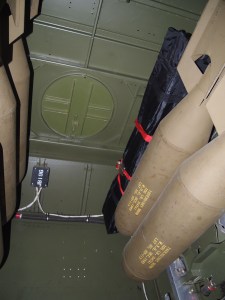
Picture 4 - View of the top of the bomb bay of a B-25 where Minneapolis mechanics installed 225 gallon fuel tank.

Picture 4 – View of the top of the bomb bay of a B-25 where Minneapolis mechanics installed a 225 gallon fuel tank.

Wayne Snyder of the Northwest Airlines History Centre says the mechanics utilized every bit of free space on the bomber.  “They carried a lot of gasoline.  It was AV gas, very explosive and the fumes could be very dangerous.  Basically, every place they could put sizable tanks was a gasoline tank,” said Snyder.

The crews also installed bomb extension shackles made by the McQuay Company in Minneapolis.  They fine-tuned the 1,700 horsepower Wright Cyclone engines and readied the aircraft for flight.

By the end of February, 1942, Blotz and the rest of the mechanics had finished their work.  The airmen of the 17th Bombardment Group and their mission commander Jimmy Doolittle were just beginning.  From Minneapolis they flew to Eglin Field in Valparaiso, Florida where the airmen spent the next few weeks practicing short takeoffs and low-level bombing runs .
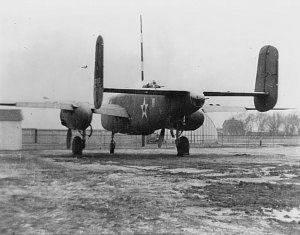
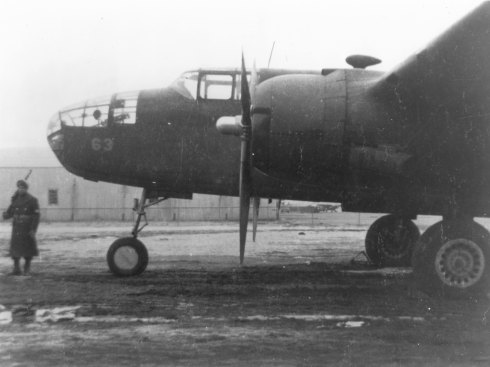
Picture 5 - This newly acquired photo is of plane #2242 at Wold-Chamberlin Field.  This B-25 was flown by Capt. Ed York and was the 8th plane to launch from the deck of the USS Hornet and the only plane to survive the raid on Tokyo.  Capt. York safely landed this aircraft a Russian airfield about 40 miles north of Vladivostok. This same aircraft is seen in Picture 4 along side the Mid-Continent Airlines Hangar.  (Courtesy: Tom Norrbohm)

Picture 5 – This newly acquired photo is of plane #2242 at Wold-Chamberlin Field.  This B-25 was flown by Capt. Ed York and was the 8th plane to launch from the deck of the USS Hornet and the only plane to survive the raid on Tokyo.  Capt. York safely landed this aircraft at a Russian airfield about 40 miles north of Vladivostok.  This same aircraft is seen in Picture 4 along side the Mid-Continent Airlines Hangar. (Courtesy: Tom Norrbohm)

On March 31st, just sixteen of the B-25’s were loaded onto the deck of the USS Hornet (CV-8) aircraft carrier in Alameda, California.  The next day Admiral William Halsey steamed the task force out to sea.  At last, Doolittle gathered his volunteer crew togehter and finally revealed their mission: Tokyo.

As Halsey navigated the task force toward Japan, Doolittle set the launch date for the midnight hours of April 19th.   But war, as life, seldom follows plans.  A Japanese fishing trawler came in contact with the task force on the morning of the 18th.  Fearing it had radioed the mainland with a warning putting the task force at risk, Halsey and Doolittle launched the raid 10 hours early and 400 miles further out to sea.

Picture 6 – Tim & Matt Myklebust of the Commemorative Air Force in the cockpit of the B-25J “Miss Mitchell.”

If there’s anyone who knows what Doolittle’s men were about to experience, it’s a group of avid fliers in St. Paul, Minnesota.  Twice a week, volunteers with the Minnesota Wing of the Commemorative Air Force gather to maintain and care for their own B-25 bomber.  It is one of just 42 remaining B-25’s in the world that are still flying.  What these volunteers know, what Doolittle’s men knew, is that the Mitchell gives the pilot and co-pilot a narrow, limited forward view.   The plane sitting level on its nose gear gives the pilot a clear view of the horizon, but not what’s immediate in front of him. (Picture 6)  Sit in the cockpit along with the CAF’s Matt Myklebust and it becomes horrifyingly clear that the only thing Doolittle and his men would have seen was the ocean rising and falling with the swell of the heavy seas.  The end of the carrier deck would have been nowhere in sight—no way of knowing if you were about to fly or plunge into the ocean.

“And that carrier is pitching up and down,” explains Myklebust.  “And you got to sit there with all your might at full power and release the brakes on the high pitch to get off the deck.”

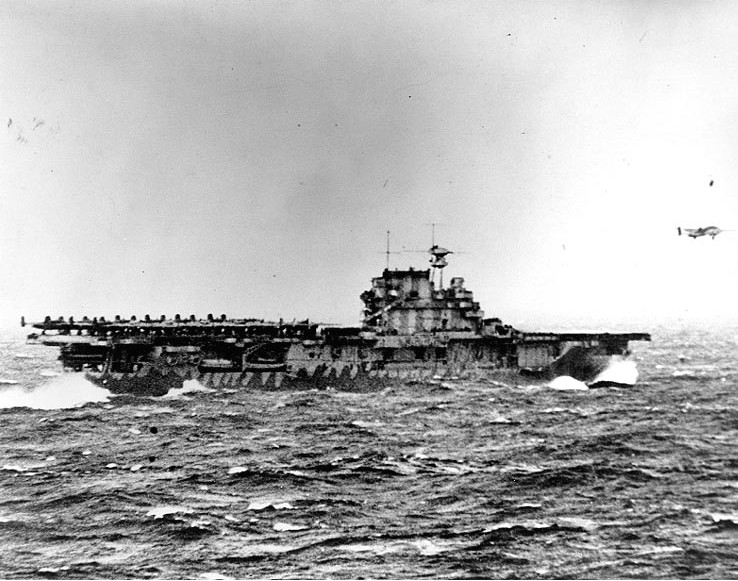
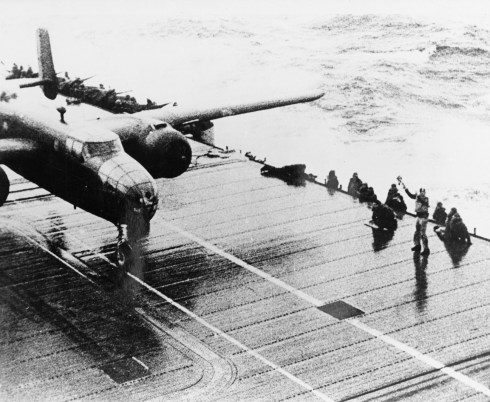
Picture 7 – Launch from the USS Hornet, April 18th, 1942.  (Courtesy: U.S. Archives)

Both history and archival film will forever record that Doolittle and his pilots not only successfully launched from the Hornet, they made it all the way to Japan. (Picture 7)  Nearly every bomber hit its primary targets and was met with surprisingly little Japanese fighter resistance.   In his report to the War Department Doolittle wrote, “The damage done far exceeded our most optimistic expectations.”

News of the raid spilled like ink from a barrel as papers around the world leaded the headlines in 72-point type.  Across Minnesota, word of the raid was as welcome as spring breakup–and a sign, too.  In a war seemingly as frozen and foreboding as Lake Mille Lacs, the Doolittle Raid was as much a welcome symbol of renewal as the call of the first loons of spring.  (Picture 8)

Picture 8 – Randal Dietrich of The 70 Years Project showing a newspaper headline reporting the raid on Tokyo.

“This was a lynchpin kind of moment in the war and these headlines reveal that,” said Randal Dietrich of The 70 Years Project.

Each day for the next four years, The 70 Years Project is chronicling WWII as it was reported in newspapers across Minnesota.  The headlines from the morning of April 18th may have trumpeted the news, but it told only half of the story. (Picture 9)

It would be weeks before the War Department would confirm the raid, but among a small group of Minnesota airplane mechanics, the pride was as bright as a polished wing panel.  To Northwest Airlines retirees, it is still one of the most storied chapters in the airline’s history.

“The people that had been involved in it had been very proud of their work to start with,” said former NWA mechanic Wayne Snyder.

Picture 9 – Minneapolis Morning Tribune, April 18th, 1942.  (Courtesy: The 70 Years Project)

“And for me to have that as one of the first stories I heard when I started at Northwest you could see that the people involved in it were very proud of their work and knew that they had contributed significantly to the war effort.”

As for my grandfather Philip Blotz, his small role in the Doolittle Raid was not his last contribution to the war.  Northwest Airlines would later send him to Wright Paterson Air Base in Ohio where he continued to service military aircraft.  In 1944 he enlisted in the U.S. Navy.  As grandchildren he would often regale us with the stories of the many fighter planes he maintained, how the F-4U Corsairs had bad landing gear hydraulics and how the F-6 Hellcats and the eventual F-8 Bearcats were the best planes in the air.  But somehow the stories always came back to Doolittle’s B-25’s.

To this day, the role these men played is one of the countless under-told stories of WWII.  It’s not just my family’s story to tell, Randal Dietrich believes it’s Minnesota’s story, too.

“Now a days we should all take some pride in that work was done here in Minnesota leading up to April of 1942 and enabled those fliers to launch that raid and change the direction of WWII from one of defeat to ultimate victory,” said Dietrich.

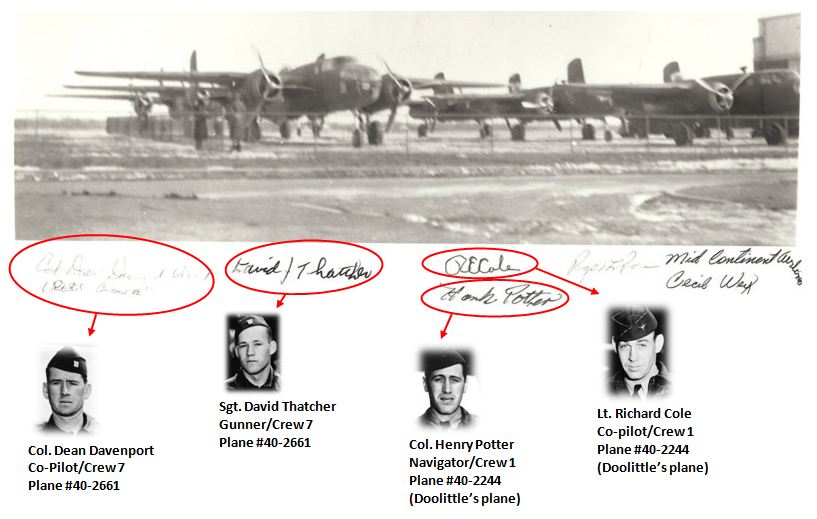
Picture 10 – B-25’s of the 17th Bombardment Group at the Mid-Continent Airlines hangar in Minneapolis as they were being retrofitted with extra fuel tanks for the raid on Tokyo.  The picture is signed by four crew members of the mission.  These signatures were most likely obtained well after the Doolittle raid by evidence of the fact that David Davenport signed his rank as Colonel.  Davenport would have been a lieutenant during the mission.  (Picture Courtesy: NWA History Centre)

Picture 11 – B-25’s at Mid-Continent Airlines Hangar in Minneapolis.  (Courtesy: NWA History Centre)
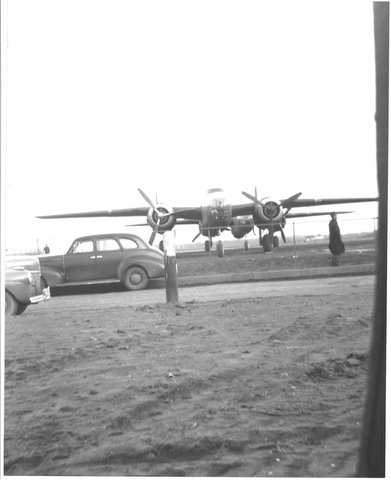
Another one of Doolittle's B-25's at Wold-Chamberlin Field in Minneapolis. This picture is significant for two reasons. First, it is taken inside the securty zone, perhaps by a contractor.  Second, is the presence of an armed sentry.  The sentry provides importance to the secrecry and military importance of the modificaitons being conducted on the B-25's.

Picture 12 – Another recently acquired photo of one of Doolittle’s B-25’s at Wold-Chamberlin Field in Minneapolis.  This picture is significant for two reasons.  First, it is taken inside the security zone, perhaps by a contractor.  Second, is the presence of an armed sentry.  The sentry provides importance to the secrecy of the modifications being conducted on the B-25’s.  (Courtesy: Tom Norrbohm)
Picture 13 – Another view of the one of Doolittle’s B-25’s at the Mid-Continent Airlines Hangar in Minneapolis – 1942.  (Courtesy: NWA History Centre)
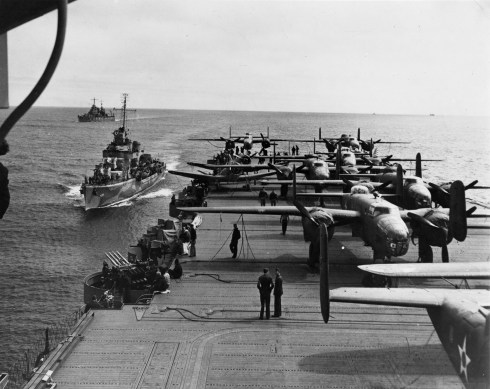
Doolittle's B-25's on the deck of the USS Hornet.  (Courtesy: US Navy archives)
Picture 14 – Doolittle’s B-25’s on the deck of the USS Hornet.  (Courtesy: US Navy archives)

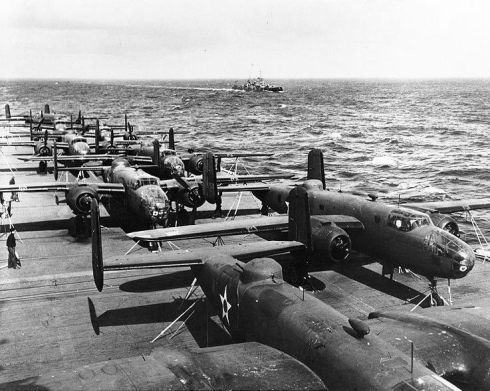
Doolittle's B-25's on the deck of the USS Hornet.  (Courtesy: US Navy archives)

Picture 15 – Doolittle’s B-25’s on the deck of the USS Hornet.  (Courtesy: US Navy archives)
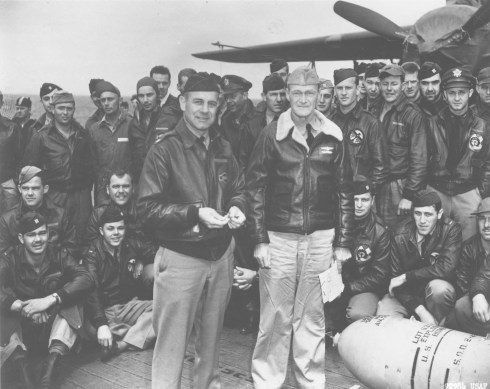
Lt. Col. Jimmy Doolittle accepts a medal from the skipper of the USS Hornet, Capt. Marc A. Mitscher. The medal, once given to a U.S. Navy officer by the Japanese, was wired to a 500-pound bomb for return to Japan "with interest." (Courtesy: US Air Force archives)

Picture 16 – Lt. Col. Jimmy Doolittle accepts a medal from the skipper of the USS Hornet, Capt. Marc A. Mitscher.  The medal, once given to a U.S. Navy officer by the Japanese, was wired to a 500-pound bomb for return to Japan “with interest.” (Courtesy: US Air Force archives)

Crew members loading 50-caliber ammunition into trays prior to their launch from the USS Hornet as members of the US Navy watch. (Courtesy:  US Air Force Archives)
Picture 17 – Crew members loading 50-caliber ammunition into trays prior to their launch from the USS Hornet as members of the US Navy watch.  (Courtesy: US Air Force Archives)

Raid picture taken from one of the B-25's over Tokyo  (Courtesy: US Airforce archives)

Picture 18 – Preparing to launch from the USS Hornet (Courtesy: US Navy archives)

One of Doolittle's B-25's launching from the deck of the USS Hornet on April 18th, 1942.  (Courtesy: US Navy archives)

Picture 19 – One of Doolittle’s B-25’s launching from the deck of the USS Hornet on April 18th, 1942.  (Courtesy: US Navy archives)
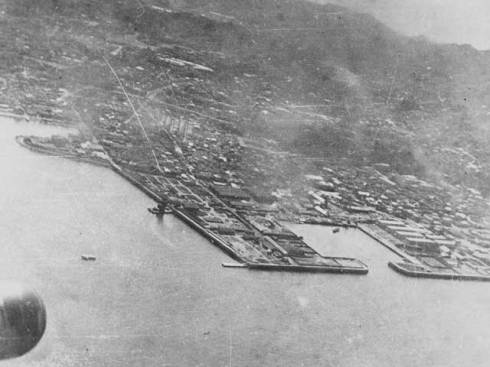
Picture taken from the cockpit of oneof the Doolittle Raiders over Tokyo.  (Courtesy: US Air Force archives)

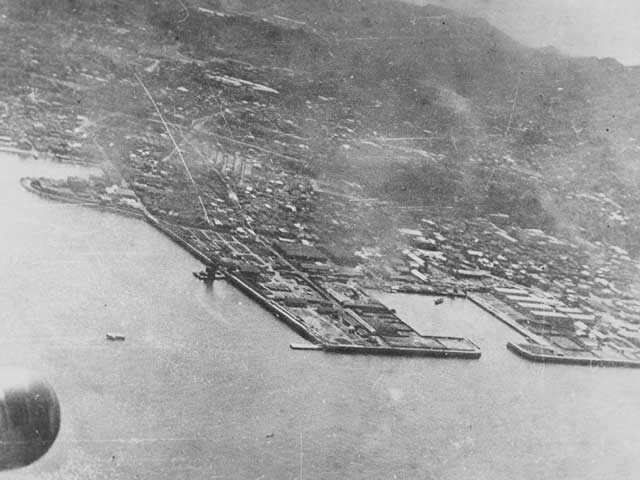
Picture 20 – Photo taken from the cockpit of one of the Doolittle Raiders over Tokyo. (Courtesy: US Air Force archives)

Social Media Engagement — Timing is Everything

12 Apr

Social media channels can be part of a great business strategy to engage customers.  Followers who like and share your posts create the ultimate popularity contest—especially if they help spread the word of great customer service, a product or sale that hits their value driven sweet spot.

But as a matter of tactics, is there a day or time to best reach your customers?

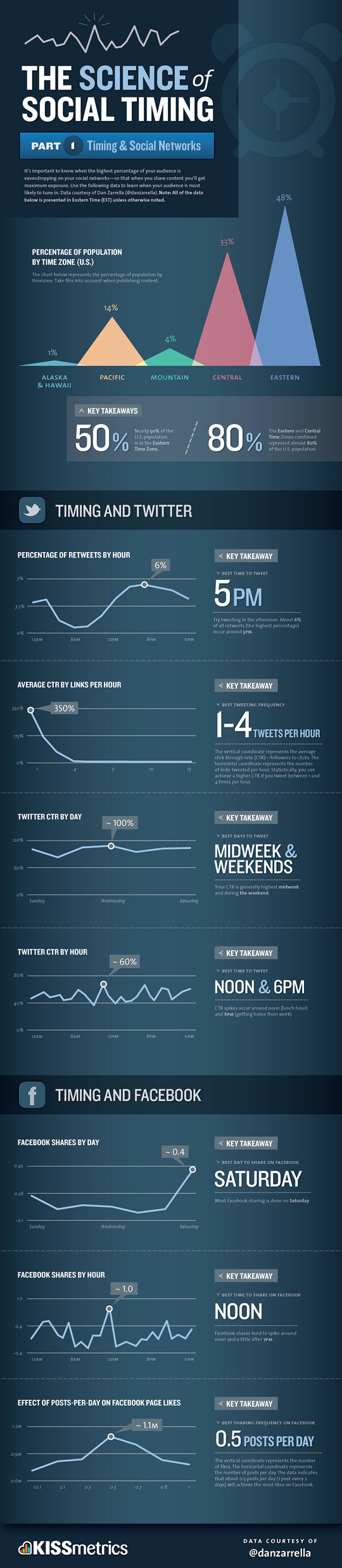
Conducting some good consumer research of your target audience could help reveal those moments of opportunity.  But without that research, the folks at Kissmetrics give us a couple of guideposts, especially with Facebook.

  • Saturday is the best for sharing
  • The best time of the day is the hours leading up to noon, and then again around the dinner hour
  • At least one post every other day generates the most “likes.”

But it’s also vitally important for businesses to remember that there is a reason why this platform is called “social” media.   Those businesses that use social networking sites (SNS) as a traditional one-way communications channel will not get encouraging results.  However, those who use SNS as means to listen and interact with their customers are likely to have more success.   It’s one thing to post content, it’s another to immediately respond to customer comments and feedback.

The Milwaukee Brewers & Aaron Rogers — The Making of a Memorable TV Ad

4 Apr

You don’t have to be a Brewers or Packers fan to enjoy the collision of metaphors in a new baseball advertising campaign.

The folks at 2-Story Creative in Milwaukee have called up the NFL’s Most Valuable Player Aaron Rogers to the pitcher’s mound.  The result is a wonderfully enjoyable piece of communication that gains its power from the use of mixed metaphors.


Whether it’s baseball/football, ace/gun slinger, or wind-up/3-step drop, the collision of ideas forces the viewer to think and elaborate about America’s game and being in the stands.

That’s some heat.  Now, pass the Secret Sauce.

More Adults Using Social Media. What it Means for Businesses.

30 Mar

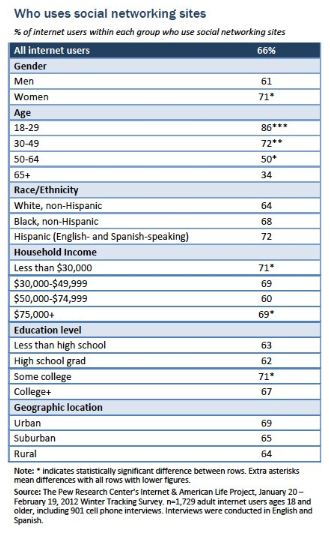
Figure 1 - Adults Using Social Networking Sites

The research folks at Pew Internet have just given us more proof that the phenomena known as social media is not just a passing fad.  As Facebook has reached 483 million daily users, Pew latest data shows us that 66% of online adults now use social networking sites.   Not surprisingly women are leading the way. (Figure 1)

The latest Pew research mirrors trends I gathered in my own research of social media users in the Twin Cities.   Women tend to be power users.   Not only are they more heavily engaged in social media,  women were more likely to “friend” or “like” a business than men would.   Facebook is the channel of choice with 90% of Twin Cities respondents indicating use the site.  Pew’s new national data set from February of 2012 shows us that women are still in driver’s seat with 71% using social networking sites.

Figure 2

Pew also confirms that social media use is still in a growth phase.   Typical daily usage among adults has rocketed from 27% in April of 2009 to 48% in February of 2012. (Figure 2)

So what does this mean if you’re a business owner looking to reach out to your customers?

  • Conduct some customer research.  Are your customers using social media, and what channels?  What do they want from you—product news?  Help?
  • If women are your primary customers, you must be on Facebook.
  • Encourage customers to follow you on SNS to get exclusive content or discounts.
  • Respond to customer comments on a DAILY if not IMMEDIATE basis.

The last tip is vital.  Internet users who are accessing social media for customer service want immediate feedback.  I recently spoke with Brittney Madsen the online manager at The Wedding Shoppe in St. Paul who said that her customers are increasing turning to the store’s Facebook page to ask questions about designers, price, and inventory.   Madsen said that if she doesn’t respond within minutes, the customers will go to a competitor looking for answers.  In this store’s experience, social media has become just as important of a business tool as a phone.

The Wedding Shoppe’s experience along with Pew’s latest research shows adults are embracing social media.  While it is still a place for personal connections, by making your engagements personal to your customer, you can be a part of their lives.

How Businesses and Consumers are using Social Media for Customer Support

25 Mar

As the internet becomes more ingrained as a 21st century communications channel, it should come as no surprise that consumers are using it to reach out to businesses to either connect or solve problems.

Current research from Pew shows how 59% of all adults use the internet.   Of those people, 43% use social networking sites.   But how are they using social media to connect with brands and business, and just as important, how are those brands responding?

Here is an extremely useful infograph from the folks at Zendesk that shows how those relationships are forming.

Pink Slime — Anatomy of a Contagion

23 Mar

The gooey mess known as Pink Slime has suddenly become a public relations mess too.  But, how did it go from a food additive to a food disaster in record time?  A large part of the answer lies in the power of social memes and the ability of key audiences to spread it like a contagion.

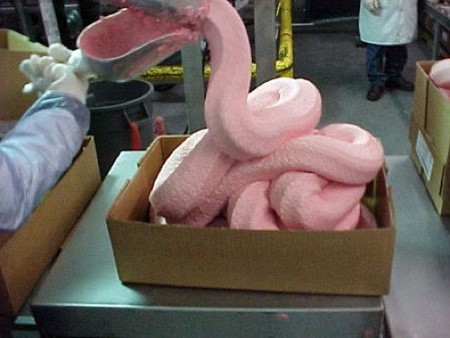
Figure 1 - Pink Slime

Let’s break it down.  In this case, the food additive included in some forms of processed beef came with a descriptive slang name and an iconic image: pink slime. (Figure 1)

In its basic form, pink slime a substance made from the rendered connective tissues and intestines of cows.  Because those tissues are susceptible to e-coli contamination, they are processed with ammonium nitrate to kill the bacteria and act as a preservative.   For years the FDA has approved the additive as a safe filler for meat products.  But when an image and video of the substance appeared in the news reports in early March about its presence in school lunch hamburgers, pink slime became a household word as fast as parents could hit the “send” button on their computers.   As a Google Trends analysis shows, pink slime went viral in a matter of 24-hours and has not let up since. (Figure 2)

Figure 2 - Google Trends

Three key factors are involved here.  First, the image itself of the pink slime became what social psychologist Jaap Van Genneken would call a strong replicator.  In other words, it’s an iconic image that developed and sealed an emotion in the minds of the viewer.  In this case, the image leads to the very human response of questioning what this substance is doing in our food—especially our children’s food at school.

Second, the image sealed itself in the minds of an important audience.   That audience is mainly women, in particular, the mothers of school children.

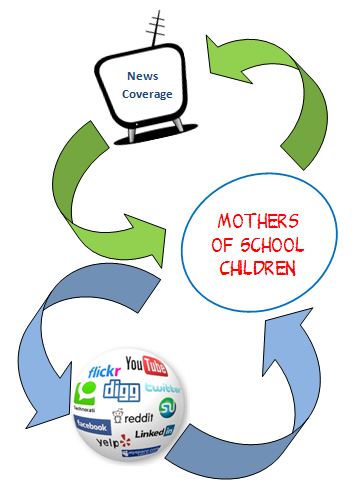
Third, these women not only saw the image of the pink slime included in stories in various news media, they spread the story to their friends and peer groups in social media.  My own audience research among social media users indicates that women are heavily invested in, and are heavy users of social channels.   They not only use social media as a way of discovering news from their friends, but to share news and issues that are important to them.   When this story broke, the image, the issue, and the salience to their children and families created its own perfect recipe for a modern-day social issue contagion. (Figure 3)

Figure 3 - Contagion Model

The result has been a sudden abandonment of meat products containing the so-called pink slime.  Several major grocery store chains have now said they have stopped ordering beef products containing the additive.   One of them is Twin Cities based SuperValue which owns and operates Cub Food stores throughout the Midwest.   Here’s its statement:

“We’ve heard concerns from many of our shoppers about the inclusion of finely textured beef in some of the ground beef products available at our stores. Effective today, we have made the decision to no longer purchase fresh ground beef products that contain finely textured beef.”  -SuperValue

            The power of the contagion lies in the statement’s first sentence.   Consumers spoke up.  SuperValue listened.  It’s a 21st century lesson in the speed of which issues closely tied to strong memes can spread, and the power of key audiences armed with a “send” button.

Fiat’s Branding Machine — What Are YOU Looking At?

20 Mar

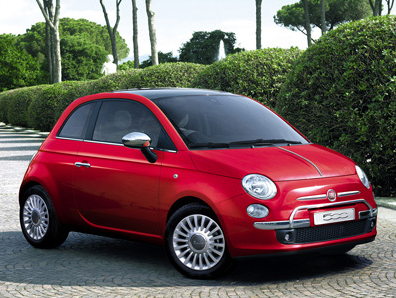
For a tiny car, the Fiat 500 is telling a big story.  And it says a lot about how to create multiple brand narratives around a new product.

Fiat 500

Since its creative splash during Super Bowl XLVI, Fiat has given us two sequels that speak to different audiences highlighting unique product attributes to each one.  The brilliance of the Super Bowl Abarth ad is that it took the age-old “love affair with a car” metaphor and made it real.  The woman seductively bending over at the curb wasn’t just any kind of sex symbol; she was an Italian sex symbol.  It was the embodiment of lust and bust.  “Che cosa guardi?” she screams in Italian.  The translation is simple, “What are you looking at?”  The answer is just as simple–a brand new sexy-hot Italian sports car.


Fiat has since followed with two more ads that stretch the storytelling for different audiences.  The latest incorporates another babe–this one in a car seat.  The ad follows two family guys with tickets to the big game and extra baggage strapped into the back seat.  But they get caught behind a grey-haired senior citizen in his vintage Chrysler Imperial.  (Think Clint Eastwood)  But the speed of the Fiat shows this is clearly not Halftime in America–it’s full throttle.  The message: drive the kids in the fast lane.


Then there’s the House Arrest ad once again featuring the Abarth, but this time in bad boy black.  The car races through the hallways of a mansion stocked with booze and babes.  When the car finally screeches to a halt in the ballroom, the driver climbing out is none other than Charlie Sheen.  The tag line is “Not all bad boys are alike.”  The message: have fun on your terms.


They are three ads with three distinct stories about a new product.  It’s sexy.  It’s practical.  And, it’s fun.  Can’t wait to see what else Fiat has up its sleeve.

Picture This — A Cure Community for Diabetes

5 Mar

Hopes and dreams don’t just hang in our minds, sometimes they hang in picture frames.

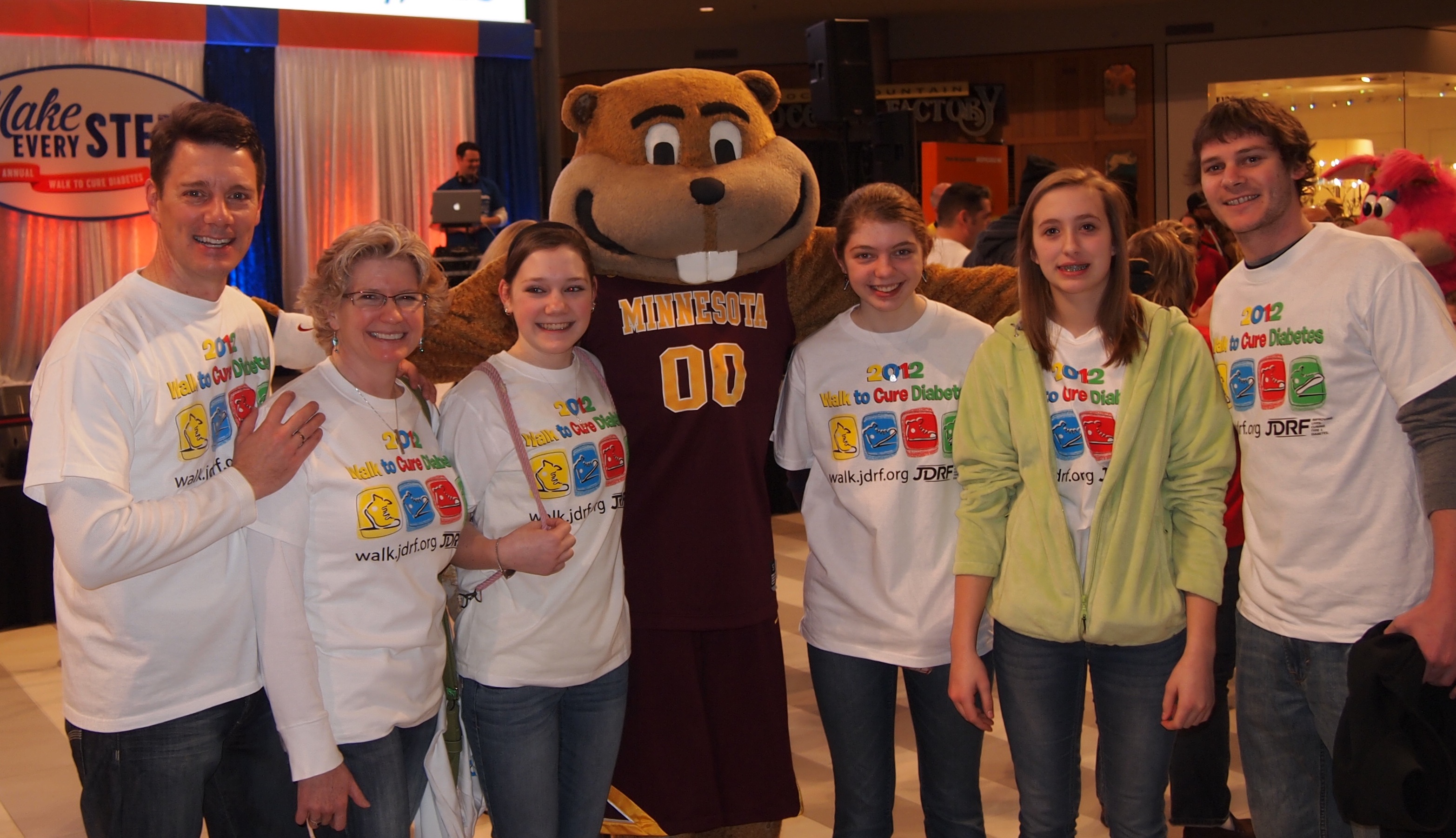
Blotz Family - OutFOX Diabetes 2012 Walk Team

At the recent Minnesota JDRF Walk to Cure Diabetes, the hopes and dreams spilled from the pictures taken and pictures displayed on shirts and posters all across the Mall of America.  Almost all of them were of children.   Each one shouts a story, each one begs for someone to listen.  But the one picture that doesn’t exist is the image reserved for the empty frame that sits in each of our homes.  That’s the frame waiting for a picture of a cure.

Kim Bailey, an adult living with diabetes since her childhood once told me she envisions the frame as a picture of nothing.  “Let’s get rid of it.  It exists no longer.  Let’s get it done and put ourselves out of a job.”

Amen.

Until then, I still fill my frames with hopes and dreams for my daughters Maddy and Emme.  Maddy was diagnosed with Type-1 diabetes at the age of three, Emme at the age of eleven.  It’s not an easy disease for children, or their parents.  Manageable, yes.  Easy, no.  Besides the constant blood sugar tests, carb counting and needles sticks, there is the worry and many times the feeling of isolation and exasperation.

Alyssa Kapaun was diagnosed in 2011 with Type-1

At this year’s Walk there were two girls who know both the isolation and exasperation.  Alyssa Kapaun is a fifth grader who every day eats lunch by herself because she returns late to the cafeteria after getting her insulin shot in the nurse’s office.  To a parent, it’s a crushing sight; Alyssa on one end of the cafeteria all alone, her class on the other end.  I recently had the chance to meet Alyssa at her school—she didn’t eat lunch alone that day. 

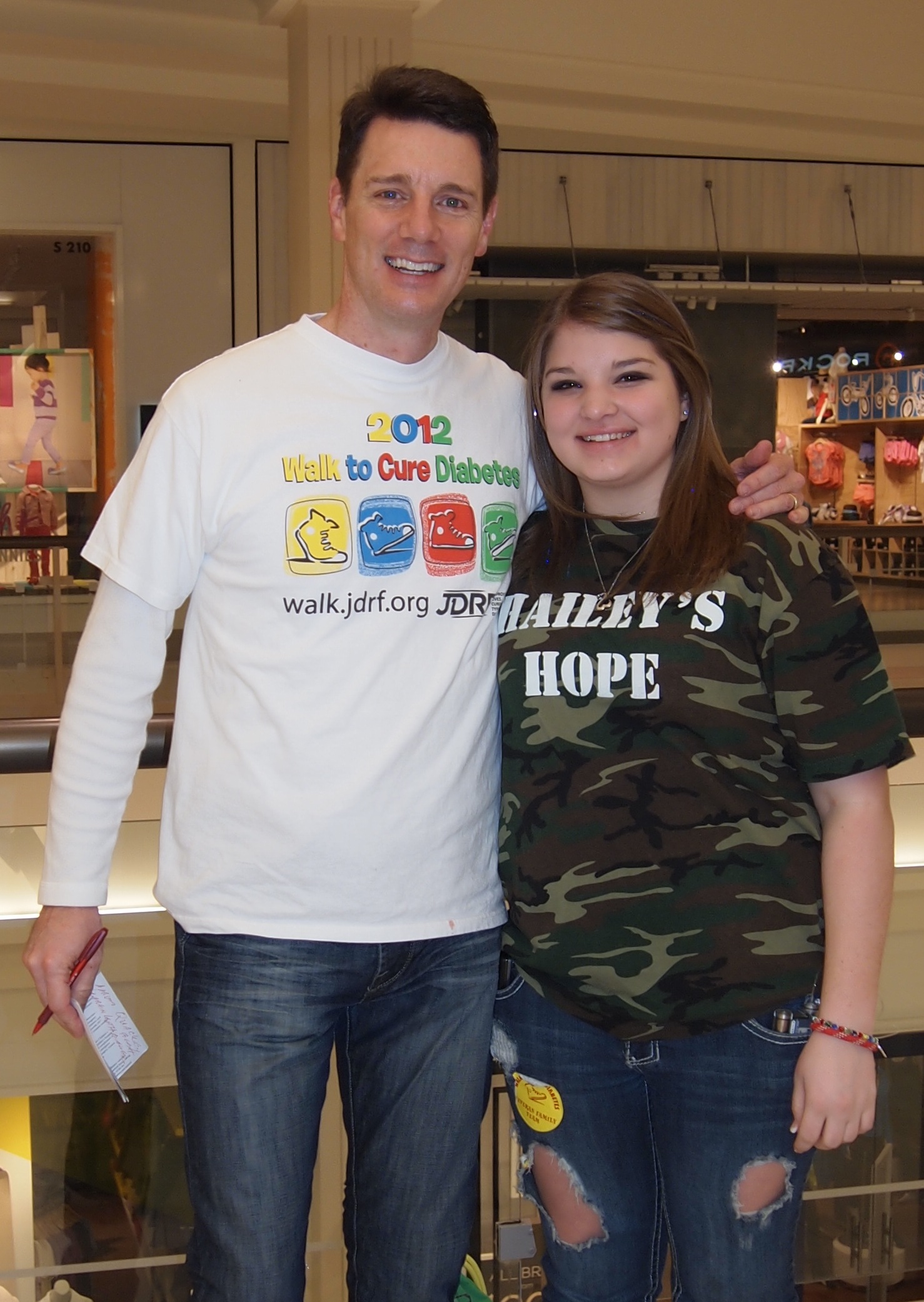
Hailey Stark of "Hailey's Army" Walk Team

                            And then there’s Hailey Stark, a high school freshman I first met at last year’s Walk hobbling along on crutches.  She was having a hard time of it.  The struggles of being a teenager, in addition to one with diabetes AND a broken leg were written on her face as plain as a low blood sugar reading.  She didn’t give up then, and she hasn’t given up now.  What a thrill it was to see her again at this year’s Walk without the crutches and with a team of friends.  The message that I hope Alyssa and Hailey took home from the 21,000 people at this year’s walk is that you’re never alone. 

The stories of those two children drive what is both an essential function and brand for JDRF.  At its core JDRF is a charitable organization that drives and funds essential research to cure, treat, and prevent Type-1 diabetes.  Since a group of mothers founded JDRF in 1970, it has contributed $1.6 billion toward research to find a cure–$116 million in 2011 alone.  In many ways, it is invisible work conducted in laboratories and clinics around the world.   But as Alyssa and Hailey show us, it is JDRF’s visible work of programming the Walks and fundraisers that provide a core social purpose and create a powerful brand.

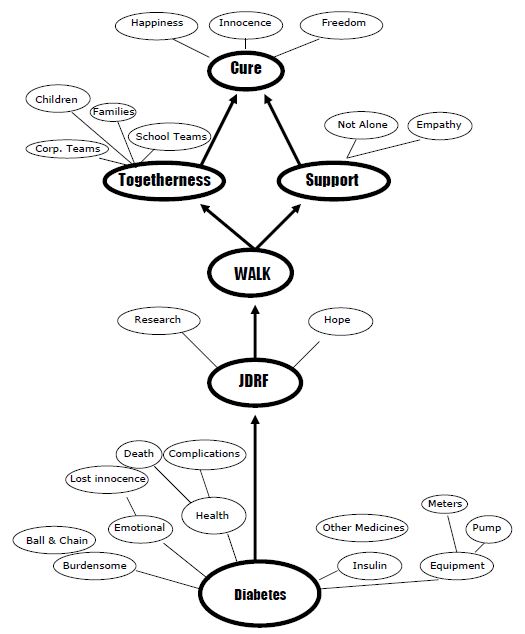
Figure 1 - JDRF Mental Model Map

Two years ago I conducted a communications research study to identify leverageable consumer insights into the Walk to Cure Diabetes.   Part of the study’s methodology utilized a Zaltman-style elicitation analysis that had a number of people affected by Type-1 diabetes assemble a series of pictures that best describe their feelings and thoughts about the disease.  The elicitation study produced a mental model map that started with diabetes and its burdens and laddered up to JDRF, the Walk, and finally, a cure. (Figure 1)  The subjects in the study produced two important and equal mind models of the Walk, one of support, and one of togetherness.  In the togetherness model, the concepts of “empathy” and the thought of “not being alone” stood out among the participants.  To all of the study’s subjects, the Walk represented the possibilities of a cure and the higher level values of happiness, innocence, and freedom. 

Together, this mental map produced a number of important take-aways.

Consumer Insights into Diabetes:

  • Diabetes is hard on families
  • Exceptionally hard on parents
  • Physical and emotional struggle for the patients of Type-1 diabetes
  • Lives are ruled by medicines and machines

Consumer Insights into JDRF:

  • Represents a means to a cure
  • Finding a cure means a return to innocence for our children

Consumer Insights into Walk to Cure Diabetes:

  • Family
  • Coming together
  • Support
  • Reinforces the sense of not being alone

What became very clear from the research is that people with ties to JDRF viewed it as a community.  Not just any community—A Cure Community.

JDRF has done extensive work in the past year to rebrand itself as the Type-1 diabetes organization.  It’s certainly one way to differentiate itself from the American Diabetes Association (ADA) which also supports research but has a core mission of helping people with diabetes live better lives.  The people who continue to support JDRF with their dollars want something more.  They want a cure and a return to the freedom and happiness it represents.  That’s why the consumer insight into JDRF as a cure community is so powerful.  It is the foundation to a brand for JDRF that has real meaning.

2012 JDRF Walk to Cure Diabetes at MOA

The 21,000 people who raised $2.1 million at the recent JDRF Walk know it.   Now Alyssa Kapaun and Hailey Stark know it, too.  They exist in their parents’ picture frames just as Maddy and Emme exist in my own.

And then there’s that empty frame, too.  I’m holding out to fill it with one giant group-shot of all the people we cure.

Halftime in America. How Chrysler Found a Voice, and Missed an Opportunity

14 Feb

                The silhouette emerging from the darkness on Super Bowl Sunday was more than a man stepping into the light.  It was a car company emerging from the blast furnace of scrap metal.  And, it was a nation emerging with it. 

"Halftime in America"

                The advertisement for Chrysler wasn’t directly selling a product, it was selling an idea—economic patriotism.   It picked up where Chrysler left off in Super Bowl XLV when Eminem introduced the new Chrysler 200 luxury car proclaiming “Detroit was back.”   This year’s message is  that Chrysler has survived a brutal first half of the recession, and if Chrysler can do it so can the rest of America.   As I wrote in a previous post, the ad was no accident and was strategically positioned to elicit a desired response.

  • Idea:  Halftime/Patriotism
  • Target Market Audience:  Anyone who has struggled in the economy
  • Desired Response:  Feel confident about Chrysler—feel confident about yourself
  • Competitive Frame:  Apathy and pessimism
  • Message Argument:  We’ve only just begun—can’t wait for the second half
  • Rationale:  Emotional trigger to build loyalty and awareness to Chrysler 

             The positioning of Clint Eastwood as the metaphoric coach giving the country a sobering Super Bowl halftime pep talk was brilliant casting.  Who’s not going to stand tall with Dirty Harry giving a “Million Dollar Baby” lecture? 

                Apparently, plenty.

                From Fox’s Bill O’Reilly, to former Bush White House Aide Carl Rove, many people saw it as a rallying cry to justify the auto industry bailout.  Additionally, many of those same people saw the halftime in America theme as a metaphoric campaign commercial urging voters to give President Obama a second term.  Media analyst John Rash said the backlash should not be surprising.  

Media Analyst John Rash

                “The commercial is a real shock test in that people can read into it what they bring politically,” said Rash.

                “Many republicans might be able to read here they have a well known conservative who in effect is trying to rally the country for a fresh start in the second half.  To some that would suggest electing a new administration.  Other’s certainly some democrats read into it using the auto bailout in Detroit as a template for the country’s comeback and they hear second half and they think second term.  So, people will project onto a spot what they think politically and socially.”

                But critics of the ad need to hear at least one more perspective.  Anna Ciaramitaro lives in Detroit and has witnessed its slow death in the new economy. 

Detroit resident Anna Ciaramitaro

              “It was one of the best commercials ever made,” said Ciaramitaro. 

                She added, “It was a commercial that touched the heart of Detroit and the people that lived there, the citizens, the residents there that experienced everyday what it’s like rebuilding a city again.  And we just wanted to share that with the rest of America.”

                And this is exactly where Chrysler missed an opportunity.  What if it didn’t just create an ad, what if it had created a community?  What Chrysler missed was the chance to launch a multi-channel campaign where people can tell and create their own “second half” stories.  Here are a couple of ideas:

  1. Branded website:  A separate webpage called secondhalf.com where Chrysler can showcase comeback stories/videos of ordinary Americans and companies.  User generated content would be the key component of this website.   Ideally, the stories would include some thread of how Chrysler products helped in the comeback.  The website should be prominently embedded on Chrysler’s homepage that customers can easily find.  The website branding would be integrated within Chrysler’s media buys:  “Tell your story. Secondhalf.com”
  2. Daily Twitter updates:  A separate Twitter feed of daily success stories tied to the Chrysler brand.
  3. Elementary School Art Contest:  Involve local Chrysler dealerships and schools in an art display that encourages children to tell their own stories through art work of how perhaps their own families have found ways to succeed.   The local Chrysler dealerships would serve as the galleries to display the art and present a cash prize to the school with the best presentation.
  4. Video contest:  An invitation to young film makers to create their own second half ad showcasing a comeback story.  All ads would be screened and judged by Oscar winning director Clint Eastwood.  The winning commercial would then air during the halftime of the NLF kick-off game in September. 

             During the Super Bowl, Chrysler implored the world to “hear the roar of our engines.”   Building a community could provide the echo chamber to let those engines roar from every corner of the planet.

                Yes, Chrysler is a car company.   But as Americans in every walk of life emerge from this brutal recession, Chrysler is also a success story.  Americans love winners.  That’s a sustainable brand value Chrysler can build and drive.